
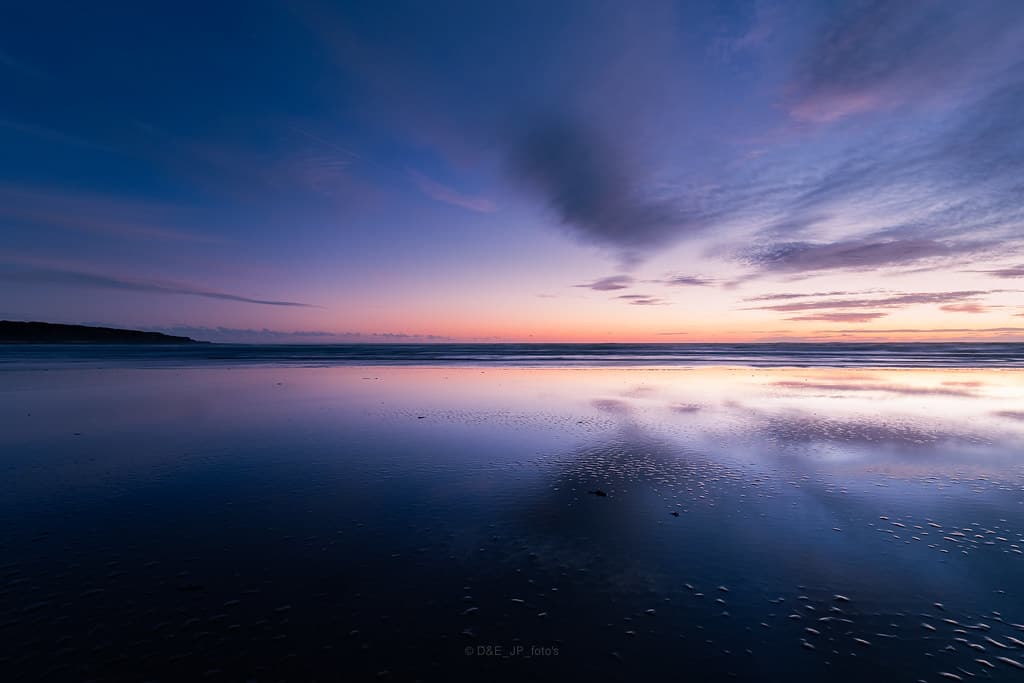
The beach occupies the narrow spit where the Payré River surrenders to the sea, giving you two entirely different water experiences separated by a hundred meters of sand. On the estuary side, the water moves with tidal currents rather than waves, creating a channel where stand-up paddleboarders glide past moored fishing boats. The opposite face takes the full force of Atlantic swells, waves building and crashing with rhythmic insistence.
“Le Veillon's estuary-ocean duality creates two beaches in one, letting families self-sort by temperament and skill level while remaining within shouting distance—a geographic compromise that keeps everyone satisfied.”
 Credit: Flickr
Plage du Veillon — photo by Johan MTH
The tombolo itself becomes an island at high spring tides, the ocean briefly claiming the entire spit before retreating. You'll see tide markers showing where the water reached during the last big surge, often surprisingly high. Shorebirds work the wrack line at the estuary's edge—curlews probing with curved beaks, egrets standing motionless in the shallows. The lighthouse at Pointe du Payre watches over the convergence, white tower against blue sky, a navigation mark that's guided boats through these waters since 1902.
Dunes rise behind the ocean-facing beach, their paths leading through thickets of sea buckthorn to overlooks where you can photograph the entire system: river mouth, barrier beach, ocean beyond. Late afternoon light turns the scene golden, the estuary's calm water reflecting clouds while the ocean side churns with whitecaps. You understand why this configuration—rare along the Vendée coast—draws landscape photographers and naturalists who value complexity over simplicity.


