

The beach is small—maybe two hundred meters end to end—and curves gently along a low bluff where the land meets the sea. The sand is coarse, mixed with shell fragments and pebbles polished smooth by the waves. You can see across the water to the pale cliffs of Hiddensee on clear days, and in summer the Baltic here is that particular Baltic blue-green, sharp and cold even when the sun is high.
“A true locals' Baltic beach, untouched by development and reached only by those who know the unmarked farm track.”
 Credit: Pexels
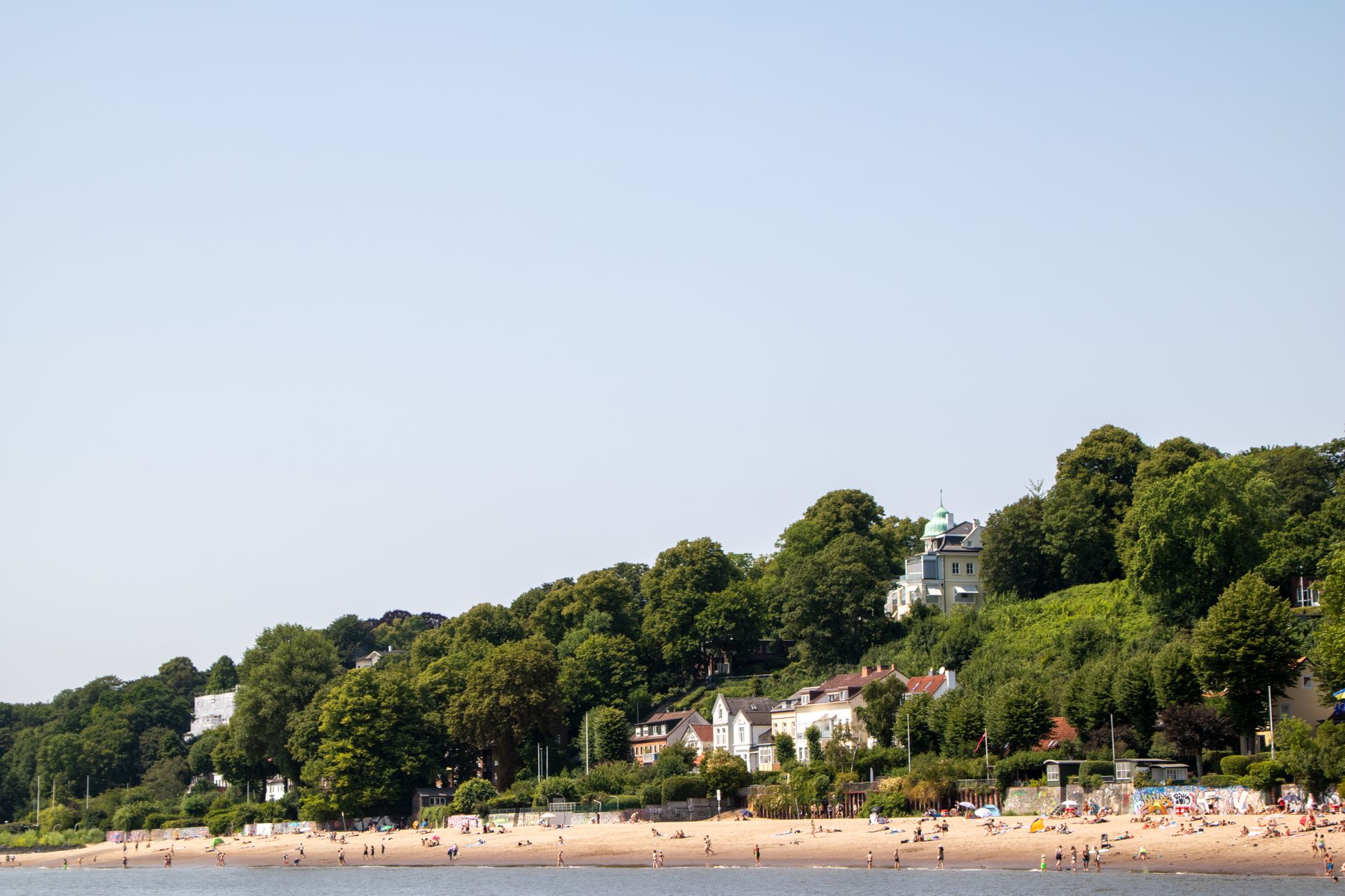
Sunlit beach with historic villas along Hamburg's coast, surrounded by lush greenery.
Behind the dune line, a fringe of wind-stunted pines gives way to agricultural land—barley fields in June, stubble by August. The village of Kinnbackenhagen itself is a hamlet: a church with a shingled steeple, a handful of farmhouses with roses climbing the brick. Most visitors are grandparents from Stralsund who've been coming for decades, spreading blankets in the same spot year after year, and children from the neighboring villages who bike down in the afternoons to swim and dig for sand crabs.
There's no café, no lifeguard tower, no parking lot—just a sandy pulloff where the track ends. The beach operates on trust: if you carry it in, you carry it out. Evenings, the wind drops and the water goes glassy, reflecting the light like beaten silver. By dusk, you'll often have the place entirely to yourself, the only sound the lap of small waves and the distant bleat of sheep from the inland fields.


