

Reinberg announces itself with a windbreak of stunted pines and a gravel parking area barely large enough for six cars. You walk down a slope through beach grass that whispers in the channel breeze, emerging onto a shore where fishing nets lie drying across weathered sawhorses. The Strelasund stretches east, its gray-green water stippled by current and wind, Rügen's low profile visible as a darker line on the horizon.
“Reinberg exists in cartographic limbo—too small for tourist attention, too functional for picturesque neglect, just a working shore that locals use without ceremony.”
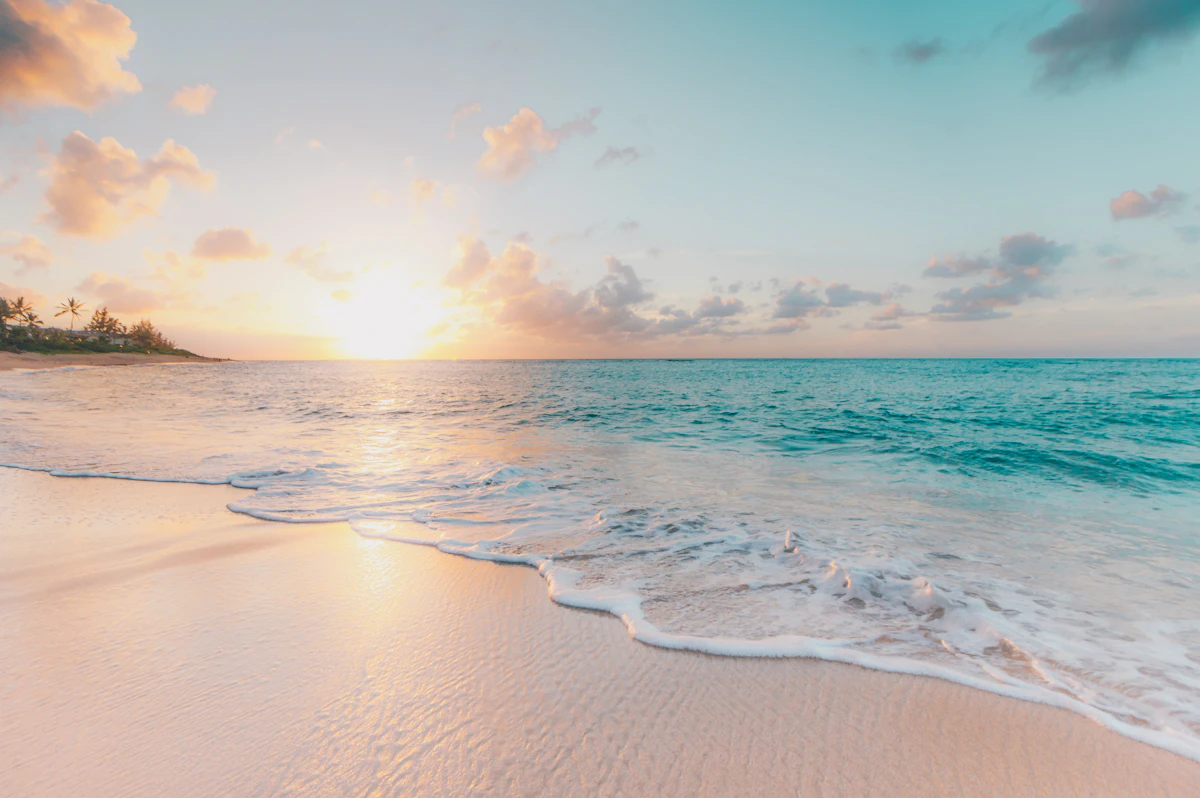 Credit: Unsplash
Aerial view of turquoise tropical bay
You wade in, feeling stones roll under your soles until the bottom transitions to sand and finally to the silky mud that characterizes these inland waters. A heron stands motionless in the shallows fifty meters away, waiting for mullet to pass within striking range. You'll notice the water temperature—degrees warmer than the open Baltic—and the way it tastes less of salt than of river mouths and marshland. Sailboats tack past on their way to Stralsund, their wake reaching shore minutes later in gentle undulations.
Late afternoon brings the beach's best light: the sun dropping behind Reinberg's church tower, casting long shadows across the sand and turning the Strelasund's surface to hammered pewter. You might see an elderly couple arrive in rubber boots, launching a small motorboat with practiced efficiency. They nod in greeting, nothing more, and putter off toward their fishing grounds, leaving only the smell of two-stroke exhaust mixing with the marsh-grass sweetness of the shore.


