
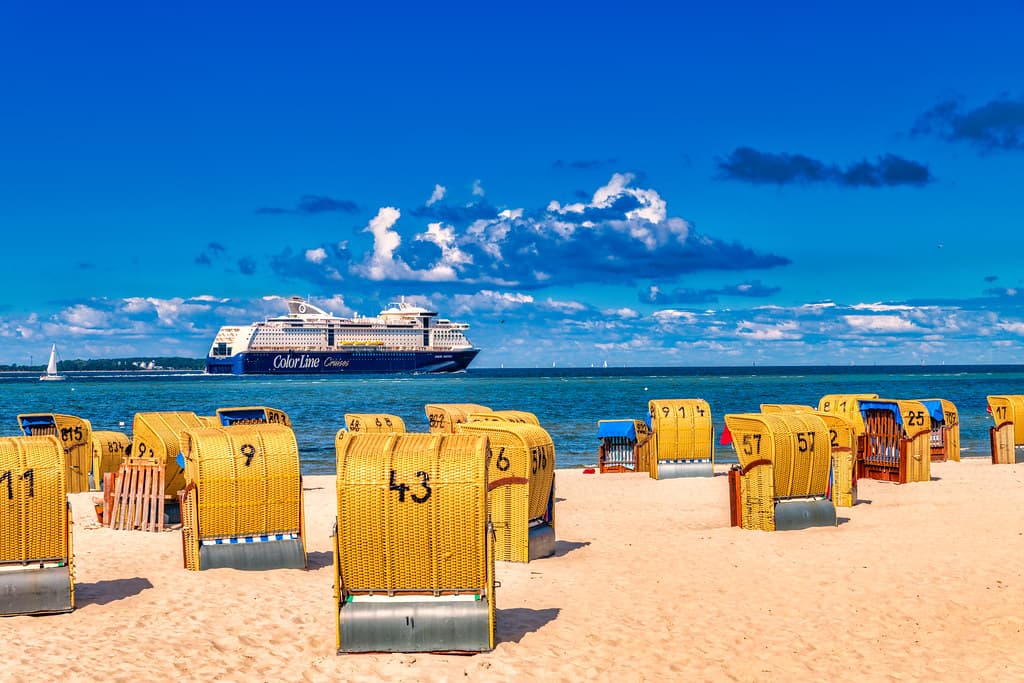
This stretch of Kiel Bay coastline barely qualifies as a beach in the resort sense. The shore alternates between coarse sand and cobble, backed by agricultural land that runs right to the water in places. A gravel track provides access past a working farm; the Baltic appears suddenly beyond a stand of windbreak poplars, grey-green and stippled with whitecaps when the wind blows.
“One of the last Kiel Bay shores where agriculture, not tourism, shapes the landscape and beach access remains incidental to farming.”
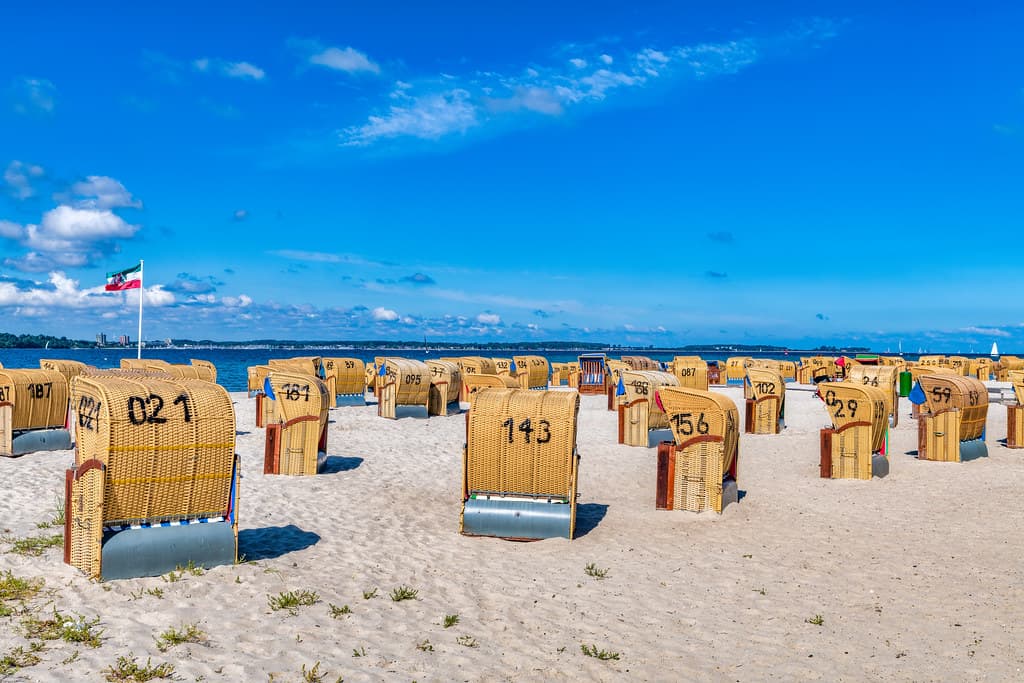 Credit: Flickr
Brodersdorf Coast Beach — photo by karlheinz klingbeil
No promenade, no changing rooms, no designated swimming area. Local families know to park near the old boat shed and walk west, where the shore widens slightly and the stones give way to packed sand. The water stays cold here—Kiel Bay's circulation patterns favour the southern shore. By late afternoon, the sun backlights the rapeseed fields inland, turning them radioactive yellow against darker clouds.
Seabirds outnumber people: oystercatchers work the tideline, and cormorants dry their wings on the remaining groyne posts. The village of Brodersdorf sits a kilometre inland, invisible from the water. Come in September when the combines work the grain fields and you can hear the harvest machinery over the wave-wash, a reminder that this coast still serves purposes beyond recreation.


