Counting the waves…
Counting the waves…
A refined fusion of water purity, environmental stability, and communal vibrancy for Reußenköge Coast Beach.
View MethodologyAnalyzed via live sensors and environmental data.
Wave height, wind, and atmospheric stability.
Live footfall and crowd balance metrics.
Community reviews and curated sentiment.
“You're almost at the border here, where Schleswig-Holstein's mainland coast ends in mudflats and marram grass. The shore curves gently, empty except for gulls and the occasional tractor hauling mussel nets.”
Limited recent visitor reports — live OBI telemetry is your best guide for current conditions.
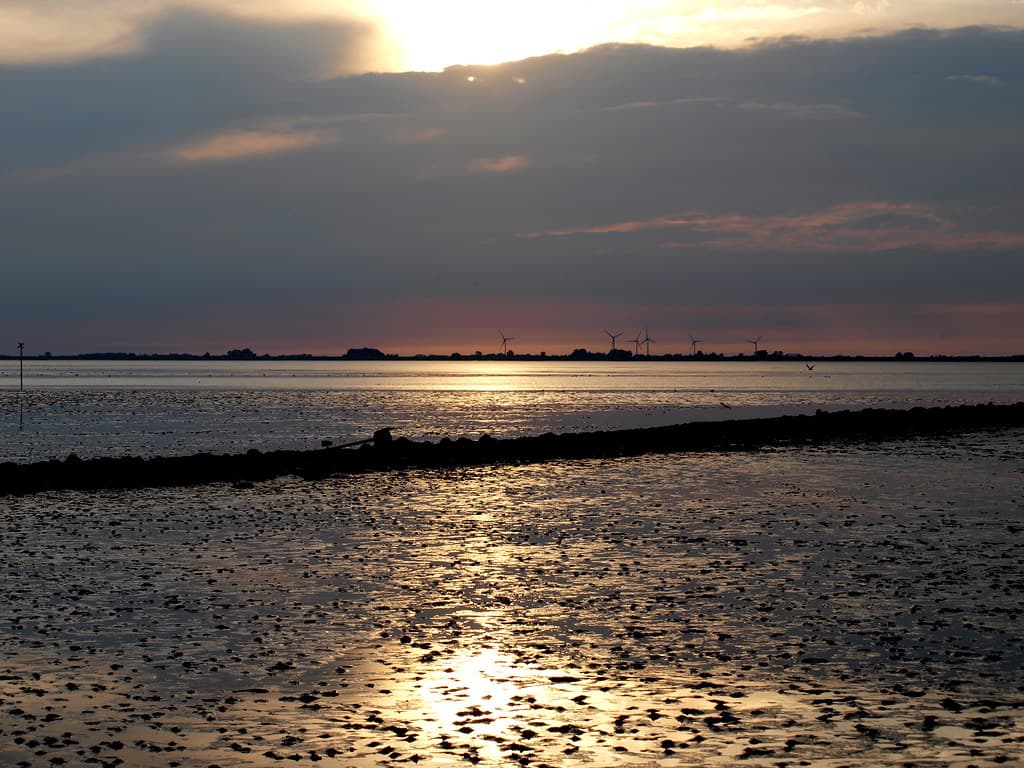
Reußenköge sits at the frayed northern edge of Germany's North Sea coast, a place where the land seems uncertain whether to continue or dissolve into the Watt. The beach—if you can call these tidal flats a beach—belongs to farmers and fishermen more than tourists. Salt meadows stretch inland, cross-hatched by drainage ditches, while the sea arrives and departs on its own unpredictable schedule.
The wind never stops. It races across the flatlands unimpeded, carrying the scent of kelp and wet sand, bending the grass into waves. When the tide recedes, you can walk out onto the ribbed seabed, following rivulets that glint in the afternoon light. Curlews probe the mud; gulls wheel overhead, their cries swallowed by the gusts. The sky dominates everything—vast, changeable, streaked with weather rolling in from the Danish coast just kilometers north.
 Credit: Unsplash
an aerial view of a small town
 Credit: Unsplash
a dirt road leading to a house
Trek the exposed sea bottom
Spot migratory waders and geese
Watch light flood endless flats
Prime Visitation
Less Crowds
Where it is
Reußenköge Coast Beach
Reußenköge, Schleswig-Holstein, Germany
54.564100°, 8.859200°
Weather
Loading…
Swell
—
Temp
Warm · Restorative
UV Index
Moderate
Wind
—
Tidal State
Last known
Max Sunlight
—
Ideal Shade
—
May - Sep (Peak)
Jan - Dec (Off-season)
Historical data suggests peak visibility and stable sea temperatures occur during the prime visitation window.
Select a category to load nearby places.
Unlock restaurants, luxury stays and curated maritime experiences within 2km
Swimming at Reußenköge Coast Beach requires caution due to tidal conditions typical of the North Sea Wadden Sea region. The beach experiences significant tidal changes, and mudflats become exposed during low tide. Strong currents can occur, especially during tidal shifts. Always check local tide tables before entering the water, stay within designated areas if marked, and never venture onto mudflats alone. The remote nature of this location means fewer lifeguards, so supervision of children is essential. The calm designation refers more to atmosphere than water conditions.
The best time to visit Reußenköge Coast Beach is during late spring through early autumn (May to September) when weather is mildest and daylight extends into evening for spectacular sunsets. Since this beach attracts fewer crowds, visiting during shoulder seasons like May-June or September offers pleasant temperatures with minimal visitors. Summer months provide the warmest conditions but can be windy. The remote location means it remains peaceful even in peak season. Winter visits are possible for nature enthusiasts and storm watchers, though conditions can be harsh with cold winds off the North Sea.
Reußenköge Coast Beach is most accessible by car, located in the remote Nordfriesland region of Schleswig-Holstein. From major cities like Hamburg (approximately 150 km), take the A23 north toward Heide, then follow regional roads toward the coast. Public transportation is limited in this rural area, though regional buses may connect from nearby towns like Husum. The journey requires planning as services are infrequent. Cycling is popular for those already in the region, with quiet country roads leading to the coast. GPS navigation is recommended as signage can be sparse.
Given the remote nature of Reußenköge, accommodation and dining options are limited directly at the beach. Visitors typically stay in nearby towns like Husum or Friedrichstadt, which offer hotels, guesthouses, and vacation rentals. Local farm stays and holiday apartments in the surrounding countryside provide authentic rural experiences. For dining, plan to bring provisions or eat in neighboring villages where traditional North German and regional Frisian cuisine is available. Small cafés and restaurants serve fresh seafood, particularly North Sea shrimp. Advance booking is recommended, especially during summer months.
Reußenköge Coast Beach stands out for its remarkably remote and undeveloped character along the North Sea mainland coast. Unlike popular resort beaches, it offers an authentic Wadden Sea landscape with vast open horizons, expansive mudflats, and grazing sheep on protective dikes. The area provides exceptional opportunities for experiencing dramatic North Sea sunsets without crowds, making it ideal for nature photography and solitude seekers. Its position along the UNESCO Wadden Sea World Heritage Site means rich birdwatching opportunities, particularly during migration seasons. The unspoiled rural atmosphere represents traditional Nordfriesland coastal life.
Photos