
The descent to Bingin feels like entering a secret—133 steps wind through a narrow gulley where surf shops and guesthouses cling to the rock face like barnacles. Halfway down, you'll pass a grandmother selling palm-leaf offerings, her sarong bright against the grey stone. The staircase spits you onto a stretch of sand no wider than a volleyball court at high tide, hemmed in by volcanic boulders and the kind of turquoise water that looks computer-generated until you're standing in it.
“One of the last south Bali surf breaks where the morning lineup still speaks Indonesian first.”
 Credit: Flickr
Enjoy the ocean
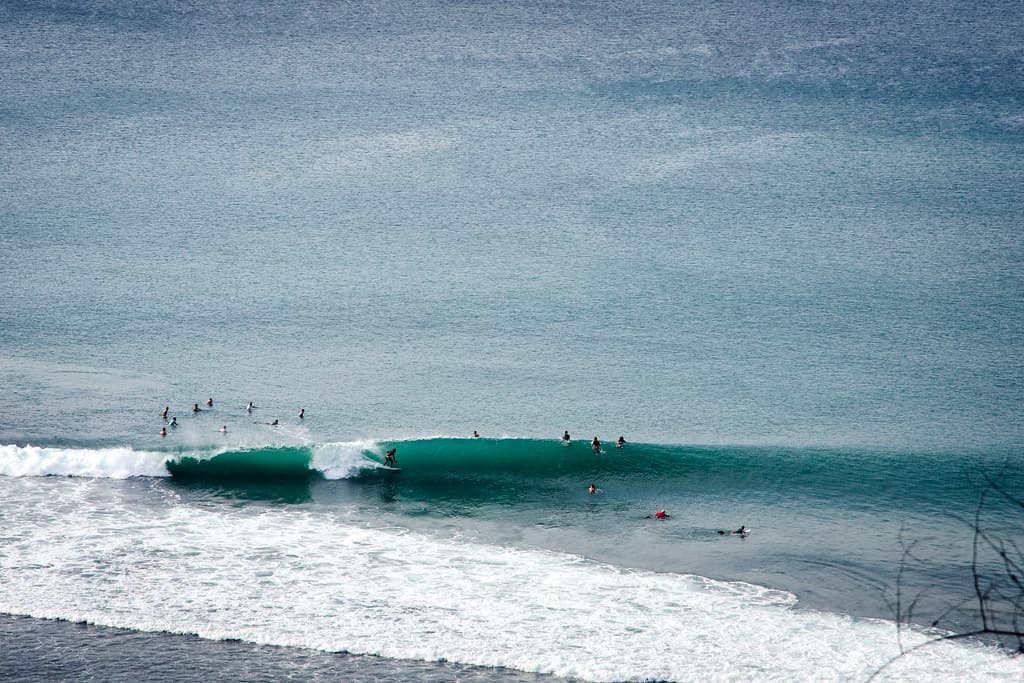
This is Bali's surf beach that tour buses haven't discovered, where the lineup still belongs to Indonesian regulars who paddle out before the sun clears the cliffs. The reef breaks left with mechanical precision over a shallow shelf, and you'll watch bronzed locals thread barrels while you sip young coconut water at one of three bamboo warungs perched on stilts. Low tide reveals tide pools trapped in the pockmarked limestone, and the smell of grilled snapper competes with salt spray.
By late afternoon, the beach transforms into a different theater. Non-surfers arrive with Bintangs tucked under their arms, claiming the few flat rocks that serve as sunset bleachers. The warungs fire up their charcoal grills, and you'll eat rice wrapped in banana leaf while the sky turns the color of rambutan flesh. Stay past dark and you'll navigate the stairs by phone light, legs pleasantly tired, skin tight with dried salt.


