
The Togean Islands float in Tomini Bay like a scattered handful of green jewels, and Poya Lisa Beach occupies a hushed corner of this seldom-visited archipelago. You arrive by wooden longboat, the kind local families use to visit neighboring islands, and step onto sand that's part crushed shell, part powdered coral. Coconut palms tilt at improbable angles, their fronds casting lace shadows across the tide line, while the water—bath-warm year-round—stretches in shades of jade and aquamarine over gardens of staghorn and table coral.
“One of the few remaining Togean beaches where traditional Bajau sea nomad culture unfolds visibly along the same shoreline where you swim.”
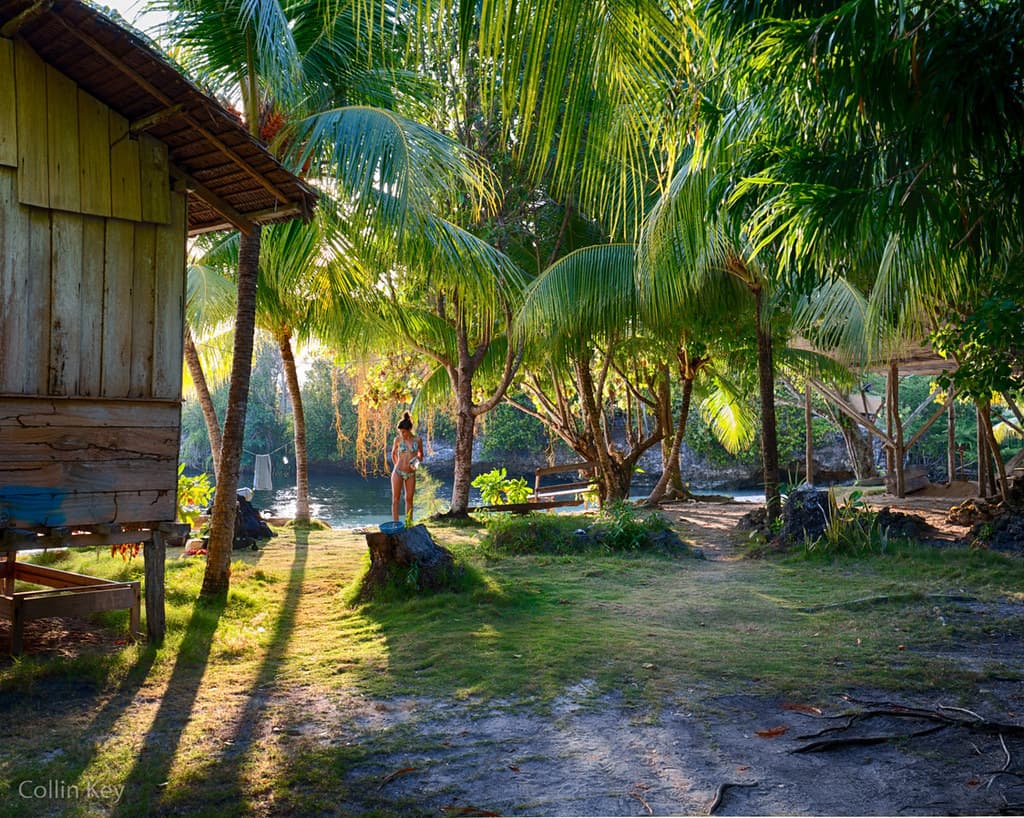 Credit: Flickr
tropical vacation
This is Indonesia before the tour buses: a place where Bajau fisherfolk mend nets in the late afternoon, where the only soundtrack is the rhythmic slap of water against wooden stilts, and where you're more likely to share the beach with a family grilling fresh tuna than with another traveler. The reef begins just a few strokes from shore, shallow enough that you can stand and watch parrotfish nibble at coral heads, then glide over drop-offs where the seafloor disappears into indigo.
Because the Togeans remain off most itineraries—reachable only by a six-hour ferry from Ampana or chartered boat—Poya Lisa retains the unhurried rhythm of island life. Guesthouses are simple: bamboo bungalows with solar-charged batteries, meals served family-style at communal tables. You'll fall asleep to the sound of waves nudging the shore and wake to the scent of clove cigarettes and sweet black coffee drifting from the village kitchen.


