Counting the waves…
Counting the waves…
A refined fusion of water purity, environmental stability, and communal vibrancy for Papuma Beach.
View MethodologyAnalyzed via live sensors and environmental data.
Wave height, wind, and atmospheric stability.
Live footfall and crowd balance metrics.
Community reviews and curated sentiment.
“You'll smell the salt spray before you see the shore at Papuma Beach, where powder-soft sand meets cerulean water and towering limestone stacks cast morning shadows across the tideline. Local vendors grill fresh fish…”
Limited recent visitor reports — live OBI telemetry is your best guide for current conditions.
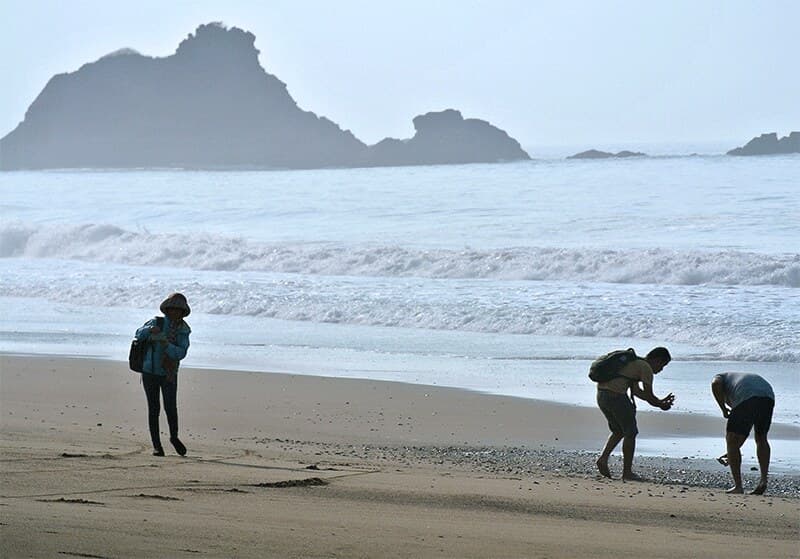
The first thing you notice at Papuma Beach isn't the sand—it's the rocks. Enormous limestone formations jut from the shoreline and shallow waters, worn smooth by centuries of Java Sea swells into shapes that resemble ships, mushrooms, and slumbering giants. You'll weave between them as you walk the shore, discovering tide pools in their shadows and smooth-worn caves where the ocean whispers through openings the size of doorways.
The sand stretches in a generous crescent, fine and bright enough to make you squint on cloudless mornings. Families claim spots early beneath rented umbrellas, while grandmothers wade knee-deep in sarongs and children build castles in the damp sand near the waterline. The swimming is gentle here when the tide cooperates—shallow enough for toddlers, warm as bathwater by midday.
 Credit: Unsplash
A sandy beach with clear blue ocean and green islands
 Credit: Unsplash
a view of the ocean with palm trees in the foreground
Best light two hours before sunset
Check tide tables for calm water
Caves and pools at low tide
Where it is
Papuma Beach
Jember, East Java, Indonesia
-8.432000°, 113.569000°
Weather
Loading…
Swell
—
Temp
Warm · Restorative
UV Index
Moderate
Wind
—
Tidal State
Last known
Max Sunlight
—
Ideal Shade
—
May - Sep (Peak)
Jan - Dec (Off-season)
Historical data suggests peak visibility and stable sea temperatures occur during the prime visitation window.
Select a category to load nearby places.
Unlock restaurants, luxury stays and curated maritime experiences within 2km
Swimming conditions at Papuma Beach vary depending on tides and weather. The beach features large rocks and coral formations that create natural pools, which can be safer for swimming during low tide. However, waves can be strong during high tide and monsoon season, making swimming potentially dangerous. Always observe local conditions before entering the water, stay away from rocky areas during rough seas, and watch children closely. The beach doesn't always have lifeguards on duty, so exercise caution and swim at your own risk.
Papuma Beach can be visited year-round, though the dry season from April to October offers the most reliable weather with sunny skies and calmer seas. The wet season (November to March) brings occasional rain but fewer crowds. Weekdays are generally quieter than weekends when local families visit. For photography, early morning or late afternoon provides the best lighting to capture the beach's distinctive rock formations. Avoid major Indonesian holidays if you prefer a more peaceful experience, as the beach can become quite crowded.
Papuma Beach is located about 40 kilometers south of Jember city center, approximately a 1.5-hour drive. Most visitors rent a car or motorbike from Jember, or hire a driver for the day. Public transportation is limited, though some travel agencies offer tours. The road is paved but winding in sections. There is a parking area at the beach entrance with a small fee (typically a few thousand rupiah). The beach is well-signposted from main roads around Jember.
Papuma Beach has basic facilities including toilets, changing rooms, and small warungs (local food stalls) selling Indonesian snacks, fresh coconuts, and simple meals like fried rice and noodles. There are also vendors offering grilled seafood and corn. Facilities are modest, so bring essentials like sunscreen and towels. For accommodation, most visitors stay in Jember town where hotels and guesthouses are available. A few simple homestays exist closer to the beach, but options are limited. It's advisable to bring drinking water.
Papuma Beach is renowned for its seven large rocks jutting from the ocean, locally called 'Tanjung Papuma' or the seven brothers. These dramatic coral rock formations create a distinctive landscape and are the beach's signature feature. They're popular photography subjects, especially during sunset. The rocks form natural tidal pools that can be explored during low tide. According to local legend, the formations have mythical significance. The unique geological features combined with white sand make Papuma one of East Java's most photogenic beaches.
Photos