

Losari Beach defies every expectation of what a beach should be. No sand, no palms leaning into the breeze—just a long seaside boulevard where Makassar gathers nightly for its most sacred ritual: watching the sun drop into the strait. You'll stand shoulder-to-shoulder with office workers still in their uniforms, students sharing bags of jalangkote, elderly couples on their evening constitutional, all of them turned toward the horizon as if pulled by the same magnetic force.
“The only major Indonesian beach that's entirely urban hardscape, where the city's heartbeat is measured in sunsets rather than sand.”
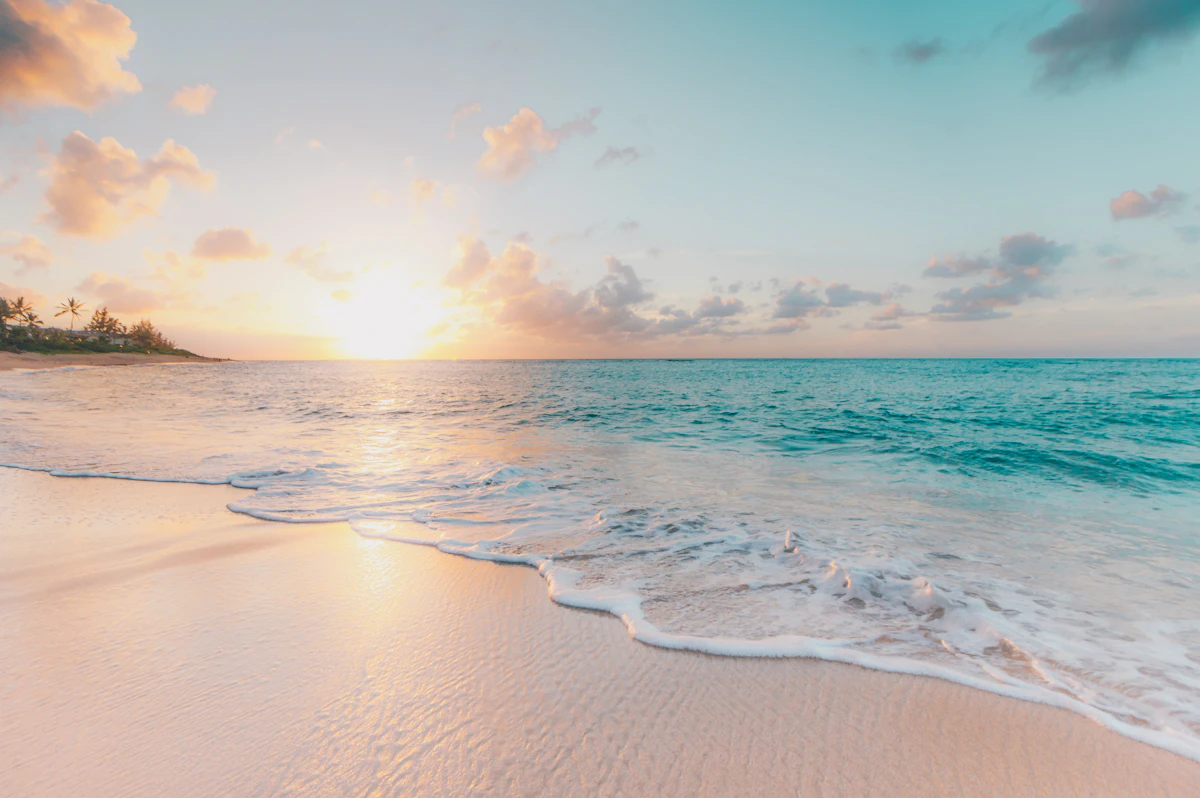 Credit: Unsplash
Aerial view of turquoise tropical bay
The promenade hums with an energy that shifts through the day. Mornings bring joggers pounding the concrete as fishing boats bob in the harbor. By late afternoon, the food carts multiply—smoke rising from charcoal grills, vendors calling out their specialties. The scent of ikan bakar mingles with sweet banana being pressed flat and caramelized, while the calls of balloon sellers compete with the rumble of passing trucks on Jalan Penghibur.
When the sun finally touches the water, turning the strait into molten bronze, the chatter softens. Cameras appear. This is Losari at its essence: not a place to escape the city but to be utterly immersed in it, to understand that in Makassar, the beach isn't separate from urban life—it's the heart of it. The sea breeze carries diesel fumes and salt in equal measure, and somehow that combination feels exactly right.


