
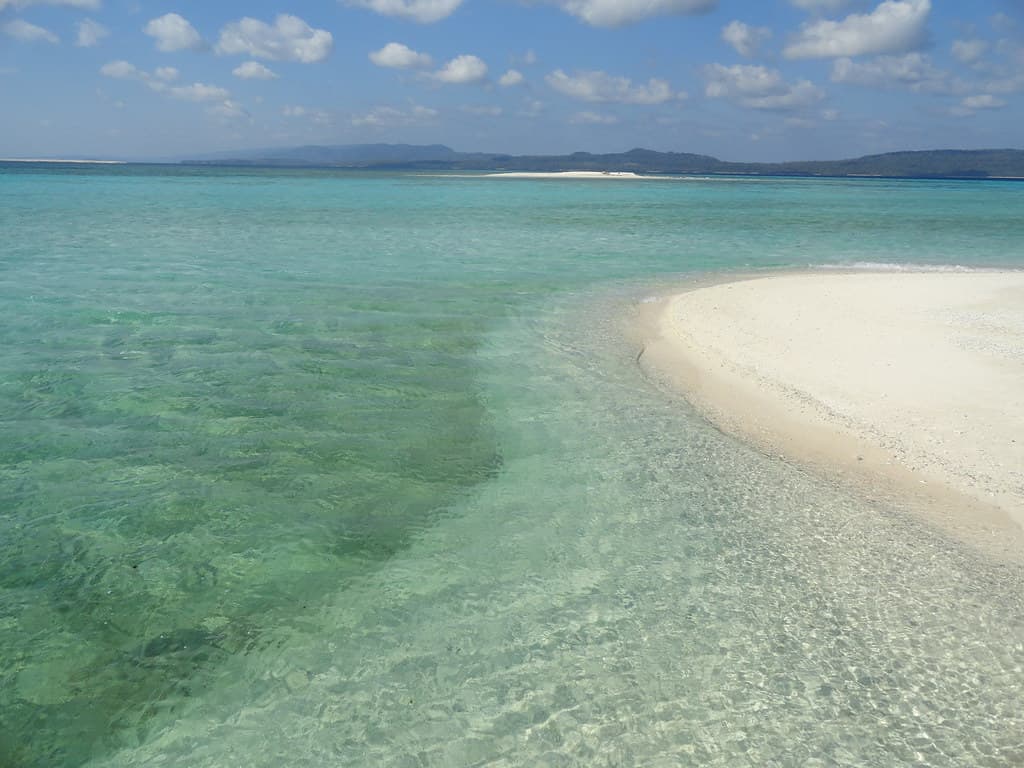
The crossing from Makassar takes seven hours by ferry, and that distance acts as a filter. By the time you reach Selayar's northern coast, the crowds have thinned to a handful of divers and Indonesian families on holiday. The beach curves gently, its sand a mix of coral fragments and volcanic gray, warm underfoot even in the early morning. Fishermen mend nets in the shade of tamarind trees, and outrigger canoes rest on their sides, hulls bleached by salt and sun.
“Selayar sits on a dramatic drop-off where shallow reefs plunge into deep ocean trenches within sight of shore.”
 Credit: Flickr
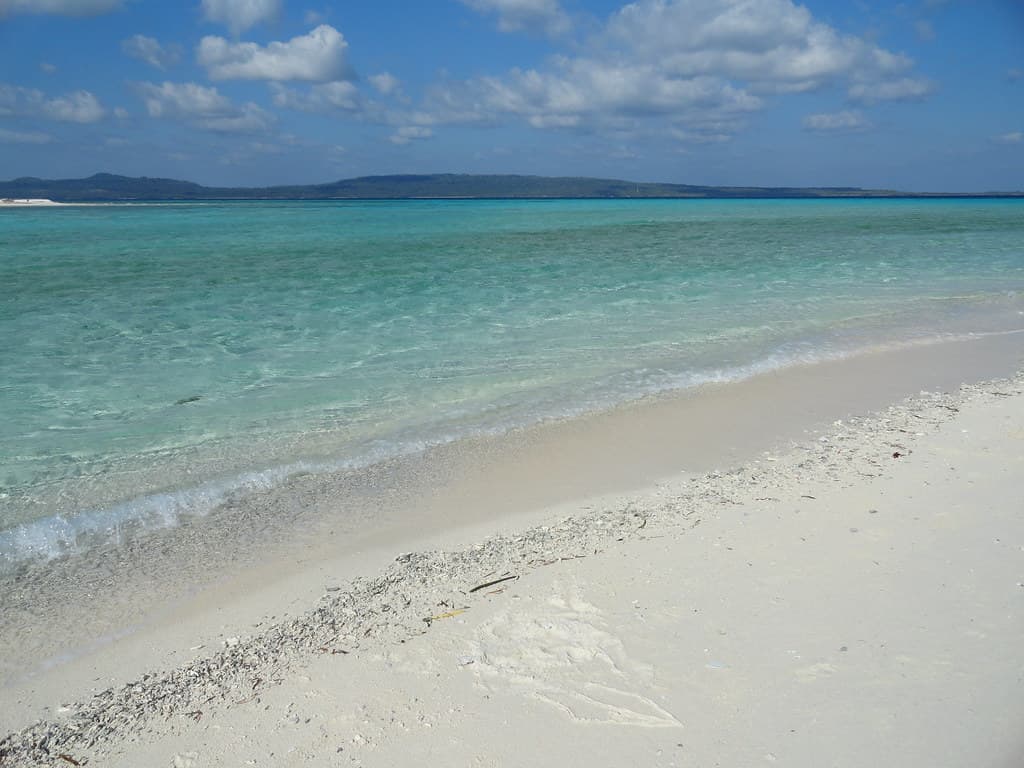
A Remote Sandbank, Selayar Island, South Sulawesi
Beneath the surface, the real geography reveals itself. The island sits on the edge of a continental shelf, and within a short swim from shore, the seabed drops away into blue nothing. Reef fish hover in schools above table corals and sea fans that sway with the current. You'll see hawksbill turtles grazing on sponges, and if you're lucky, a passing pod of spinner dolphins cutting through the channel.
Onshore, life moves to the rhythm of the tide. Mornings bring vendors selling pisang epe—grilled bananas smashed flat and drizzled with palm sugar—and afternoons slow to a halt under the weight of equatorial heat. By evening, the light turns golden, the kind that makes even the most ordinary coconut husk look like something worth photographing. There's no boardwalk, no resorts with infinity pools. Just sand, sea, and the knowledge that you've found one of the last places that hasn't been packaged for easy consumption.


