
Pangandaran curves along both sides of a narrow peninsula that juts into the Indian Ocean, giving you two shores with distinctly different moods. The calmer western beach draws families who wade into gentle surf while vendors balance seafood platters on their shoulders, offering barbecued crab and butter-grilled fish still warm from the coals. The eastern flank faces open ocean, where consistent swells draw surfers and the undertow demands respect.
“One of Java's few beaches where a protected forest meets the shore, offering monkeys and caves alongside surf breaks.”
 Credit: Flickr
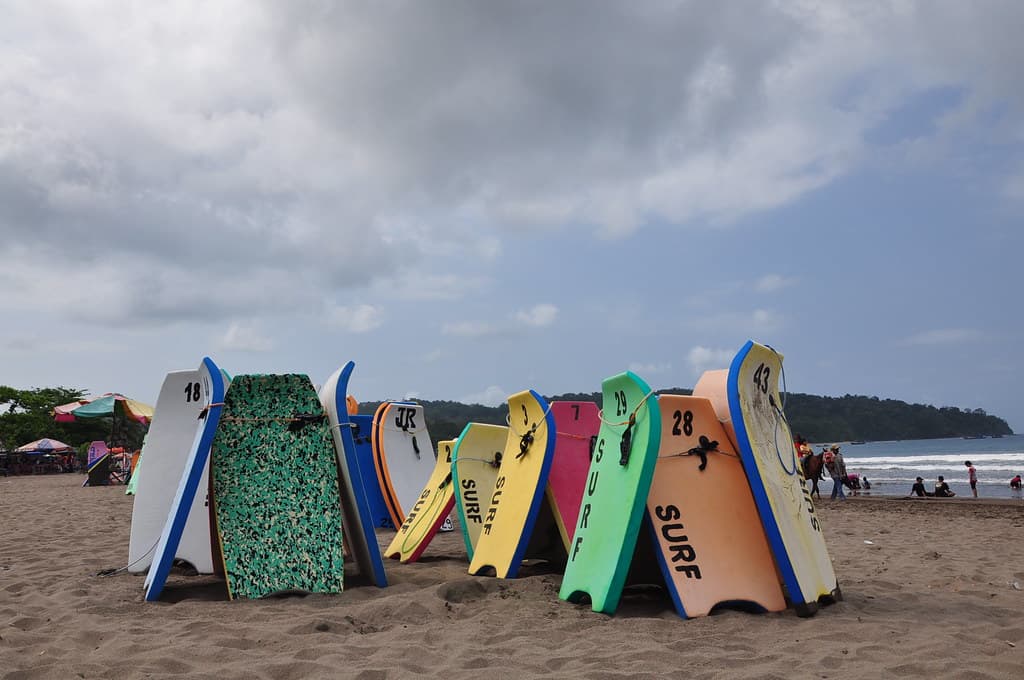
Surfboards
The town itself presses close to the sand—guesthouses with salt-stained balconies, rental shops stocked with bodyboards and snorkel sets, motorbike taxis idling beneath palms. Mornings begin with fishermen hauling nets onto the shore, their boats painted in faded blues and reds, while hawkers set up carts selling es kelapa muda, young coconut water served with a straw and a chunk of soft flesh. By late afternoon, the western promenade fills with Indonesians on weekend holiday, children shrieking as warm waves lap their ankles.
Pangandaran Nature Reserve anchors the peninsula's southern tip, where troops of silver leaf monkeys crash through canopy and cave temples hide in limestone folds. You can walk the perimeter trail in an hour, emerging to catch the sun dropping behind fishing platforms silhouetted against bands of orange and magenta—a ritual that draws applause from the assembled crowd each clear evening.


