
You reach Nipah Beach by following a rutted lane through tobacco fields and cassava plots, past chickens scratching in red dirt yards, until the road simply ends at a fringe of palms. The beach announces itself not with signage or hawkers but with the low hum of diesel engines as fishermen prep their jukung for the evening run. The sand here is gunmetal grey, volcanic grit that heats quickly underfoot and contrasts sharply with the turquoise shallows.
“Nipah remains one of Lombok's last working fishing beaches where tourism hasn't displaced the daily catch.”
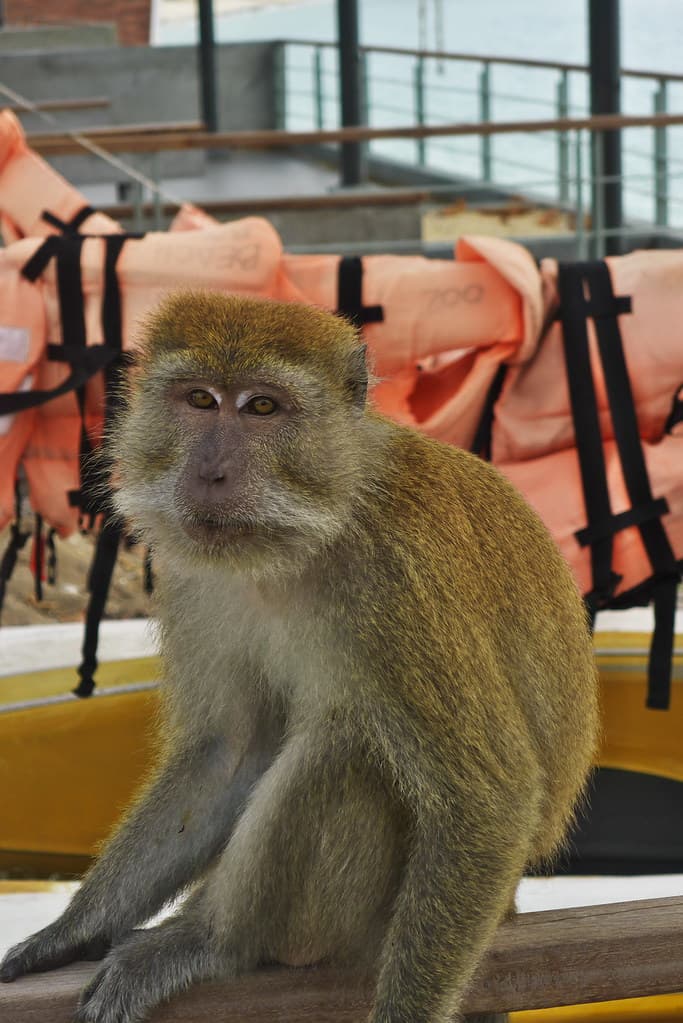 Credit: Flickr
Long-Tailed Macaque, Pangkor Island
Mid-morning, the bay becomes a workroom. Nets spread across the sand in tangles of nylon and cork, men hunched over tears with needles made from bone. A few warungs operate from family front rooms, serving iced tea and nasi campur on wobbly plastic tables, the kind where the proprietor yells your order back to a kitchen you can't see. The swimming is calm, the water shallow for fifty meters before dropping into deeper channel currents that sweep south.
By late afternoon, the fishing families have retreated indoors and the beach empties entirely. The light turns amber, then rose, illuminating the silhouette of Bali's Mount Agung across the strait. You'll hear the call to prayer from the village mosque, carried on wind that smells of clove cigarettes and grilled fish. This is Lombok without the gloss, a shore where tourism remains an afterthought and the rhythms belong entirely to the tides.


