
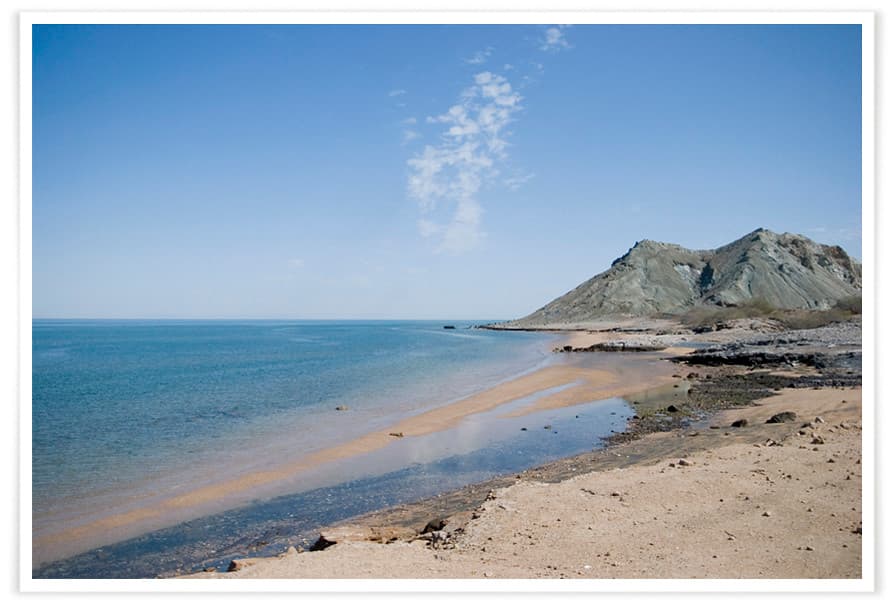
Step onto Hormuz Island's Red Beach and prepare for a sensory experience unlike any other. The sand here is a deep, rusty red, a striking testament to the island's unique geology. This rich coloration comes from hematite, a mineral that has painted the landscape in hues of terracotta and vermillion, making the coastline a living canvas.
“The Red Beach is irreplaceable for its intensely pigmented sand, a natural phenomenon that dyes the shoreline and the water in shades of crimson.”
 Credit: Flickr
Red Beach — photo by Recovering Sick Soul
As the waves lap at the shore, they churn the crimson particles, creating a pinkish foam that dissolves back into the blue-green depths. The visual impact is profound; a ribbon of intense color separating the arid, ochre cliffs from the vast, shimmering expanse of the Gulf. It's a place where the earth itself seems to blush.
Beyond its striking appearance, the red earth of Hormuz has been historically valued for its pigment, used in everything from cosmetics to paints. Today, it offers travelers a chance to witness a natural wonder, a beach that truly stands apart, inviting contemplation of the planet's raw, artistic power.


