

The approach to Cala Verde begins where the coastal road turns inland, marked only by a gap in the guardrail and a footpath worn smooth by years of use. The descent is steep enough to require hands on rock in places, and the scent of Mediterranean scrub—rosemary, thyme, something resinous you can't name—rises in the heat. Below, the cove reveals itself in stages: first the aquamarine water, then the curve of rock that shelters it from the north, finally the narrow strip of coarse sand at the waterline.
“The challenging access and lack of road proximity have preserved Cala Verde as a self-selecting destination for those willing to work for their swim.”
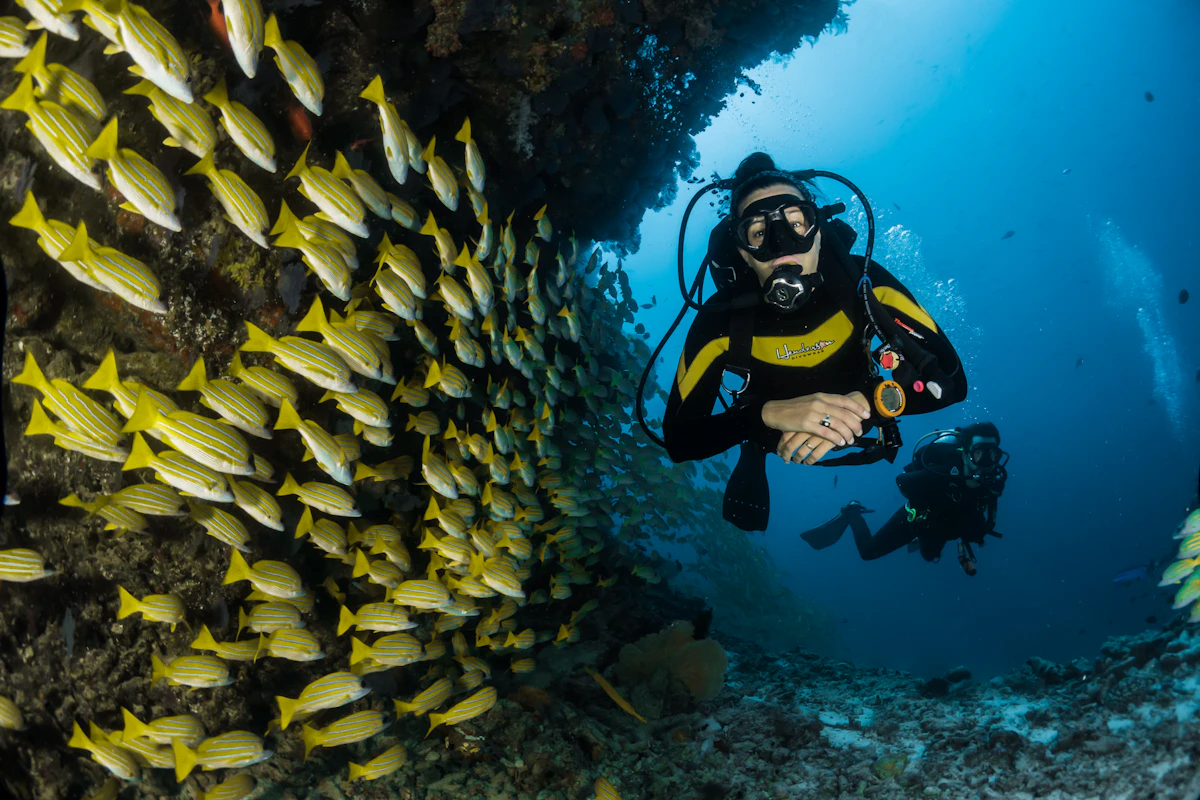 Credit: Unsplash
Palm trees framing a sunset shore
This is an intimate beach, twenty meters wide at most, where a dozen people constitute a crowd. The water is remarkable—so clear that you can watch your own shadow move across the seafloor as you swim, and the rock formations create channels and pools that shift from turquoise to deep blue depending on depth and light. Small fish gather around the rock edges, and if you swim out to where the cove opens to deeper water, the seabed becomes a landscape of boulders and sandy valleys that beg exploration with a mask.
There are no services, no trash bins, no cellular signal strong enough for streaming video. What you carry in, you carry out. The rock walls provide some afternoon shade, and experienced visitors know to arrive with an umbrella or resign themselves to seeking refuge in the small caves that pock the cliff face. By late afternoon, when the sun angles in from the west, the water lights up like backlit jade.


