

You approach through farmland—olive groves giving way to artichoke fields, then wild grasses and the sudden horizontal expanse of the Ionian. The tower stands exactly where it stood in the sixteenth century, when it was one link in a chain of coastal warnings against Ottoman raids. Its upper section has crumbled, but the lower walls remain thick enough to hold the day's heat well past sunset. The beach spreads from its base, wide and gently sloping, the sand here finer than on the Tyrrhenian coast, almost powder in the dry zones above the tideline.
“The intact Saracen tower anchors the beach in centuries of coastal defense history, its presence a tangible link to Mediterranean conflicts.”
 Credit: Unsplash
Aerial view of turquoise tropical bay
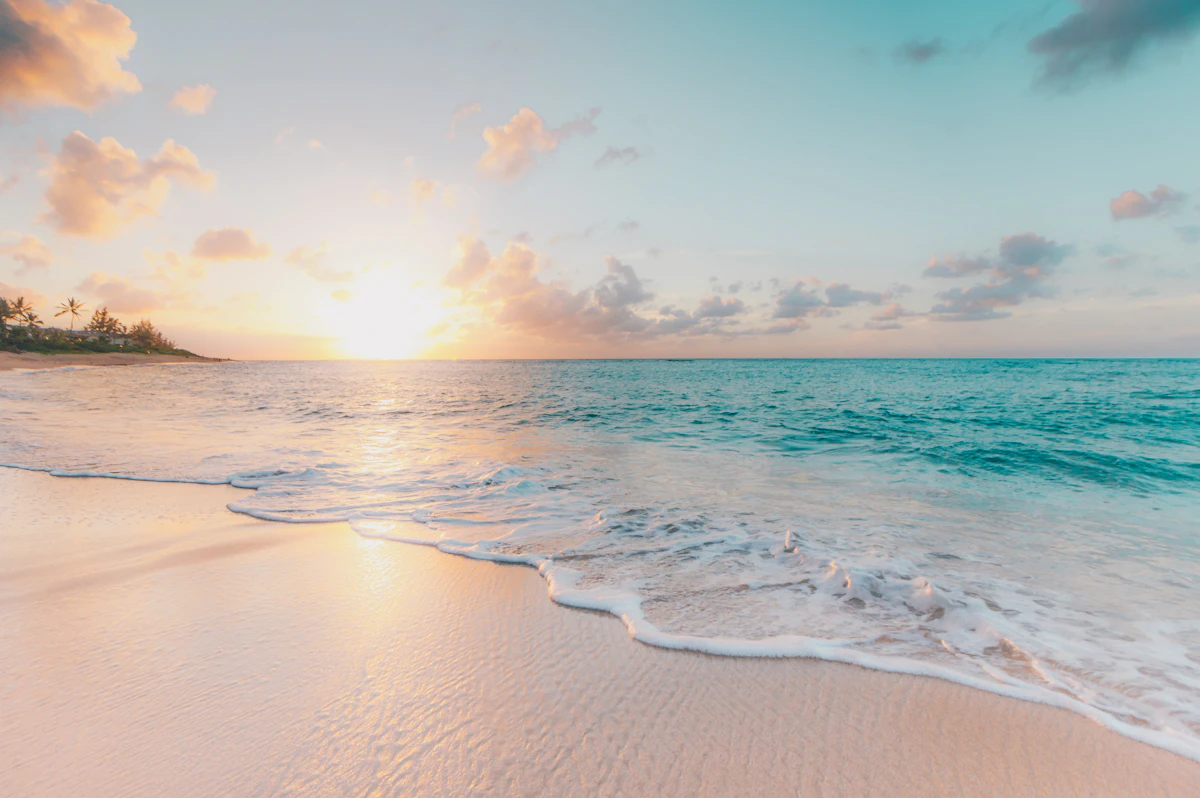
The water is bathwater warm in summer, shallow for thirty meters out. You can wade to knee-depth and still see your toes clearly, the seafloor a uniform beige interrupted only by occasional shells and the small crabs that scatter at your approach. The gentleness is absolute—no rocks, no sudden drops, no dramatic currents. Children dig elaborate canal systems in the wet sand, their engineering projects lasting until the tide shifts. Families stake umbrellas in loose rows, the fabric snapping in the sea breeze that picks up each afternoon, coming off the water with enough force to cool the air by several degrees.
The beach lacks the dramatic cliffs and coves that define Maratea's western coast. What it offers instead is space—room to walk for a kilometer in either direction without navigating crowds, distance from your nearest neighbor, the particular freedom that comes from horizontal expanse. The tower provides the only vertical element, a reminder that this coastline has always mattered strategically, that the sea's tranquility is a recent condition, historically speaking. At sunset, the tower's shadow reaches across the sand like a sundial, measuring the day's end in lengthening darkness.


