
You'll feel each stone through your towel—oval river pebbles in bands of slate gray, rust, and bone white, worn smooth by centuries of Ionian tides. The beach curves in a tight crescent, maybe two hundred meters across, backed by a narrow road and then the immediate climb of terraced hillsides planted with bergamot and lemon trees. When the sun peaks, the citrus scent intensifies, mixing with salt and the faint diesel tang from fishing boats beached on the stones.
“The southernmost beach of mainland Calabria's Greek-speaking region, where linguistic and geographic isolation preserved medieval Hellenic culture.”
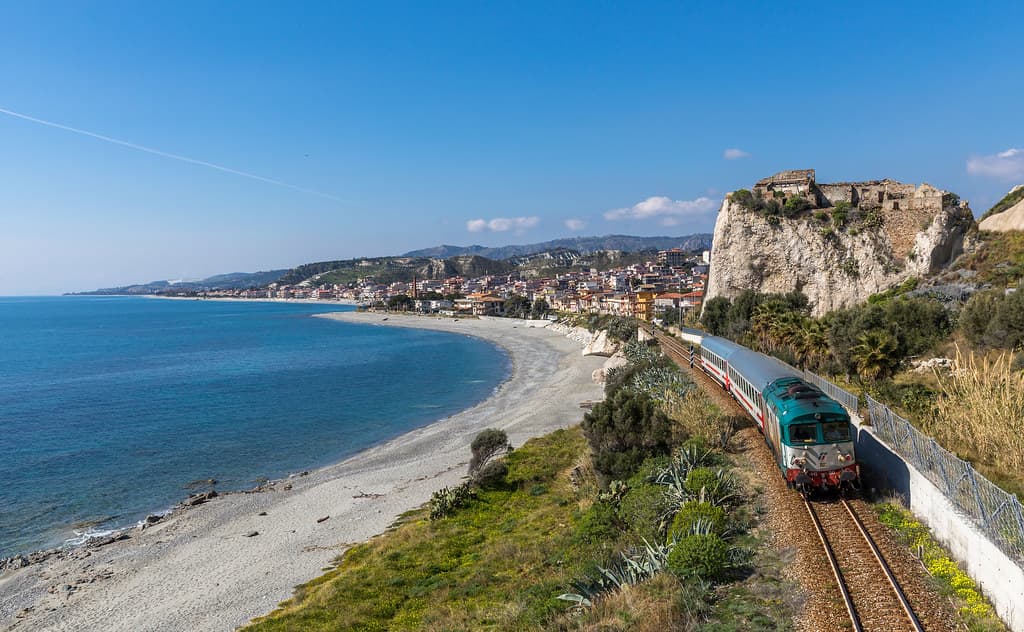 Credit: Flickr
Palizzi Marina Beach — photo by david_gubler
The water deepens quickly. Three steps in and you're swimming, the seafloor visible through ten meters of cobalt blue. Small fish dart between submerged rocks at the cove's edges. By late morning, the sea surface turns glassy, interrupted only by the occasional passing trawler heading toward Bova Marina. The water temperature in July hovers around twenty-six degrees—warmer than the Tyrrhenian side, locals will tell you.
Palizzi itself clings to the mountain high above, a cluster of ochre houses where old men in the piazza still greet each other in Grecanico, the Greek dialect that survived two millennia here. Down at the marina, a single taverna serves swordfish caught that morning, grilled over lemon wood, the flesh flaking apart under your fork.


