

The castello sits on its limestone bluff like something from a fever dream—ochre walls rising straight from rock, crenellations sharp against the sky. Below, the beach stretches in a long curve of rounded stones that click and shift with each wave. You spread out where the beach widens near the torre, where Aleppo pines offer morning shade and the stones have been polished smooth by centuries of tide. The fortress above dates to the eleventh century, built by Normans who recognized the strategic value of this headland guarding the gulf.
“The only Calabrian beach where a medieval fortress rises directly from the swimming shore, creating a composition photographers chase across all seasons.”
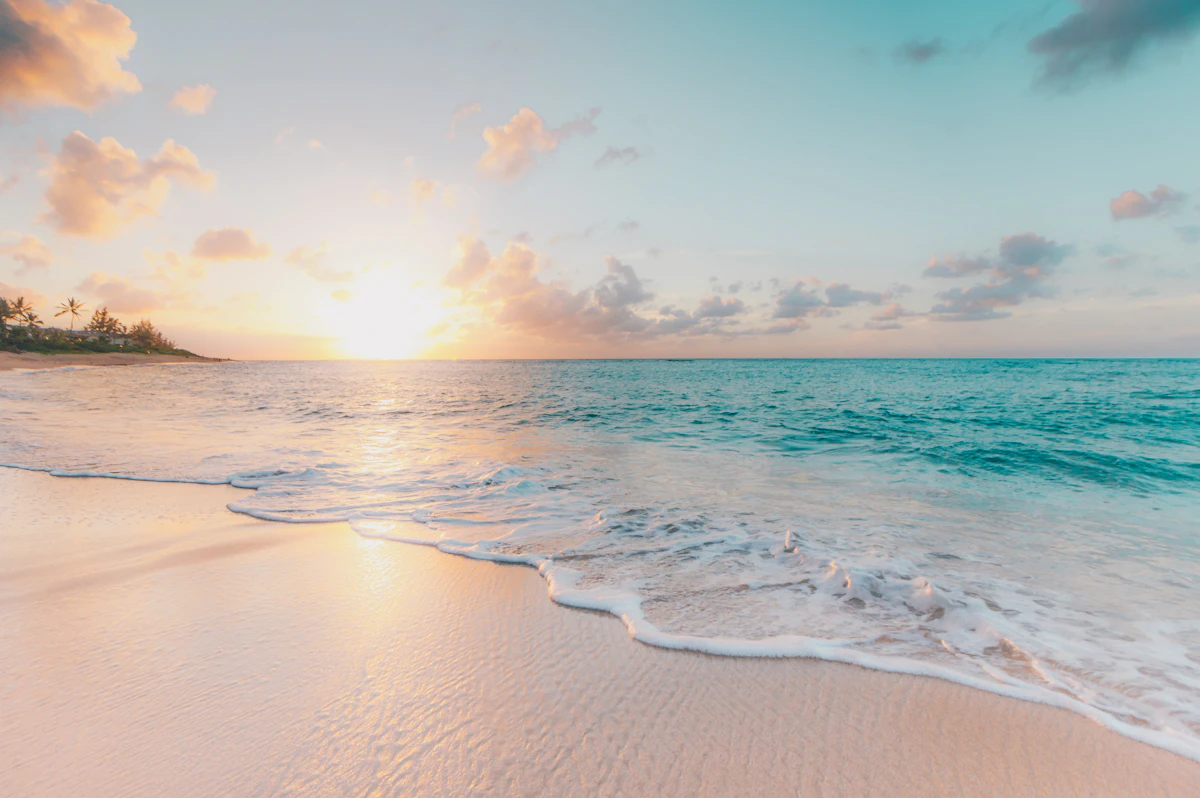 Credit: Unsplash
Aerial view of turquoise tropical bay
You enter water so clear the pebbled bottom remains visible even as you tread water twenty meters out. The shore drops sharply—within a dozen steps you're swimming, the sea floor falling away into channels where spigola and orata cruise. Small waves slap the stones with a rhythmic clatter, a sound that changes pitch as pebble sizes shift along the beach. By midday the stones radiate heat; you move constantly between water and towel, each immersion a reset, each emergence to bake a little more bronze.
The town climbs the hill behind the beach—whitewashed houses with green shutters, balconies dripping geraniums, a lungomare where locals take the passeggiata after the heat breaks. A handful of lidos rent umbrellas and serve swordfish caught that morning off Punta Alice. At sunset, light turns the castello the color of raw sienna and throws its shadow across the entire beach, a sundial marking the day's end.


