
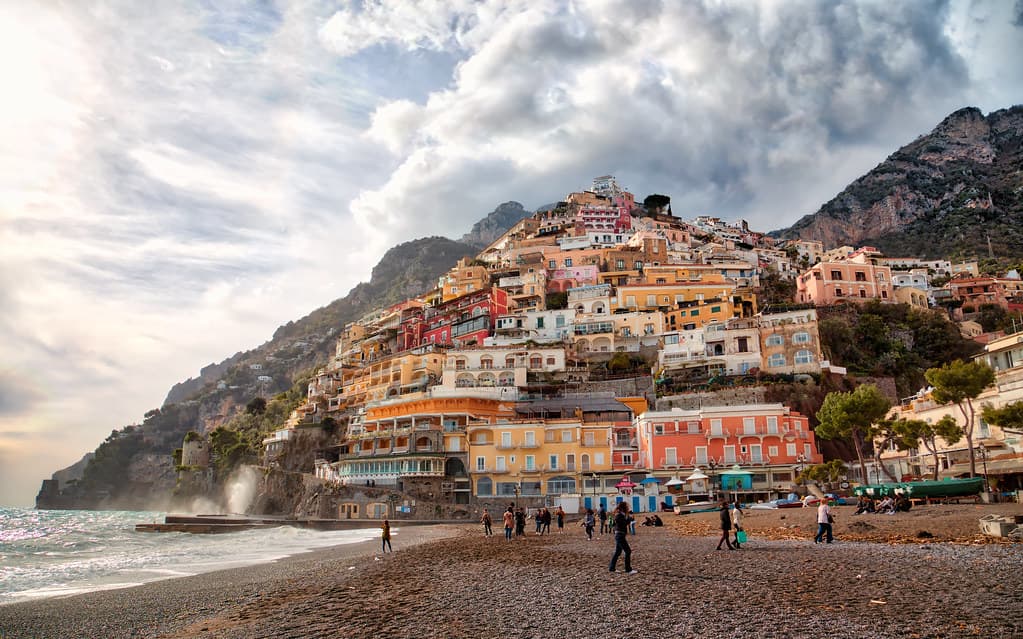
You count one hundred thirty-seven steps descending from the coastal road, the staircase switching back through gardens where lemons hang heavy enough to touch. The cove reveals itself in stages—first the turquoise water, then the cluster of fishing boats, finally the narrow strip of mixed pebble and rock platform barely wide enough to spread your towel without touching your neighbor's. Cliffs bracket the space so tightly that the sun reaches the water only between eleven and three, their limestone faces pocked with dark openings where swallows nest.
“The Amalfi Coast's most intimate swimming spot, where vertical geography creates isolation despite proximity to the coastal road.”
 Credit: Flickr
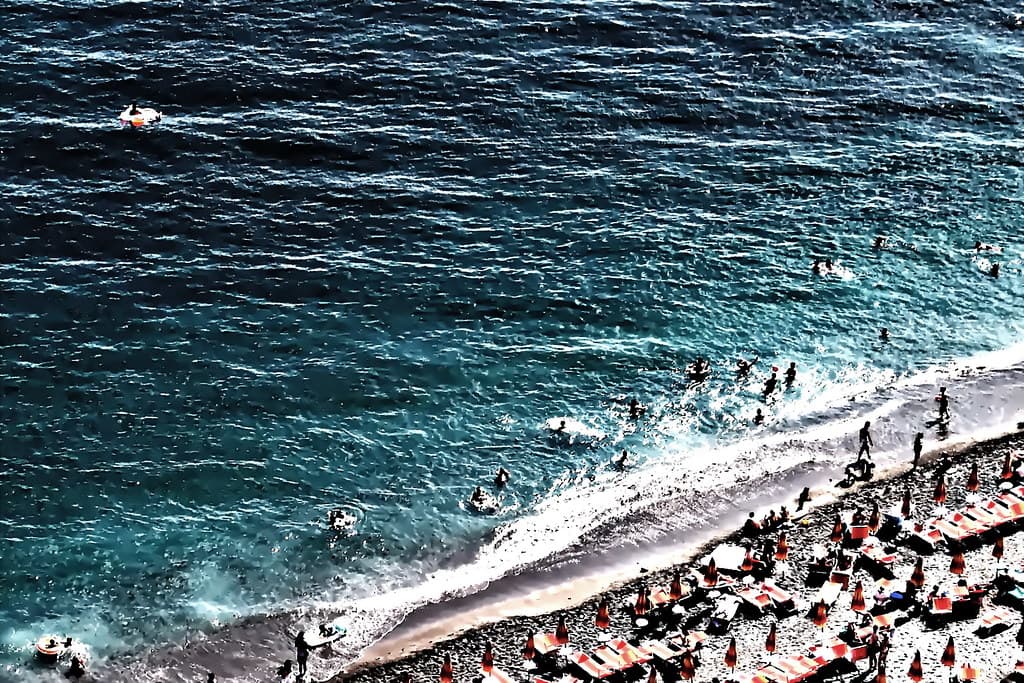
Marina di Conca — photo by VV Nincic
The gozzi bob at permanent moorings, their hulls painted the faded blues and greens of workboats maintained by habit rather than vanity. Fishermen arrive mid-morning to bail bilges and check lines, exchanging brief nods with the handful of swimmers who've claimed the rocks. You enter the water from a concrete platform slick with algae, the depth immediate and startling, the cold rising from some subterranean spring that keeps this cove ten degrees cooler than beaches a kilometer away.
Underwater, the bottom drops along a boulder field where damselfish guard territories and octopuses wedge into crevices at your approach. You surface to find the boat owners have departed, leaving only the rhythmic knock of hulls against fenders and the distant whine of Vespas navigating the corniche above. By mid-afternoon shadow reclaims the cove entirely, and you face those hundred thirty-seven steps back up, legs shaking, lungs grateful for the lemon-scented pauses where the stairs level briefly between flights.


