

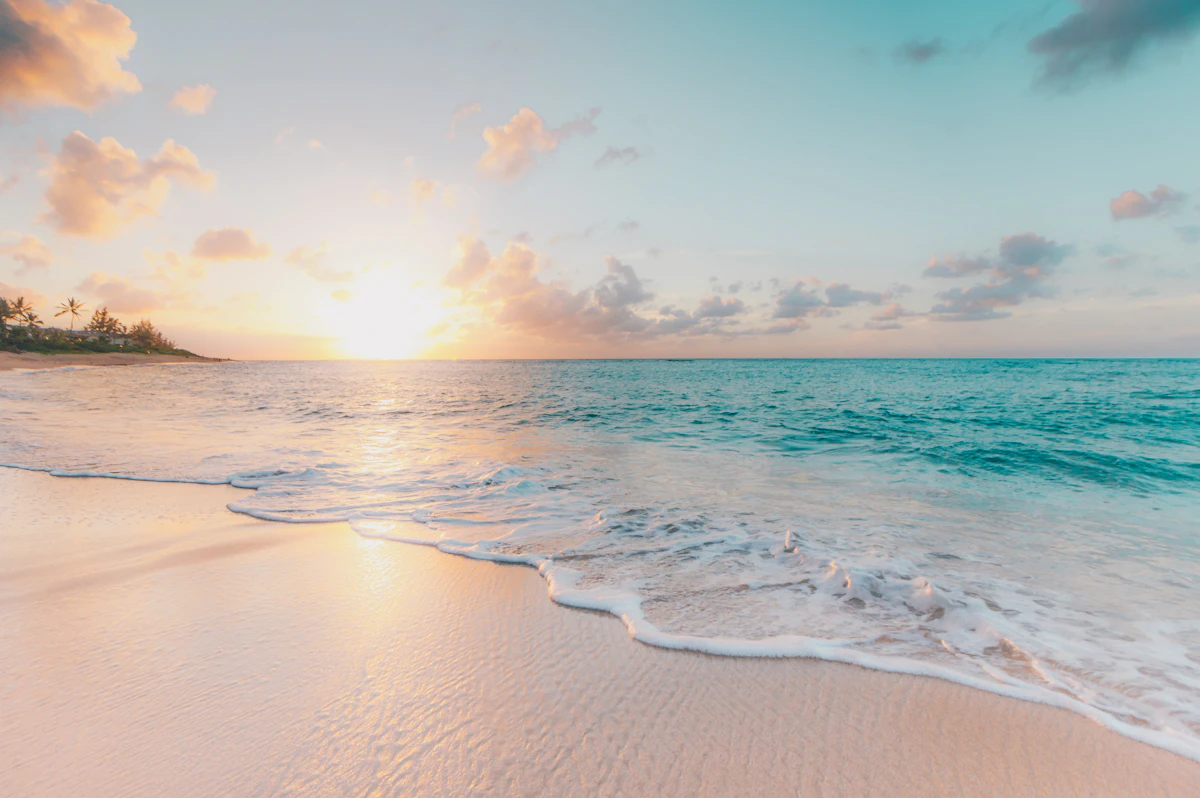
The beach stretches for kilometers along the Tyrrhenian, a generous ribbon of tawny sand backed by the town's lungomare and the railway line that stitches Calabria's western coast together. You can hear the trains from the waterline—the clatter and hiss as they pull into the station—but the sound becomes background, blending with the waves and the chatter of beachgoers. Lidos line the shore in close succession, their umbrellas planted in ruler-straight rows, while patches of free beach offer space for those who prefer to bring their own setup.
“Few Calabrian beaches are as accessible or as central—this is where the region's coastal life and transport networks meet.”
 Credit: Unsplash
Aerial view of turquoise tropical bay
This is a town beach in every sense: locals claim their favorite spots with the ease of habit, vendors circulate selling taralli and cold beer, and the beach bars serve espresso and cornetti alongside sunscreen and inflatable toys. The water is warm and shallow, the waves gentle, and by midday the scene is in full swing—kids splashing in the shallows, teenagers tossing a volleyball, retirees sitting in the shade reading La Gazzetta dello Sport.
Come evening, the lungomare fills with the passeggiata crowd. Pilgrims from the Santuario di San Francesco mix with townspeople and summer visitors, all strolling the promenade as the sun sinks behind the headland. The smell of fritto misto drifts from the restaurants; gelaterias do brisk business. This isn't a beach for solitude or quiet romance—it's Paola's public living room, where the rhythms of a coastal town play out in full view.


