

The sand beneath your towel isn't the postcard white of the east coast—it's gunmetal gray, flecked with minerals that shimmer when wet. This chromatic difference tells Scivu's story: you're on mining country shores where oxidized metals once washed down from the mountains, coloring everything they touched. The beach runs for nearly two miles, backed by dunes that crest forty feet high in places, their windward faces carved into ripples that mirror the waves offshore.
“The dark, mineral-rich sand carries the geological signature of Sardinia's mining era, creating a beach unlike any other on the island.”
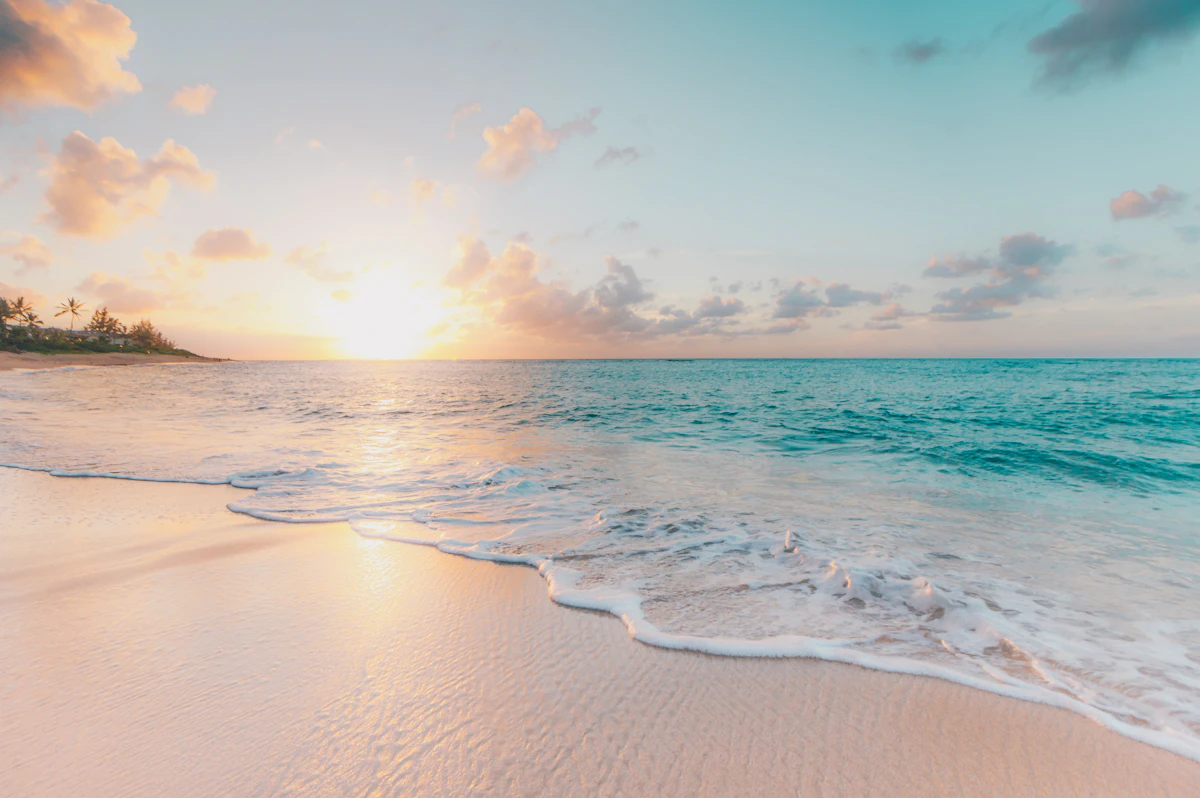 Credit: Unsplash
Aerial view of turquoise tropical bay
Reach the waterline and the Mediterranean stretches uninterrupted to Africa. The exposure means waves arrive with force here, sculpting the shore into a dynamic landscape that reshapes itself with every storm. After ponente winds, you'll find the high-tide line decorated with polished driftwood, tangled fishing line, and occasionally the iridescent glass floats that still escape from North African nets. The water temperature runs cooler than the protected eastern gulfs—the offshore Sardinian current brings deeper water close to shore.
Above the beach, the dune ecosystem thrives in isolation. Juniper bushes twisted by constant wind anchor the sand, while sea holly and immortelle survive on salt spray and minimal rainfall. Footpaths worn by sheep and the occasional shepherd traverse the dune crests, offering views that encompass the entire southwest coast from Capo Pecora to Capo Frasca.


