

You descend a staircase carved into the cliff face, iron handrails streaked orange with rust, and emerge onto a platform of wind-sculpted limestone. The rock underfoot is pitted with pockets where seawater evaporates into lace patterns of salt. Local teenagers sprawl on beach towels wedged into the flatter sections, their phones propped on backpacks, earbuds blocking out the slap and hiss of surf against stone.
“A swimmers' coastline that has resisted the transformation into a beach resort, staying raw and functional.”
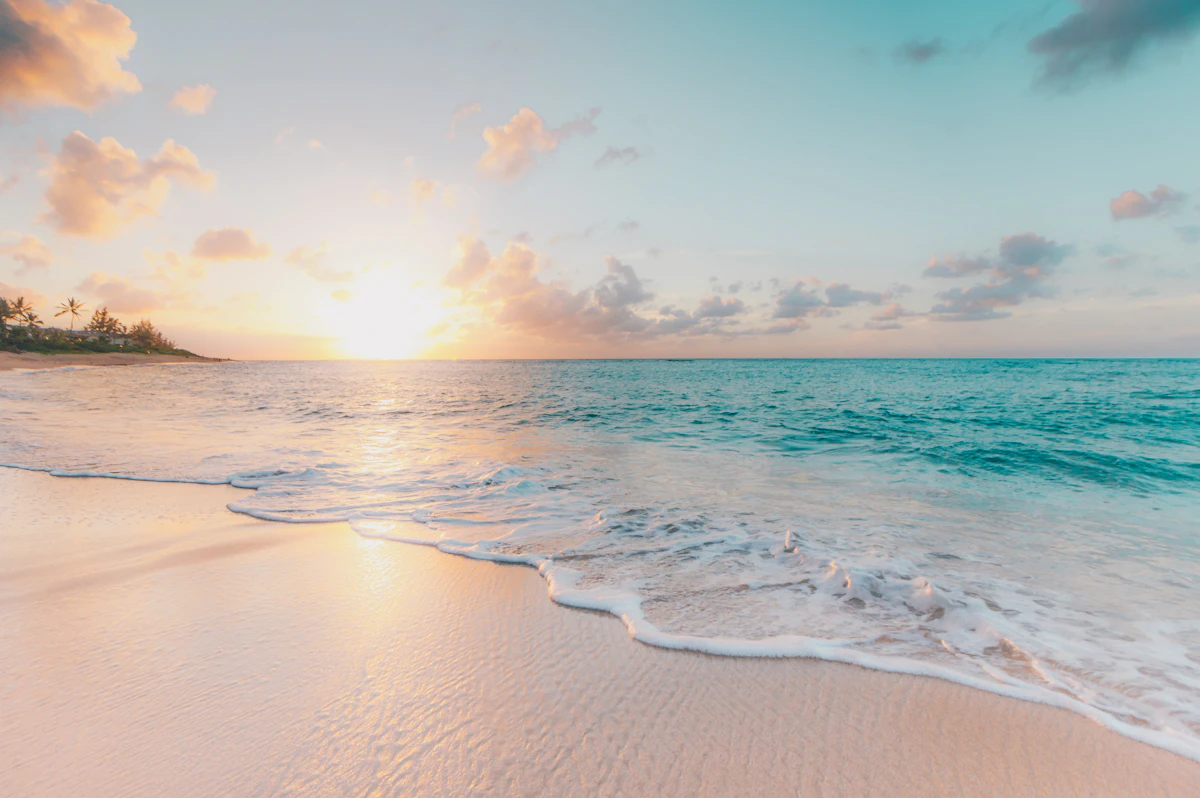 Credit: Unsplash
Aerial view of turquoise tropical bay
The water here is absurdly transparent—you can see urchins gripping the submerged ledges three meters down, their spines swaying in the surge. Entry points are marked by worn grooves where generations of swimmers have launched themselves into the blue. You choose a spot where the rock dips smooth into the sea, slide in feet-first, and the cold hits like a hand on your chest. Then you're floating over gardens of posidonia, the ribbon grass bending in the current, damselfish flicking between the blades.
Snorkelers drift along the coastline, following the submerged shelves that drop in steps toward deeper water. An older man surfaces with a small octopus gripping his gloved hand, checks its size, releases it back. By midday the exposed rock becomes a griddle; the only shade comes from beach umbrellas locals have jammed into crevices. This is not a beach for lounging—it's a place for swimming hard, diving deep, then retreating to a beachside bar in Quartu for cold beer and conversation.


