
You step onto sand the color of charcoal, fine grains warming under your feet as the Ionian laps at a shore born from ancient eruptions. Mount Etna rises to the north, its plume threading the sky, a reminder that this beach exists because the volcano willed it. Beach clubs stud the kilometers-long strand, their blue loungers rented by the half-day, while free stretches fill with Catanesi spreading towels on unadorned sand.
“Volcanic black sand beneath an active stratovolcano creates a rare urban beach where geology writes the color palette.”
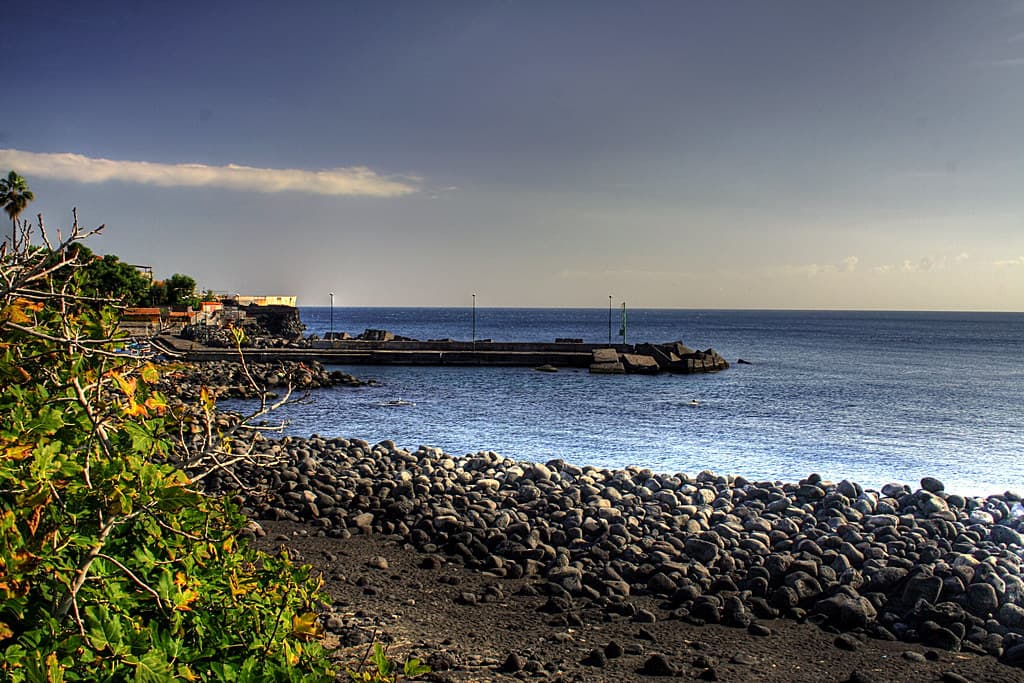 Credit: Flickr
Playa di Catania — photo by pallotron
The vibe tilts urban and unpretentious. Joggers pound the lungomare at dawn; by afternoon, beach volleyball nets draw crowds and shouts. Vendors weave between sunbathers selling coconut slices and cold beer. When the sun dips, the strip transforms—bars along Via Playa pump house music, and tables spill onto the pavement for aperitivo, glasses of Aperol catching the last coral light.
This is not a beach you visit for solitude or turquoise reverie. You come because Catania lives here, because the sand is real and gritty, because after a morning scrambling through fish markets and Baroque cloisters, you want salt on your skin and a granita di mandorla in your hand. The water stays shallow for dozens of meters, warm enough by June that children wade fearlessly while their grandmothers watch from folding chairs, feet buried in black sand.


