

The beach at Santo Stefano is all pebbles—oval stones worn smooth as worry beads, ranging from the size of quail eggs to your fist. They're warm to the touch by noon, radiating heat even in the shade of the few umbrellas planted in defiant rows by the stabilimenti. Walking across them requires a shuffling gait, and you'll feel each stone's contour through your flip-flops. But once you're in the water, you understand: no sand means no grit, no cloudy swirls, just immediate clarity.
“The beach sits directly beneath Sicily's ceramics capital, where artisan workshops have shaped the town's identity for centuries.”
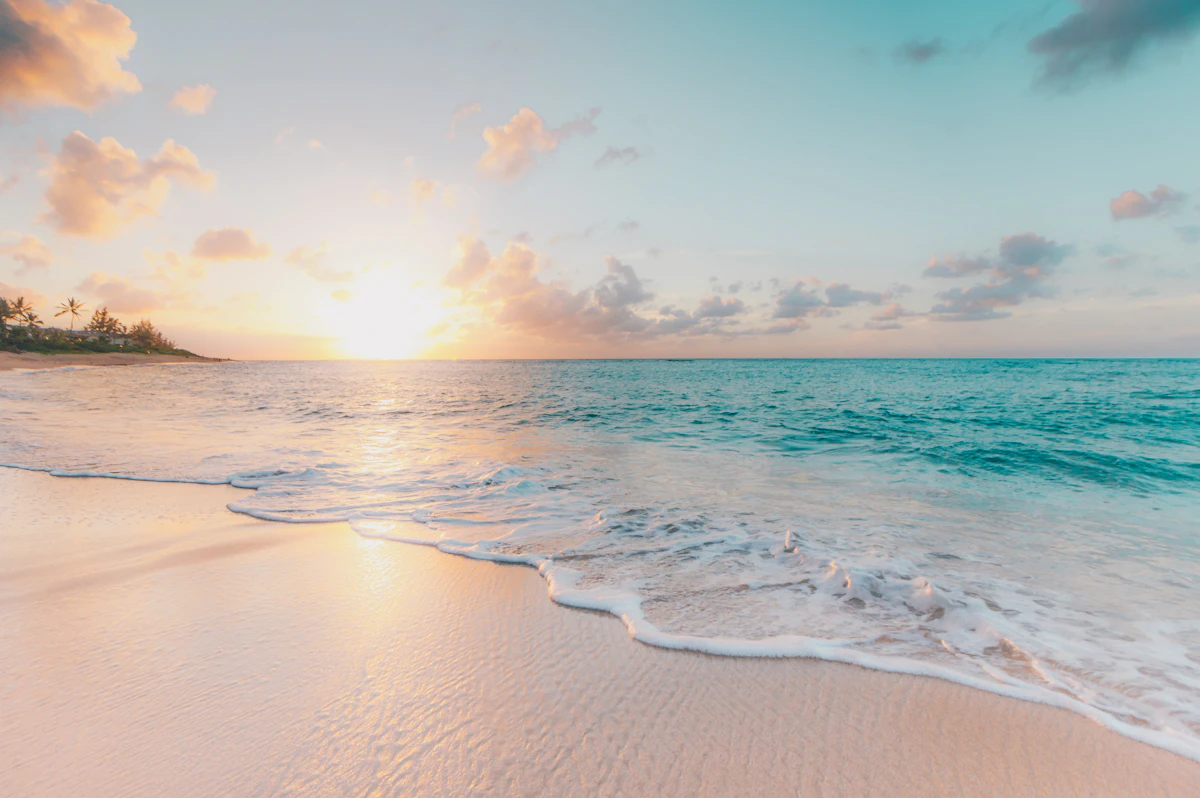 Credit: Unsplash
Aerial view of turquoise tropical bay
The Tyrrhenian here is more assertive than at neighboring beaches—there's a light chop, a bit of pull when the waves retreat. You swim out past the buoy line, where the bottom drops away and the water turns a deeper, more honest blue. Locals paddle inflatable kayaks parallel to shore, and a few teenagers dare each other to dive from the rocks at the eastern edge. The air smells of salt and sun-baked stone, with occasional wafts of espresso drifting down from the lungomare.
After your swim, you climb the hill into town, where every other shopfront is a ceramics studio. Hand-painted plates, tiles, and vases crowd the windows—blues and yellows that echo the sea and sun. You buy nothing, but you spend an hour looking, your feet still damp from the beach. When you return at dusk, the stones have cooled, and the light turns them amber. A fisherman mends his net at the water's edge, humming something tuneless. You sit and listen.


