
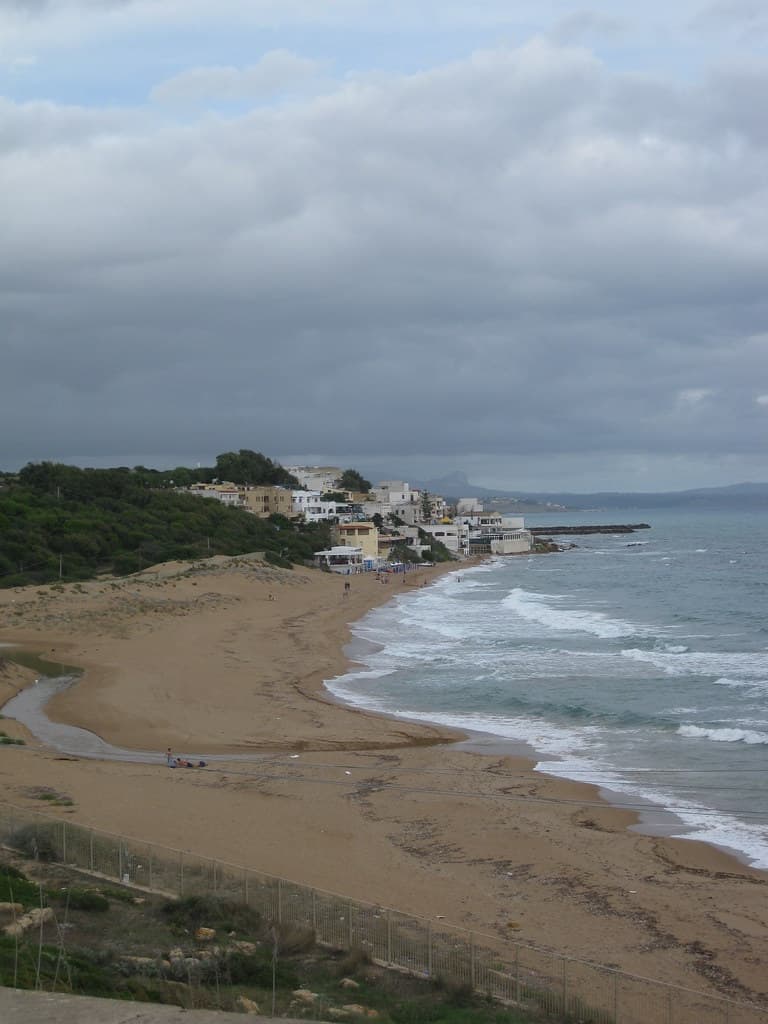
The beach unfolds in a long golden arc, backed by dunes where wild fennel and sea daffodils grip the sandy soil, the same plants that grew here when Selinunte was among the most powerful Greek cities in the Mediterranean. You plant your umbrella in sand that holds fine grains of limestone, likely fragments weathered from the very temples visible on the acropolis three hundred meters uphill. The juxtaposition never grows ordinary: monumental antiquity hovering above vacation simplicity, the profound and the pleasurable sharing the same coastline.
“Where fifth-century Greek temples stand guard over family beach days, making every swim a lesson in the long Mediterranean memory.”
 Credit: Flickr
Marinella di Selinunte Beach — photo by SandShoes
The water enters warm and shallow, perfect for children who build sandcastles in the tidal zone while their parents float in chest-deep clarity. Lidos punctuate the free beach at regular intervals, their ordered rows of lettini and umbrellas providing infrastructure for those who want cold beer delivered to their lounger. You can walk the waterline for nearly two kilometers, the temples maintaining their silent watch, gulls wheeling over both ancient stone and modern sunbathers with equal disregard.
By late afternoon, visitors migrate from the archaeological park to the beach, trading cultural edification for the simple medicine of saltwater and the satisfaction of a day that honors both intellect and body. You'll time your swim for the hour before sunset, when the light turns the temple columns amber and the sea takes on the color of aged bronze, and for a moment you understand why the Greeks chose this exact spot to build their westernmost outpost of Hellenic civilization.


