
The drive north from Fukaura town traces a lonely stretch of Route 101, where the road hugs cliffs and fishing villages appear in brief intervals. Koganezaki sits at the edge of a basalt promontory, its narrow beach framed by weathered rock formations that jut from the surf like ancient guardians. The sand here is dark—volcanic grit that crunches underfoot—and the waterline recedes dramatically at ebb tide, revealing tide pools studded with purple sea urchins and strands of kelp.
“A volcanic headland where the raw Tsugaru coast meets the Sea of Japan in near-solitude, with sunsets that draw only those who know.”
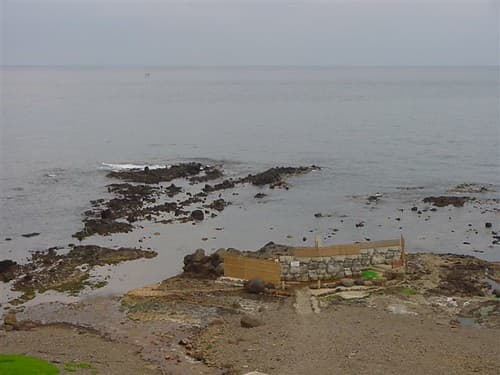 Credit: Flickr
Seaside baths
You come here less for swimming than for the light. Late afternoon softens the coast into pastels; by evening, the sun descends in slow motion, staining the horizon in shades of burnt orange and plum. Locals park along the shoulder and spread blankets on the rocks, thermoses of green tea in hand, watching the day fold into dusk. The wind off the Sea of Japan carries salt and the faint scent of grilled squid from roadside stalls back in town.
In winter, snow dusts the headland and the beach empties entirely, save for a handful of photographers who brave the cold for the contrast of white peaks against gunmetal water. Year-round, Koganezaki remains wonderfully unpolished—no umbrellas for rent, no concession stands, just the coast in its raw, elemental form.


