Counting the waves…
Counting the waves…
A refined fusion of water purity, environmental stability, and communal vibrancy for Natsudomari Beach.
View MethodologyAnalyzed via live sensors and environmental data.
Wave height, wind, and atmospheric stability.
Live footfall and crowd balance metrics.
Community reviews and curated sentiment.
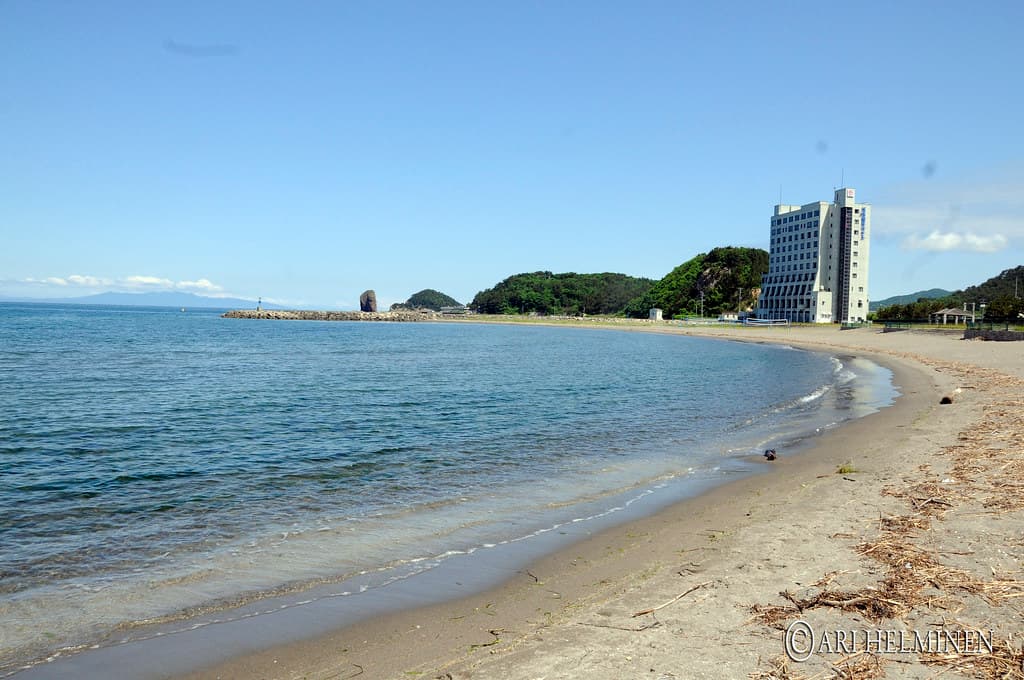
“You'll find this crescent of charcoal sand wedged between forested headlands on Aomori's quieter coast, where the bay's steel-grey water laps against a beach empty even in August. Locals come for dawn walks when the…”
Limited recent visitor reports — live OBI telemetry is your best guide for current conditions.
Natsudomari Beach stretches along the western shore of the Natsudomari Peninsula, a finger of land that juts into Mutsu Bay's cold waters. The sand here is dark—almost black in the early morning—a gift from the region's volcanic ancestry. Pine and cedar forests press close to the shoreline, their roots tangling in the dunes, while the Hakkōda Mountains rise in hazy layers across the bay.
The water stays bracingly cold even in summer, fed by deep currents that sweep down from the Tsugaru Strait. You'll see few swimmers; instead, families spread blankets near the tideline, elderly couples wade ankle-deep, and photographers arrive before sunrise to catch the light breaking over the peninsula's spine. A modest wooden pavilion offers shade, and a handful of concrete tetrapods—those ubiquitous Japanese wave-breakers—cluster at the southern end.
Tropical beach hammock between palms on the Okinawa coast, Japan
Crashing wave at sunset on the shoreline
Ridgeline silhouettes at dawn
Forest paths above shoreline
Fishing co-op sells daily catch
Where it is
Natsudomari Beach
Hiranai, Aomori, Japan
40.940200°, 140.971500°
Weather
Loading…
Swell
—
Temp
Warm · Restorative
UV Index
Moderate
Wind
—
Tidal State
Last known
Max Sunlight
—
Ideal Shade
—
May - Sep (Peak)
Jan - Dec (Off-season)
Historical data suggests peak visibility and stable sea temperatures occur during the prime visitation window.
Select a category to load nearby places.
Unlock restaurants, luxury stays and curated maritime experiences within 2km
Natsudomari Beach is generally suitable for swimming during summer months, though conditions vary with weather and tides. The beach features relatively calm waters protected by the peninsula, making it safer than open-coast beaches. However, always check local conditions before entering the water, as currents can strengthen during storms. Lifeguards may not be present year-round, so swim cautiously. The coastal area can be rocky in places, so water shoes are recommended. Winter swimming is not advisable due to cold temperatures and rougher seas.
Summer (July-August) offers the warmest weather for swimming and beach activities, with temperatures reaching 20-25°C. However, Natsudomari Beach is scenic year-round. Spring brings cherry blossoms to nearby areas, while autumn offers pleasant temperatures and fewer crowds. Winter visits reveal dramatic coastal scenery with snow-capped mountains as backdrops, though swimming isn't feasible. For optimal beach weather, visit between late June and early September. Keep in mind that Aomori's climate is cooler than mainland Japan, so pack layers even in summer.
Natsudomari Beach is located in Hiranai, accessible primarily by car. From Aomori City, drive approximately 40-50 minutes northeast along coastal roads. Public transportation is limited; the nearest train station is Asamushi-Onsen on the Aoimori Railway Line, requiring a taxi or bus connection. Free parking is typically available near the beach, especially during summer season. The coastal drive offers scenic views of Mutsu Bay. For those without vehicles, consider joining organized tours from Aomori City or arranging private transportation.
Hiranai town offers several local restaurants serving fresh seafood and regional Aomori cuisine, though options directly at the beach may be limited. The area is known for scallops and other local seafood. Basic amenities like restrooms are available during peak season. For accommodations, consider staying in nearby Asamushi Onsen, a hot spring resort town about 15-20 minutes away, which offers various ryokans and hotels. Aomori City, 40 minutes away, provides more extensive dining and lodging options if you prefer a day trip.
Natsudomari Beach stands out for its peninsula location offering distinctive coastal views across Mutsu Bay, with the dramatic Shimokita Peninsula visible in the distance. The beach's position creates unique sunrise and sunset perspectives over the water. The surrounding landscape combines sandy shores with rocky outcrops and pine-covered coastal areas typical of northern Japan. During clear days, you can see multiple mountain ranges framing the bay. The relatively remote location means fewer crowds compared to southern Japanese beaches, offering a more peaceful, natural atmosphere.
Photos