
Counting the waves…
Counting the waves…
A refined fusion of water purity, environmental stability, and communal vibrancy for Oirase Beach.
View MethodologyAnalyzed via live sensors and environmental data.
Wave height, wind, and atmospheric stability.
Live footfall and crowd balance metrics.
Community reviews and curated sentiment.
“You'll find black-flecked sand stretching beneath the shadow of Towada-Hachimantai National Park, where tide pools collect between weathered basalt and the Oirase River spills into the sea. Locals arrive with fishing…”
Limited recent visitor reports — live OBI telemetry is your best guide for current conditions.
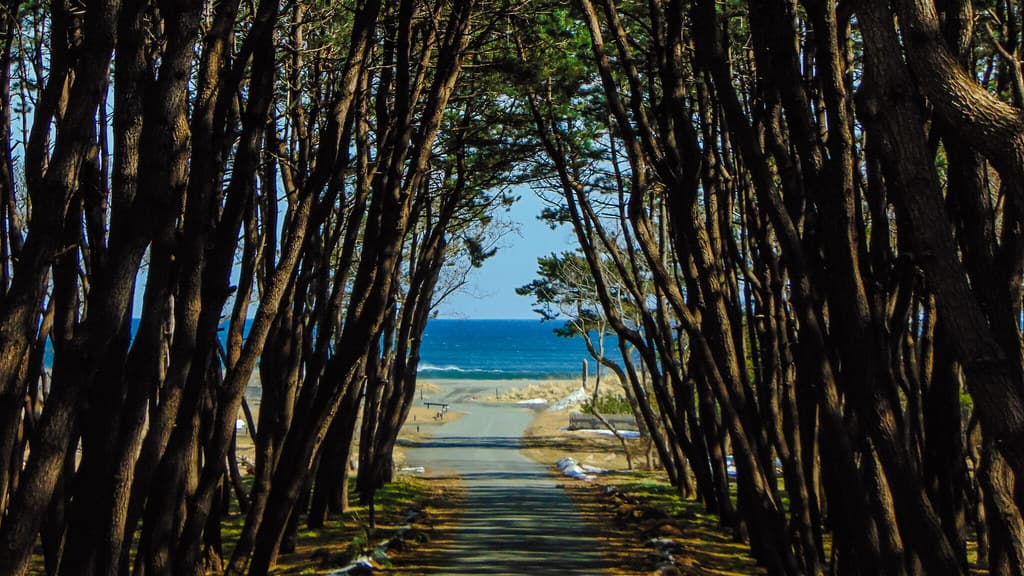
The drive north from Hachinohe brings you to a shore that feels more Nordic than tropical—wind-bent pines frame a coastline of charcoal-grey sand that shifts from coarse to powdery depending on the tide. You'll hear the Pacific before you see it: waves folding onto the beach in rhythmic exhales, punctuated by the occasional cry of black-tailed gulls wheeling overhead. The water stays bracing even in August, a reminder that this is Aomori's windward coast, where the Oyashio Current ensures no one lingers long without a wetsuit.
Families spread tarps near the northern access point, where shallow lagoons warm in the sun and toddlers chase hermit crabs between tide pools. The beach lacks the infrastructure of resort towns—no umbrellas for rent, no beachside karaoke—but that's precisely the appeal. You bring what you need: a cooler, a portable grill, perhaps a kite that catches the onshore breeze. Driftwood piles mark the high-tide line, sun-bleached and salt-scoured.
Crystal lagoon with rocky outcrop
White cliffs over a desert beach
Anemones cling to black basalt
Inland waterfalls within fifteen minutes
Bring charcoal and fresh squid
Where it is
Oirase Beach
Oirase, Aomori, Japan
40.667200°, 141.331400°
Weather
Loading…
Swell
—
Temp
Warm · Restorative
UV Index
Moderate
Wind
—
Tidal State
Last known
Max Sunlight
—
Ideal Shade
—
May - Sep (Peak)
Jan - Dec (Off-season)
Historical data suggests peak visibility and stable sea temperatures occur during the prime visitation window.
Select a category to load nearby places.
Unlock restaurants, luxury stays and curated maritime experiences within 2km
Oirase Beach is generally calm and suitable for families, though swimming conditions depend on the season and weather. Summer months offer the warmest water temperatures, but always check local conditions before entering the water. The beach doesn't have lifeguards on duty year-round, so exercise caution and supervise children closely. The Pacific coast can experience strong currents, so stay near the shore if you're not a confident swimmer. This is primarily a scenic beach popular for strolling rather than swimming activities.
Oirase Beach can be visited year-round, with each season offering different experiences. Summer (July-August) provides the warmest weather for beach activities and swimming. Spring and autumn offer mild temperatures ideal for peaceful walks along the shore with fewer crowds. Winter visits showcase dramatic coastal scenery, though temperatures drop significantly. The beach is particularly scenic during sunrise and sunset. Since it's a quieter destination, you'll find a more serene atmosphere compared to popular tourist beaches, regardless of when you visit.
Oirase Beach is located in eastern Aomori Prefecture along the Pacific coast. The nearest major city is Hachinohe, accessible by Shinkansen. From there, local buses or a rental car can reach Oirase town. Driving offers the most flexibility, with parking typically available near the beach area, though specific facilities vary by access point. The beach is less developed than major tourist destinations, so having your own transportation is recommended. Check current parking availability and access points with local tourism offices before your visit.
Oirase Beach is in a quieter coastal area, so dining and lodging options are more limited than at major resorts. You'll find small local restaurants serving fresh seafood and regional Aomori cuisine in Oirase town nearby. Accommodations range from traditional Japanese inns (ryokan) to modest hotels, primarily catering to domestic travellers. For more dining variety and accommodation choices, consider staying in nearby Hachinohe or Misawa. It's advisable to plan meals in advance, especially during off-peak seasons when some establishments may have limited hours.
Despite the similar name, Oirase Beach and the famous Oirase Gorge are separate destinations in Aomori Prefecture and not immediately adjacent to each other. The Oirase Gorge is a renowned mountain stream located inland near Lake Towada, approximately 50-70 kilometers from the beach depending on the route. While both are worthwhile Aomori attractions, visiting both requires separate trips and transportation planning. If you're interested in experiencing both the coastal and mountain scenery of Aomori, allow extra time and arrange appropriate transportation between the two locations.
Photos