
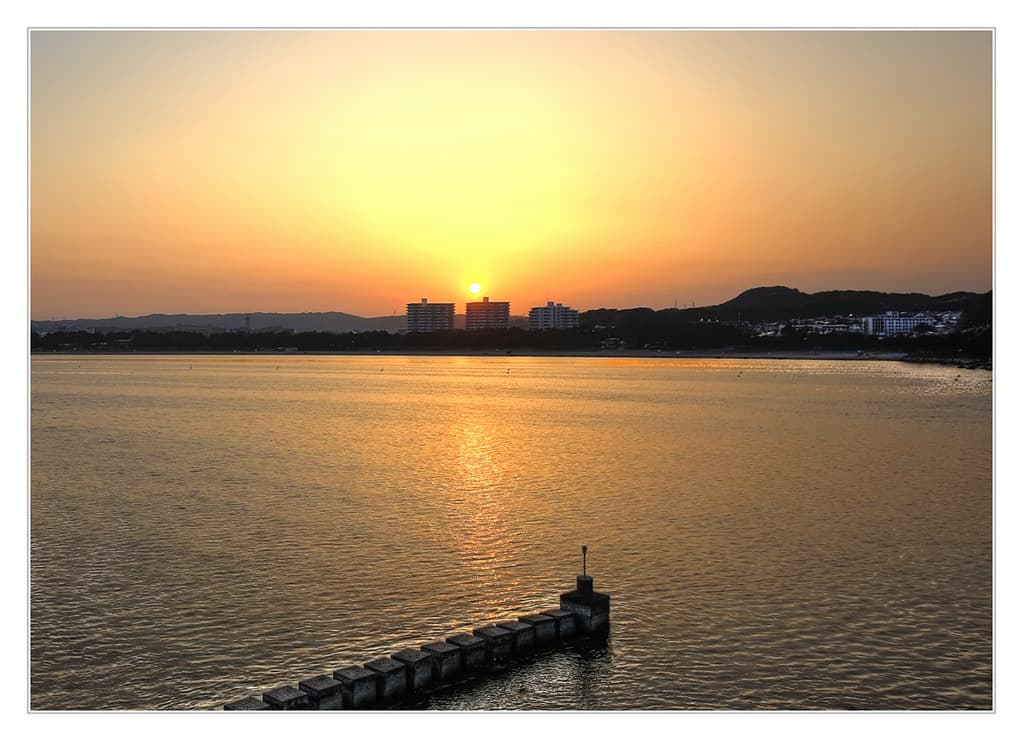
Yokohama Beach occupies a gentle curve of Mutsu Bay's coastline, where the津軽半島 peninsula shelters the shore from ocean swells. You'll find shallow, tepid water that stays swimmable long after Pacific-facing beaches turn frigid—children wade knee-deep fifty meters out, collecting shells while parents watch from woven mats under rented parasols. The sand here is fine and gray, packed firm enough for barefoot strolls that leave clean imprints.
“Mutsu Bay's protected geography creates Japan's most family-friendly northern beach, with bay water warmer and calmer than any Pacific shore at this latitude.”
 Credit: Flickr
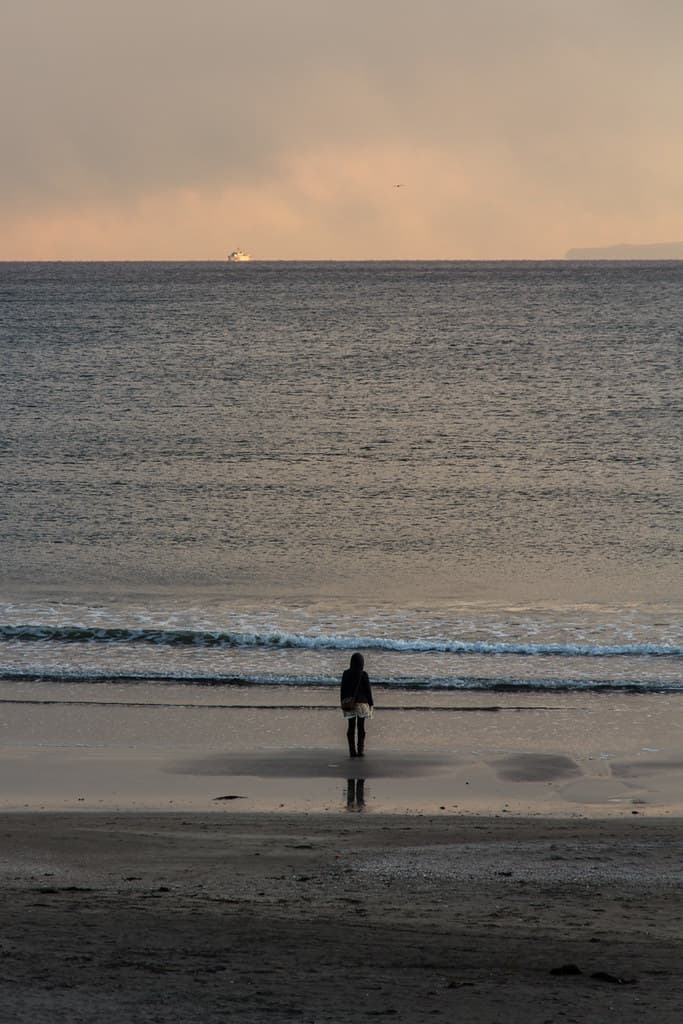
Look at the sea
Behind the beach, pine groves offer shade and the scent of resin in August heat. Vendors sell grilled squid caught that morning in the bay, the char and salt mingling with seaweed drying on wooden racks nearby. The Hakkōda Mountains rise to the south, their ridgelines visible on clear days, sometimes holding snow into June while you're rolling up your jeans to test the water temperature.
Local families arrive after breakfast and stay through dusk, when the bay reflects pink and amber. There's no surf to speak of, no dramatic tide shifts—just steady, reliable access to water warm enough for swimming from late May through September, with autumn and winter visits rewarded by empty sand and the kind of quiet only northern coastlines know.


