

The sand beneath your boots is dark—nearly black—a stark canvas for the surreal February spectacle unfolding offshore. From late January through early March, drift ice from Russia's Amur River travels down the Okhotsk Sea and piles against Abashiri's shore in heaps the size of small cars. You'll hear it before you see it clearly: a low grinding, almost organic, as floes collide and ride up over one another. The air smells of salt and cold, sharp enough to sting your nostrils.
“This is the southernmost beach where Siberian drift ice predictably reaches land each winter.”
 Credit: Pexels
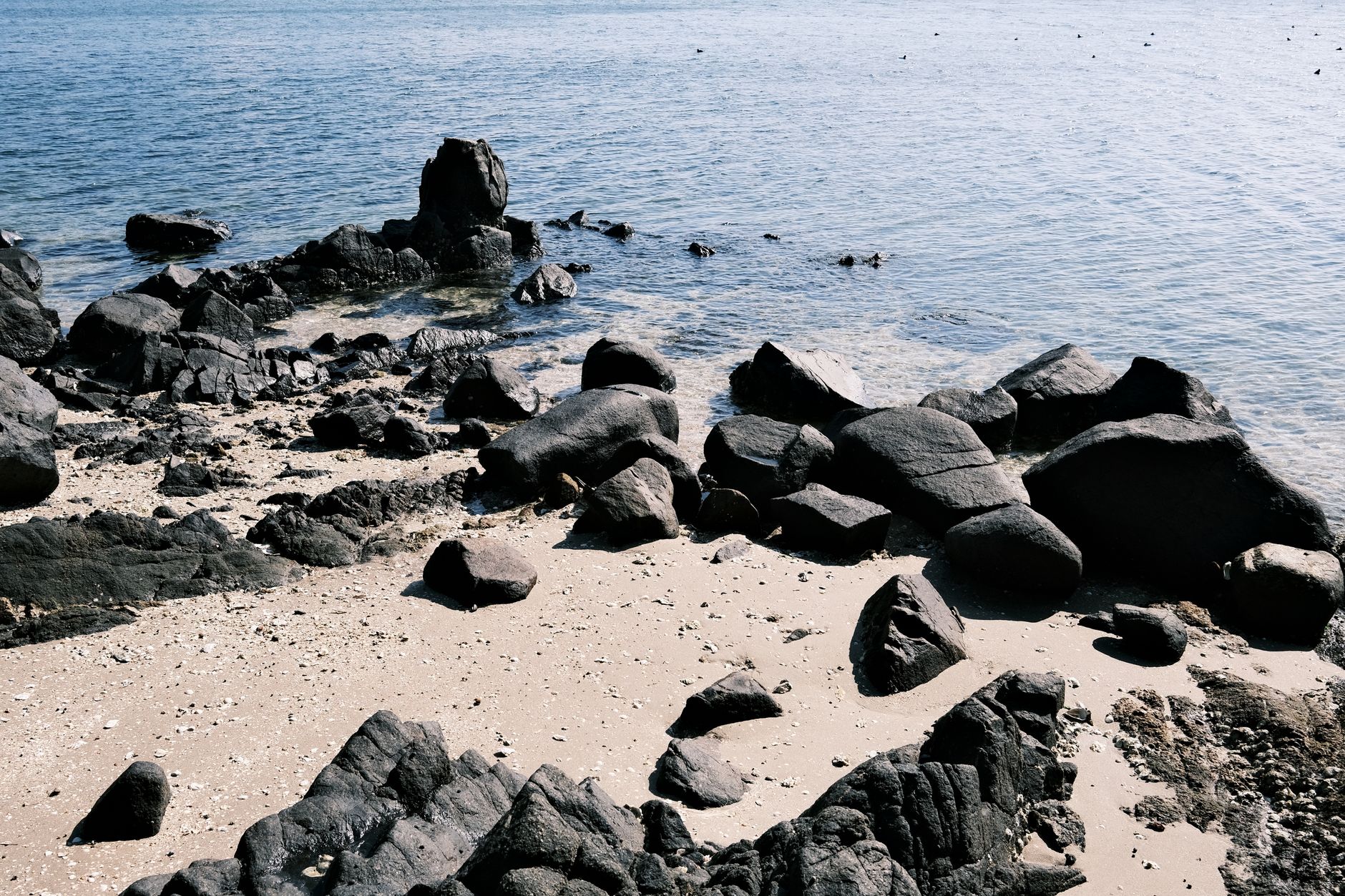
Coastal rocks and sandy shore in Gamagōri, Aichi, capturing tranquil seascape.
In warmer months, the beach sheds its frozen armor. June through August bring fog that rolls in from the sea each morning, softening the lighthouse at the eastern end into a watercolor smudge. The water never truly warms—expect temperatures around 16°C even in high summer—but local families still wade in, children shrieking at the shock. Seabirds work the tideline, and you'll spot fishing boats heading toward the horizon before dawn.
The town of Abashiri backs the beach with a mix of weathered fishing infrastructure and modest resort hotels. A short walk west brings you to the Museum of Northern Peoples, where Ainu and circumpolar artifacts provide context for the landscape's human history. The beach itself remains refreshingly undeveloped: no umbrellas for rent, no jet skis, just the rhythm of a working coast.


