
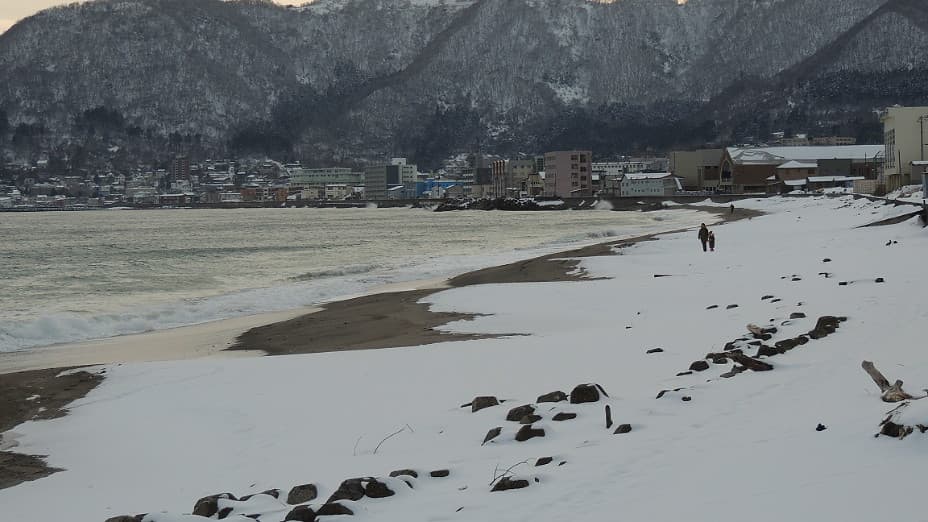
Omori Beach stretches nearly two kilometers along Hakodate's western shore, caught between the city's pulse and the Tsugaru Strait's cold currents. You'll walk a paved promenade where cyclists whiz past convenience-store coffee in hand, the sea wall dotted with anglers casting for flounder. The sand itself is dark and pebbly—volcanic remnants from the island's restless geology—and the water stays numbingly cold year-round, fed by currents that sweep down from the Sea of Okhotsk.
“Hokkaido's only major beach where you watch urban life and cargo ships share the same sightline with Mount Hakodate's volcanic cone.”
 Credit: Flickr
Hakodate Seaside in Winter
What draws you here isn't swimming or sunbathing but the interplay of urban rhythm and maritime vastness. Office buildings and ramen shops line the inland side; seaward, container ships inch toward the port while seabirds ride the wind. Locals come at sunset, when the sky bruises pink and orange above Mount Hakodate's silhouette, the city's ropeway gondolas glinting like fireflies on the slope.
You'll notice the seasonal shifts acutely: ice floes visible offshore in February, the scent of grilled squid from food stalls in summer, autumn winds that turn the bay choppy and steel-gray. The beach never empties completely—there's always someone walking a dog, photographing the lighthouse, or simply standing at the water's edge where the city meets the sea.


