
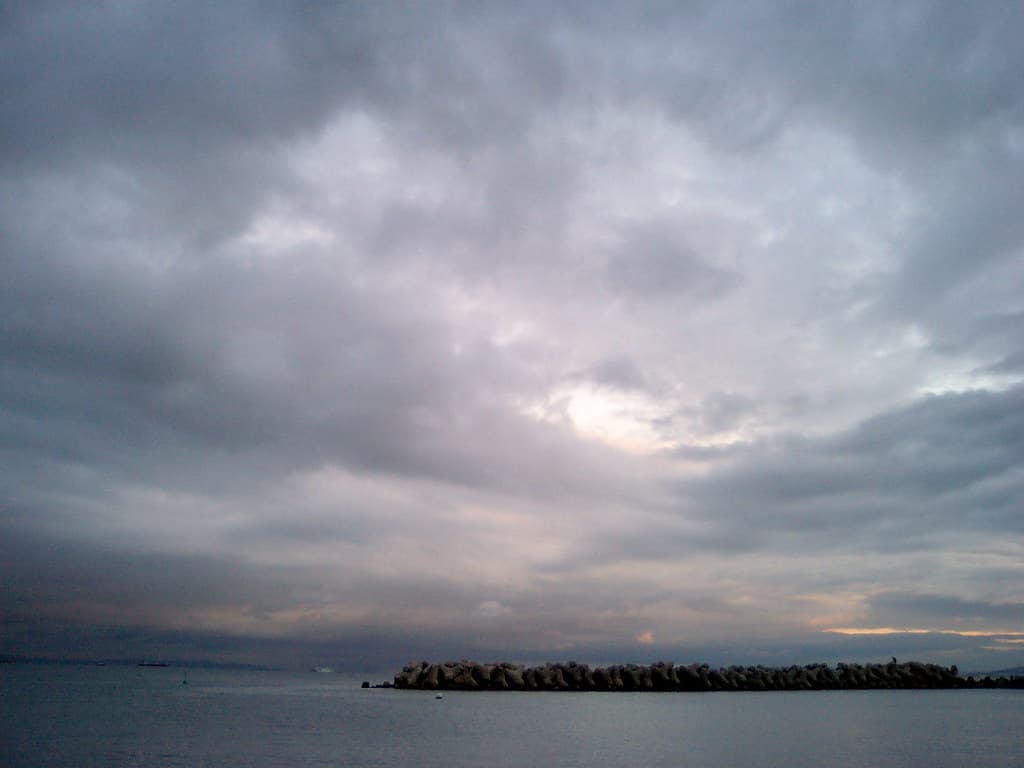
Shioya Beach unfolds along Hakodate's southwestern coast like a working postcard—fishing nets drying on weathered posts, gulls circling above tidal pools pocked with sea urchins, the occasional grandmother wading knee-deep to harvest seaweed. The beach runs narrow and ungroomed, hemmed by a modest seawall and a handful of wooden houses whose blue paint has faded to the color of old denim. You won't find umbrellas or lifeguard stands here, just pebble-flecked charcoal sand that crunches underfoot and water so cold it makes your shinbones ache within seconds.
“One of Hakodate's last undeveloped shorelines where fishing culture still dictates the rhythm of the beach rather than tourism.”
 Credit: Flickr
island?
The Tsugaru Strait stretches north toward the shadow of Oshima Peninsula, its surface ruffled by winds that carry the briny scent of konbu beds and diesel from the occasional fishing boat puttering past. Behind you, Mount Hakodate's wooded cone rises steeply, close enough that you can make out individual pines on its flanks. Locals arrive in the early morning or late afternoon, parking along the narrow access road to walk their dogs or simply sit on the seawall with thermoses of tea, watching ferries slide across the horizon.
The beach never crowds. Even on summer weekends, you might count a dozen people scattered along its length—families letting children splash in the shallows under watchful eyes, photographers setting up tripods to catch the light raking across the strait, solitary walkers combing the tideline for smooth stones and driftwood sculpted by the Tsugaru current.


