

The volcanic sand at Hamamasu Beach feels coarse beneath your feet, almost gravelly, nothing like the soft white powder of tropical shores. It's dark grey to black, a reminder that Hokkaido's geology is young and restless. The beach stretches wide and uninterrupted, backed by low dunes where sea lyme grass and marram tufts anchor the shifting sands. In summer, the wind carries the scent of salt and seaweed; in winter, it brings an edge sharp enough to make your eyes water.
“One of the few completely open, unobstructed natural coastlines in the Sapporo region, offering unbroken Sea of Japan views.”
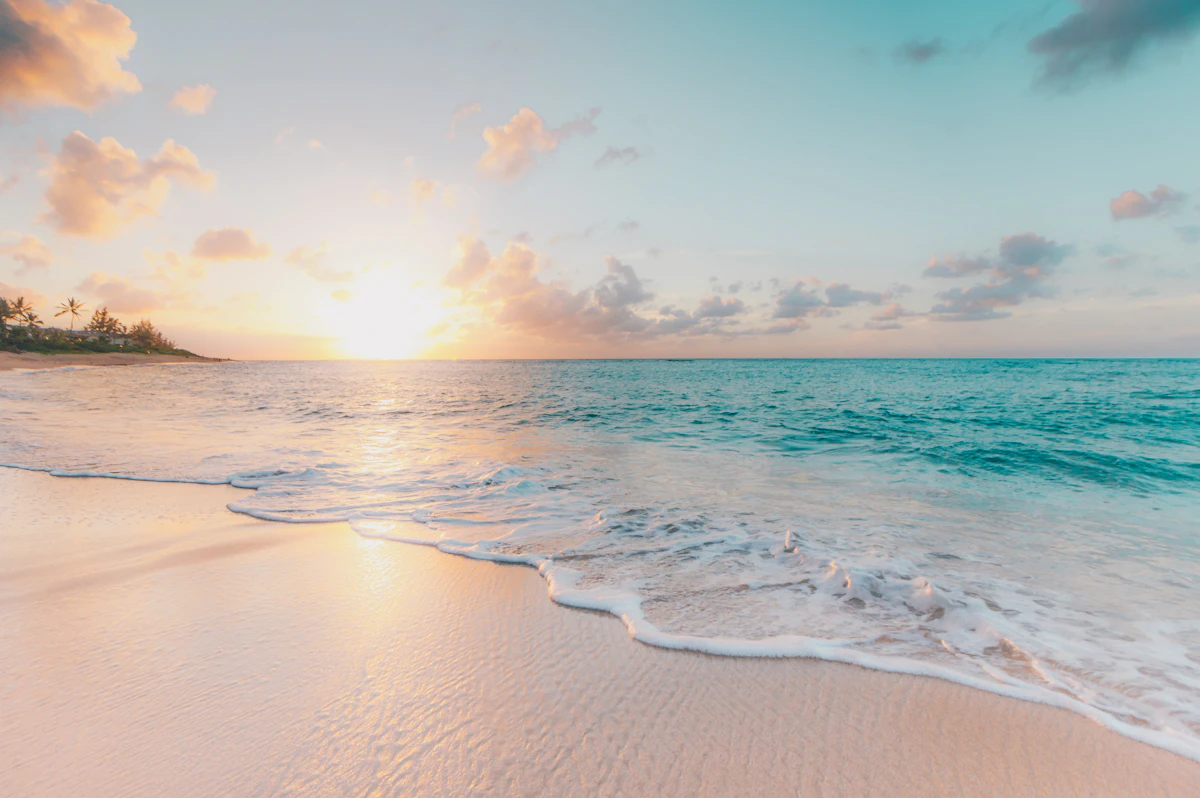 Credit: Unsplash
Aerial view of turquoise tropical bay
Families spread out along the shore on warmer days, children chasing the foam line while parents set up simple shade tents. The coastline faces west, so late afternoons bring a particular quality of light—golden and slanting, turning the grey sand almost bronze. The Sea of Japan here is moody: sometimes a steely blue-grey, other times churning white during storm season. You won't find souvenir stands or beach clubs, just a parking area and the occasional fishing boat bobbing offshore.
The openness is the point. No headlands bookend the view, no islands interrupt the horizon. Just you, the curve of coast, and the knowledge that the next landfall west is somewhere near Vladivostok. It's this unobstructed sweep—both humbling and strangely freeing—that keeps locals returning and makes first-time visitors pause longer than they planned.


