
The sand at Hamamasu Beach isn't golden—it's anthracite, flecked with basalt fragments that click beneath your sandals like worry stones. You park roadside where pines lean landward, shaped by decades of northwest winds, and walk down a gentle slope to a shoreline that stretches north and south with almost no interruption. Fishing boats dot the horizon, and the air carries kelp, salt, and the faint diesel of Mashike's working harbor a few kilometers south.
“One of Hokkaido's few black-sand beaches shaped entirely by volcanic geology and left blissfully undeveloped.”
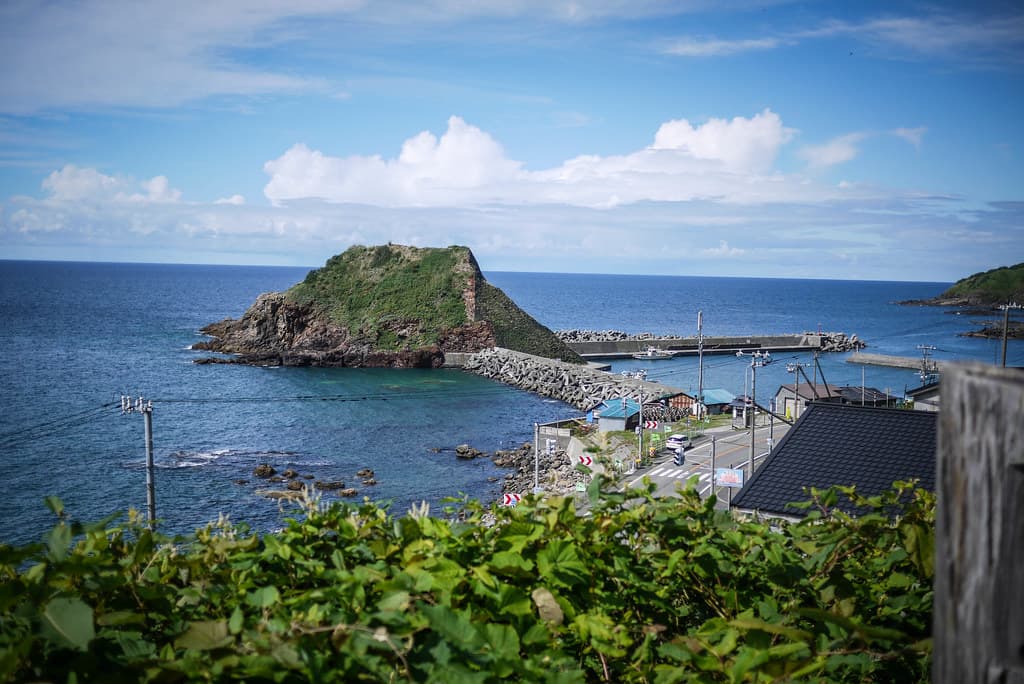 Credit: Flickr
Nice coastal scenery near Hamamasu, Hokkaido, Japan
This is not a beach of umbrellas and lifeguard towers. You'll share the sand with beachcombers hunting sea glass, the occasional surfer waiting for swell, and cormorants drying their wings on weathered pilings. The water is bracing even in August—Hokkaido's Sea of Japan coast doesn't coddle—but the cold is honest, and the swimming area remains unmarked, ungroomed, left to your own judgment.
Come at dusk in autumn and you'll watch the sun drop behind the offshore horizon in shades of persimmon and slate, the kind of light that makes you forget your phone exists. Hamamasu doesn't perform. It simply exists, a functional shoreline where the land meets the sea without ceremony, and that absence of pageantry is exactly why you'll remember it.


