

The road hugs the coastline north of Omu, a fishing settlement where fewer than a thousand people live, and Kitami Beach appears as a band of smooth stones lapped by the Okhotsk's slate-gray water. This isn't a postcard beach—no lifeguards, no umbrellas for rent—just a working shoreline where fishing boats rest between runs and the smell of seaweed mingles with diesel from the harbour. Gulls wheel overhead, their cries sharp against the wind that sweeps down from the Sea of Okhotsk without warning.
“Kitami Beach offers an unvarnished glimpse of Hokkaido's working Okhotsk coast, where fishing rhythms dictate the shoreline's mood and drift ice arrives each winter.”
 Credit: Pexels
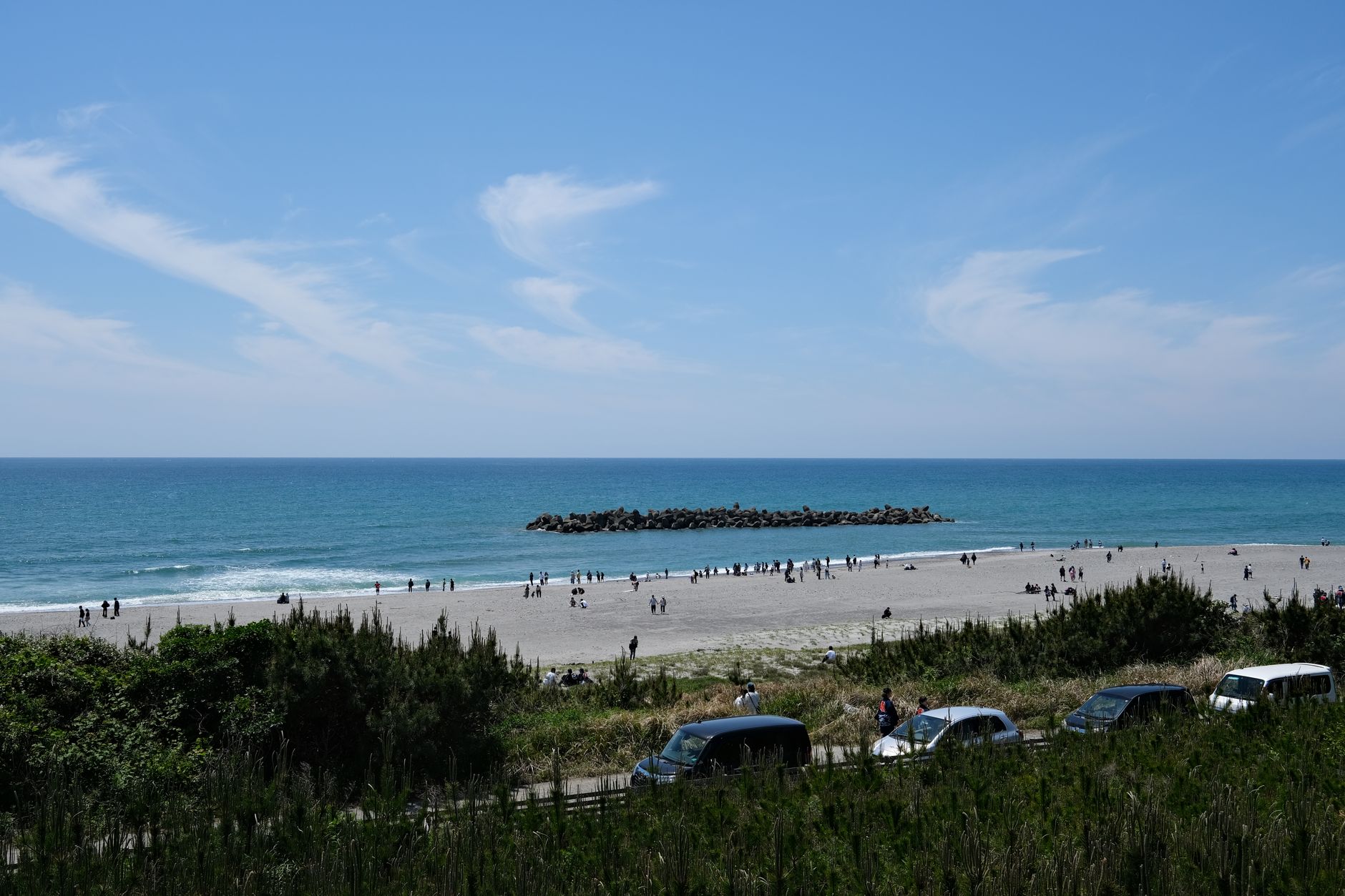
Relaxing seaside view in Hamamatsu, Nhật Bản with people enjoying the beach.
In winter, drift ice from the Russian coast sometimes presses against the shore, transforming the beach into a white expanse that locals navigate with practiced ease. Summer brings marginally warmer temperatures, though the water rarely invites more than a quick wade. You'll share the beach with fishermen repairing nets, families gathering kelp, and the occasional cyclist pedaling the coastal route that connects tiny settlements along this northern edge of Japan.
The mountains rise directly behind the beach, their forested slopes descending almost to the waterline. Between May and September, wildflowers dot the grassy verges where the road meets the shore. There's a small parking area, a weathered bench facing the sea, and nothing else—just the honest simplicity of a beach that belongs to the people who fish these waters and the visitors curious enough to explore Hokkaido's less-traveled coast.


