
The drive north from Otaru's famous canal district takes you through narrow streets lined with weathered clapboard houses until the road opens onto Shioya, a compact bay where the beach stretches in a dark ribbon between forested cliffs. The sand here isn't the golden postcard variety—it's coarse and iron-gray, studded with smooth stones the tide has polished over centuries. Gulls wheel overhead, and you'll often have long stretches of shoreline entirely to yourself, even on summer weekends when Otaru's glass workshops overflow with tourists.
“Dark volcanic sand meets Hokkaido's fishing culture in a windswept bay untouched by Otaru's tourist crowds.”
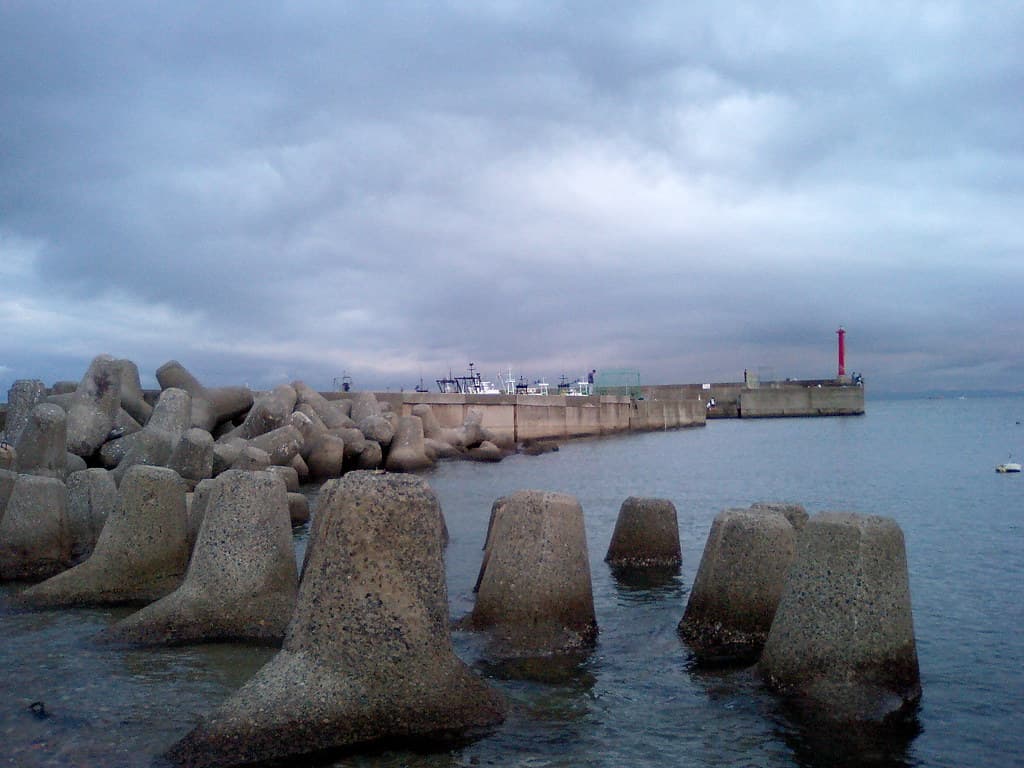 Credit: Flickr
wave breaker
The water stays frigid year-round, typical of Hokkaido's western coast where currents sweep down from the north. Hardy locals wade in during July and August, but most visitors come for the walking—the beach curves gently, offering views back toward Otaru's working port on one side and untouched headlands on the other. In winter, snow dusts the black sand in surreal contrast, and the beach becomes a meditation in monochrome.
A seawall separates the sand from a small parking area and a handful of seasonal food stalls that serve grilled scallops and soft-serve made with Hokkaido milk. There's no resort infrastructure, no umbrella rentals, no lifeguard station—just the raw meeting of land and sea that defines Japan's northern coastline.


