
Hokkaido Sunset Beach stretches along Tomamae's northwest coast, a dark-sand crescent flanked by wind turbines spinning lazily against enormous skies. The beach sits beneath low bluffs thick with beach rose and sea grasses that hiss in the constant onshore wind. Most tourists skip this remote stretch of Rumoi Subprefecture entirely, leaving the shore to local fishermen who haul in squid and rockfish from the tumbling surf.
“Unobstructed western exposure on Hokkaido's wild northwest coast delivers crimson sunsets framed by industrial wind turbines spinning above dark volcanic sand.”
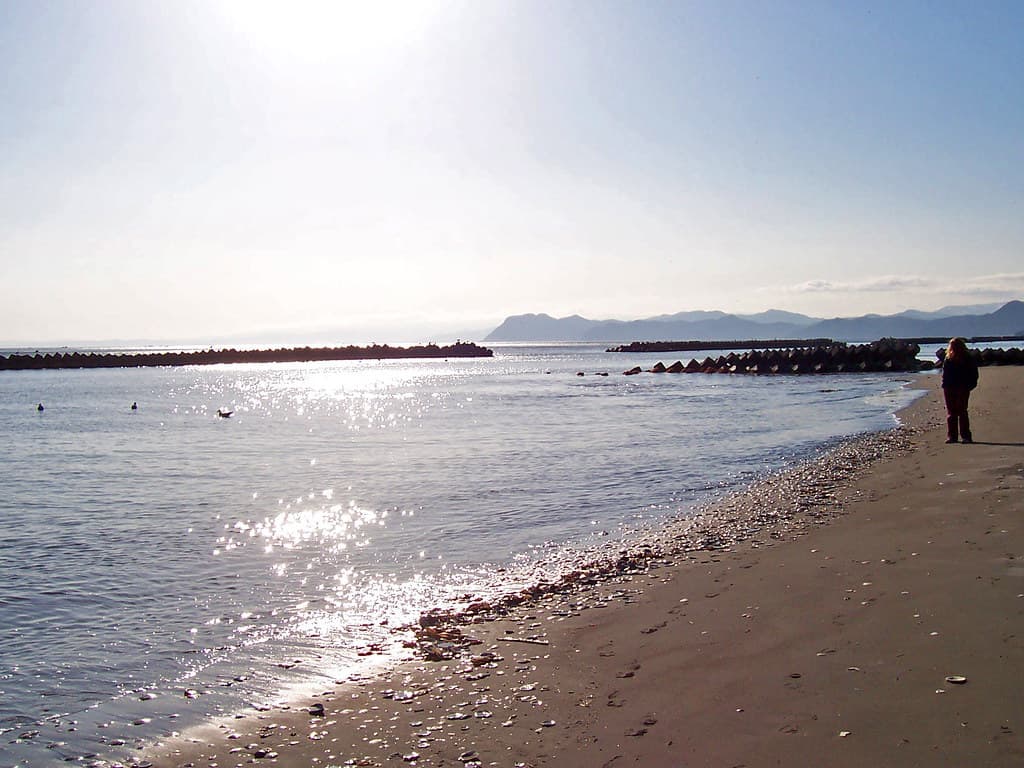 Credit: Flickr
Sunset along the Hokkaido coast
The Sea of Japan delivers consistent swells that build offshore reefs before collapsing onto the steep shorebreak. Winter brings powder snow that dusts the sand, transforming the beach into a monochrome study in grey and white. Summer sees warmer water—still bracing at 20°C—and wildflowers crowning the bluffs. Year-round, the beach earns its name: unobstructed western exposure means the sun drops straight into the horizon, backlighting the wind turbines that march along the clifftops.
A small parking area and basic facilities serve the handful of visitors who make the drive. The village of Tomamae, five minutes inland, supplies fresh uni and scallops at the morning market. Bring layers; the wind off the Sea of Japan never fully stops, even in August, and the temperature drops sharply once the sun disappears.


