

The sand stretches maybe two hundred meters, bordered by a low concrete seawall and a stand of black pines that provide the only shade. You'll park beside a vending machine that dispenses cold barley tea and walk down wooden steps to find the beach empty except for an elderly woman raking the sand smooth in front of her house. The water stays calm and slightly turbid, tinted green-brown from the bay's sheltered position, warm enough for swimming by June.
“A genuinely local beach where residents conduct daily life rather than vacation, offering authentic neighborhood coastal culture.”
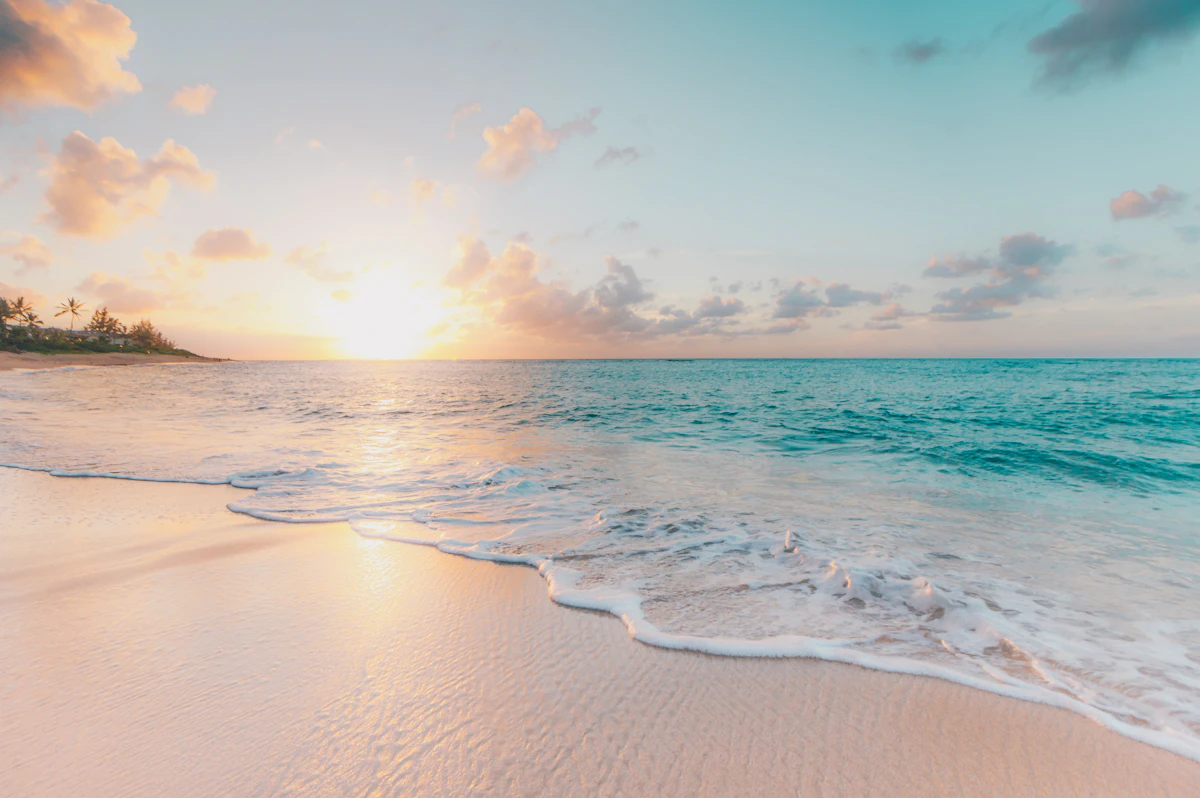 Credit: Unsplash
Aerial view of turquoise tropical bay
This is where Nanao residents come when they want fifteen minutes of ocean without the drive to better-known beaches. Salarymen eat convenience store bentō on the seawall during lunch breaks, ties loosened, shoes left in their cars. Mothers bring toddlers to dig in the damp sand while laundry dries on balconies behind the pines. The beach smells of sun-warmed seaweed and someone's yakitori grill, the smoke drifting lazily across the water.
You'll see the same faces if you return multiple times—the man who swims fifty meters out and back each morning, the family that claims the same spot every Sunday, the teenager practicing guitar under the pines. There's a public bathroom painted turquoise, a rusted shower that runs cold, and a hand-painted sign warning about jellyfish in August. This is beach-going stripped to its essentials: sand, water, shade, and the quiet satisfaction of being somewhere purely functional rather than spectacular.


