

Counting the waves…
Counting the waves…
A refined fusion of water purity, environmental stability, and communal vibrancy for Horyu Beach.
View MethodologyAnalyzed via live sensors and environmental data.
Wave height, wind, and atmospheric stability.
Live footfall and crowd balance metrics.
Community reviews and curated sentiment.
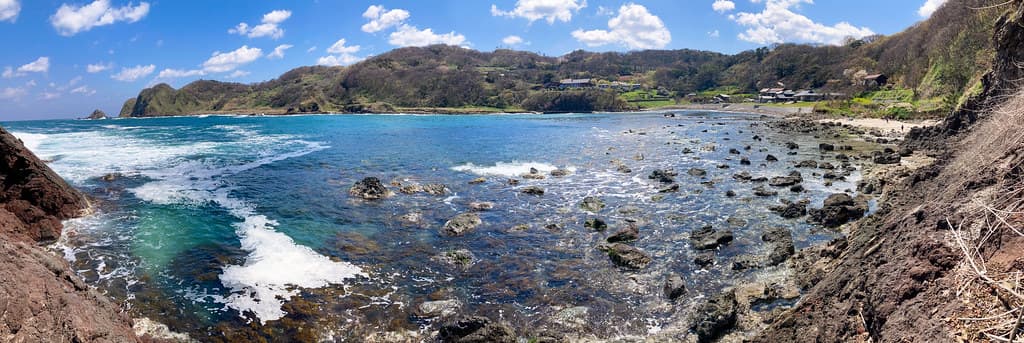
“The basalt ledges here don't yield to swimmers—they demand respect. You'll watch waves detonate against black rock, sending white foam fifteen feet skyward, while seabirds wheel overhead and the wind carries brine and…”
Limited recent visitor reports — live OBI telemetry is your best guide for current conditions.
You'll feel the vibration before you hear it—the low rumble of waves striking ancient volcanic shelves that jut into the Sea of Japan like broken teeth. Horyu Beach rewards patience rather than proximity. Position yourself on the weathered outcrops above the waterline, where tide pools collect between the crevices and hermit crabs navigate the miniature canyons.
The light shifts hourly along these cliffs. Morning sun illuminates the stratified layers in the rock face, revealing rust-colored oxidation bands and charcoal striations left by prehistoric lava flows. By afternoon, shadows carve the coastline into a study of contrasts—ebony stone against cerulean water, stillness interrupted by explosive impact.
Sunset reflecting on wet sand
Person walking on a sand spit
Long exposures of crashing surf
Navigate tide pools between sets
Trace volcanic stratification patterns
Prime Visitation
Best Weather
Where it is
Horyu Beach
Suzu, Ishikawa, Japan
37.512600°, 137.301900°
Weather
Loading…
Swell
—
Temp
Warm · Restorative
UV Index
Moderate
Wind
—
Tidal State
Last known
Max Sunlight
—
Ideal Shade
—
May - Sep (Peak)
Jan - Dec (Off-season)
Historical data suggests peak visibility and stable sea temperatures occur during the prime visitation window.
Select a category to load nearby places.
Unlock restaurants, luxury stays and curated maritime experiences within 2km
Swimming at Horyu Beach is generally not recommended due to its rocky coastline and powerful waves. The rugged terrain makes water access challenging, and the strong currents along the northern Noto Peninsula can be unpredictable. This beach is primarily visited for photography and scenic viewing rather than water activities. If you're interested in swimming, consider nearby sandy beaches instead. Always check local conditions and signage, and never enter the water alone or during rough weather conditions.
The best time for photography at Horyu Beach is during spring and autumn when weather conditions are typically clearer and more stable. Golden hour—shortly after sunrise or before sunset—offers dramatic lighting on the rocky cliffs and crashing waves. Summer can bring haze, while winter offers moody seascapes but requires cold-weather gear. Avoid typhoon season (August-October) when seas are roughest. Weekdays tend to be quieter for uninterrupted shooting. Check tide schedules as different water levels create varying compositions of the rugged coastline.
Horyu Beach is located in the remote northern tip of the Noto Peninsula, making a rental car virtually essential. From Kanazawa, drive approximately 2.5-3 hours via Route 249 along the coast. Public transportation is extremely limited in this area. The nearest town is Suzu, which has minimal bus service. GPS coordinates or a detailed map are recommended as signage may be sparse. The coastal roads are scenic but can be narrow and winding, so allow extra travel time and drive carefully, especially in inclement weather.
Accommodation and dining options near Horyu Beach are limited due to its remote location. The town of Suzu, a short drive away, offers small guesthouses, minshuku (family-run inns), and a few local restaurants serving fresh seafood. Wajima, about 30-40 minutes south, has more lodging choices including ryokan and business hotels. It's advisable to book accommodation in advance, especially during peak seasons. Consider packing snacks and water as convenience stores are sparse. Many visitors stay in larger towns and make day trips to explore this isolated coastline.
Horyu Beach stands out for its dramatically rugged rocky coastline and powerful wave action, contrasting with the peninsula's many sandy beaches. The raw, untamed landscape attracts photographers seeking dramatic seascapes and nature enthusiasts interested in coastal geology. Its remote location means minimal development and crowds, offering an authentic, wild coastal experience. The interplay of jagged rock formations, crashing waves, and open Sea of Japan vistas creates a moody, photogenic atmosphere that's rare along this coast. It represents the peninsula's wilder, less tourist-oriented side, ideal for those seeking solitude and natural beauty.
Photos