

The coast here refuses the gentle slope that defines a swimming beach. Instead, the land ends abruptly in serrated cliffs of volcanic basalt, dark gray to nearly black, stacked in geometric columns that suggest the earth's violent origins. Waves arrive with force retained from their Pacific birth, undiminished by shallow water or gradual seafloor—they hit the rocks and erupt skyward, sending spray that carries fifty meters inland when the wind cooperates. You feel the percussion in your chest, a low boom that arrives fractionally before the visual explosion of white water.
“The cliffs force you to experience the ocean as spectacle rather than playground—watching instead of wading, humbled rather than refreshed.”
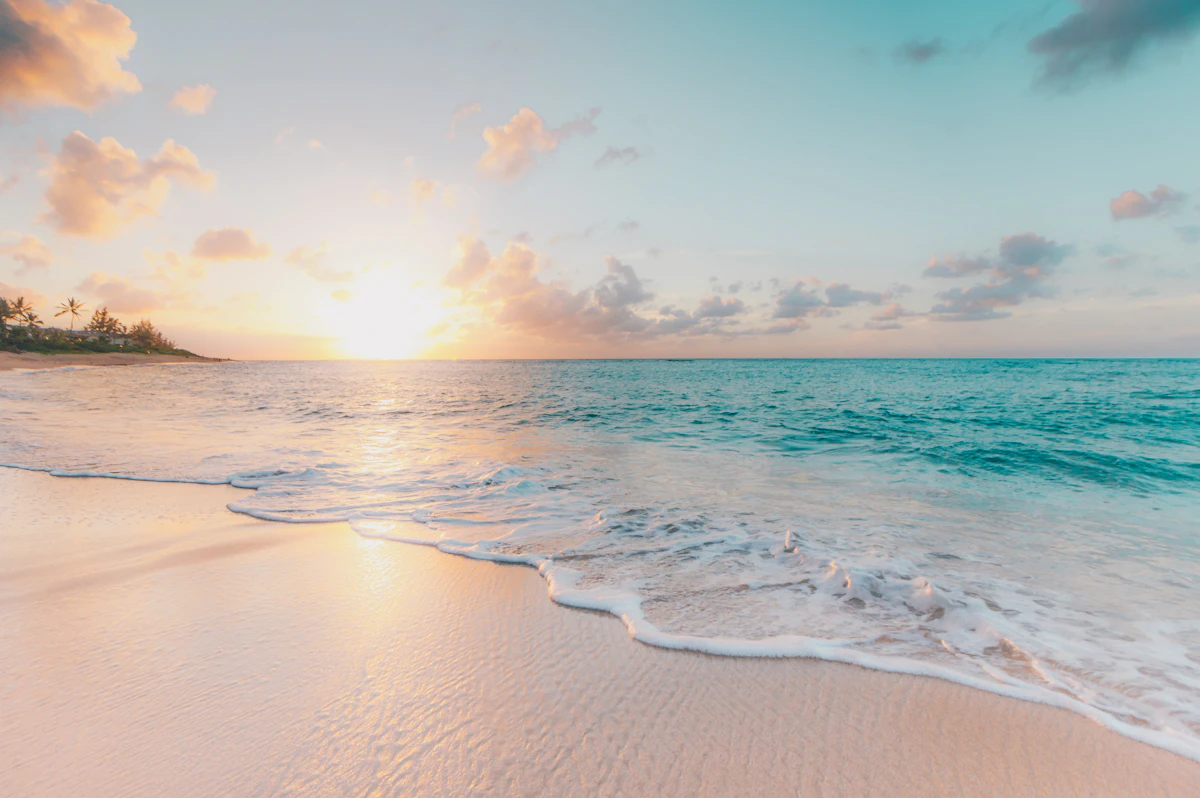 Credit: Unsplash
Aerial view of turquoise tropical bay
A narrow trail descends from the road to a series of rock platforms where the adventurous can stand at sea level, though 'beach' becomes a generous term. What sand exists hides in pocket coves between rock outcrops—small accumulations that disappear entirely at high tide. The real attraction lives in the vertical dimension: cliffs stacked in layers of cooled lava, wind-carved arches, and caves that howl when swells push air through their throats. Seabirds nest in the upper reaches, and you'll often spot cormorants drying their wings on exposed rocks, silhouettes against the white churn.
Photographers arrive in numbers during storm season, tripods wedged between rocks, waiting for the moment when light and wave energy align. The scene changes hourly—calm mornings give way to afternoon wind chop, sunset transforms the cliff faces to copper, and night brings fishing-boat lights dotting the dark water. You won't swim here unless you're exceptionally skilled and foolish, but you'll understand why some coastlines exist purely for witnessing, not entering.


