

Kamaishi Hidden Bay reveals itself slowly as you approach from the coastal trail. First comes the sound—waves breaking against the rocks that guard the entrance, creating a steady percussion that echoes off the cliff walls. Then the view opens: a narrow channel between two headlands, and beyond it, a bay that seems almost landlocked, its far shore dense with cedar and bamboo that grows down to the waterline.
“This is Kamaishi's near-landlocked tidal basin, where the narrow entrance creates fierce current reversals and the sheltered interior mirrors the surrounding forest with lake-like stillness.”
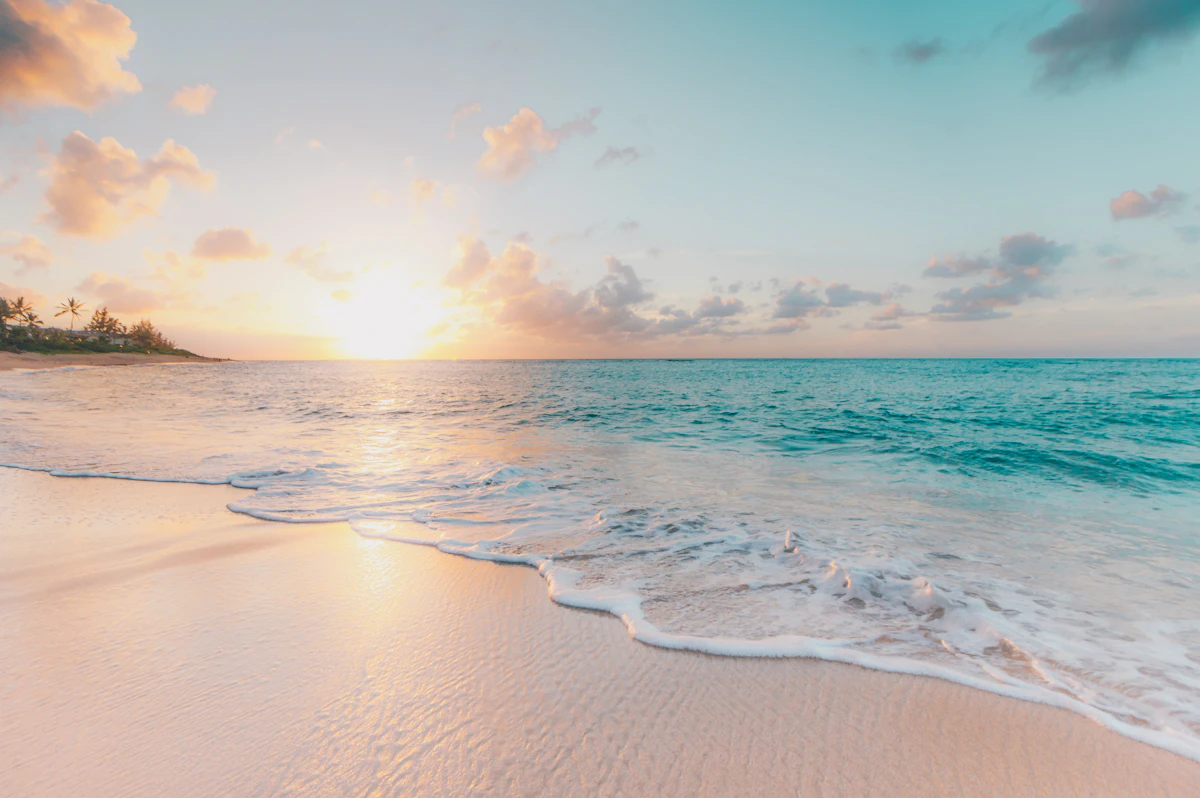 Credit: Unsplash
Aerial view of turquoise tropical bay
The tidal flow through the entrance is fierce, creating eddies and small whirlpools that reverse direction twice daily. At slack tide, the bay becomes a mirror, its surface so calm that raindrops create perfect expanding circles and the reflections of the surrounding forest are sharp enough to photograph inverted. Herons hunt the shallows on the bay's eastern side, moving with glacial patience through water barely deep enough to cover their legs.
A small shingle beach occupies the bay's northwest corner, accessible by a footpath that descends from the forest. The stones are smooth and varied—grey basalt, rust-stained volcanic rock, occasional white quartz—sorted by centuries of wave action into bands by size. At high tide, the water reaches the tree line; at low tide, the beach extends twenty meters, exposing rocks furred with seaweed and studded with barnacles. The air here smells of pine resin and kelp, and the forest dampens all sounds except birdsong and the gentle lapping of wavelets against stone.


