

The cape juts into the Pacific like a declaration, its edges ragged with erosion, its heights offering views that compress the coast into a single panorama. From here you'll see how the Sanriku coastline folds and unfolds—headlands giving way to bays, rock towers standing isolated where softer stone has surrendered. The lighthouse stands white and stark against the sky, its beam still operational, though GPS has made its guidance obsolete.
“These heights reveal the Sanriku coast's violent geology—where you see not just beauty but the brutal conversation between land and ocean.”
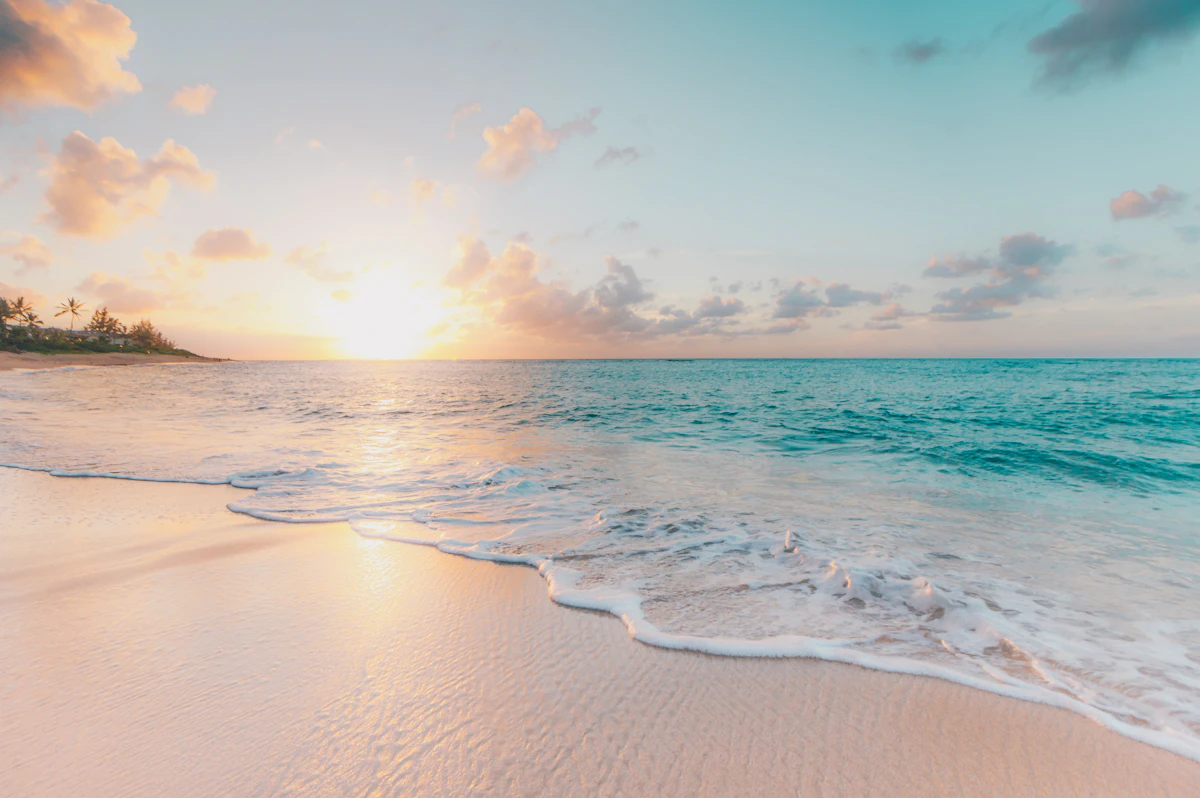 Credit: Unsplash
Aerial view of turquoise tropical bay
Grass grows thick on the cape's spine, bending perpetually eastward from constant wind. You'll walk trails that run along cliff edges where safety railings feel optimistic—a single cable strung between posts, nothing between you and a fifty-meter drop. Gulls nest on the sea stacks below, their colonies turning the rocks white with guano, their collective voice a constant argument against the wind.
The viewing platform cantilevered over the edge gives you the sensation of floating above the rocks, nothing but air between you and the waves below. Bring a telephoto lens to capture fishing boats navigating between the stacks, their small hulls dwarfed by geology. On clear days you'll see twenty kilometers up and down the coast, the land's irregular meeting with the sea laid out like a topographic map made real.


