
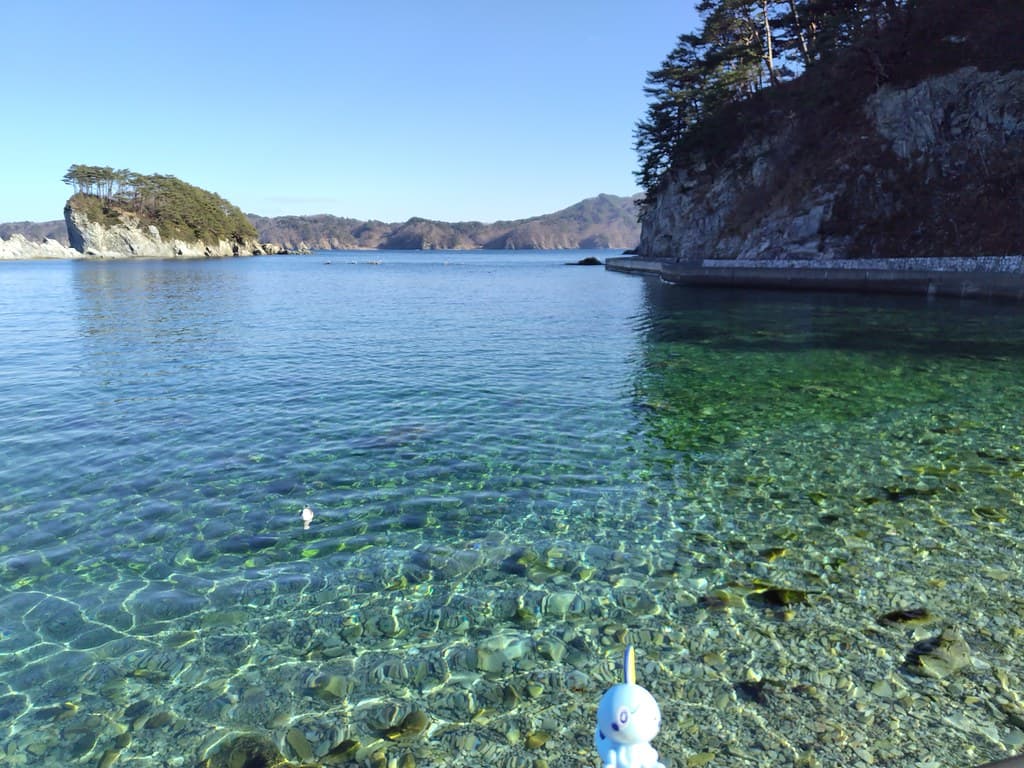
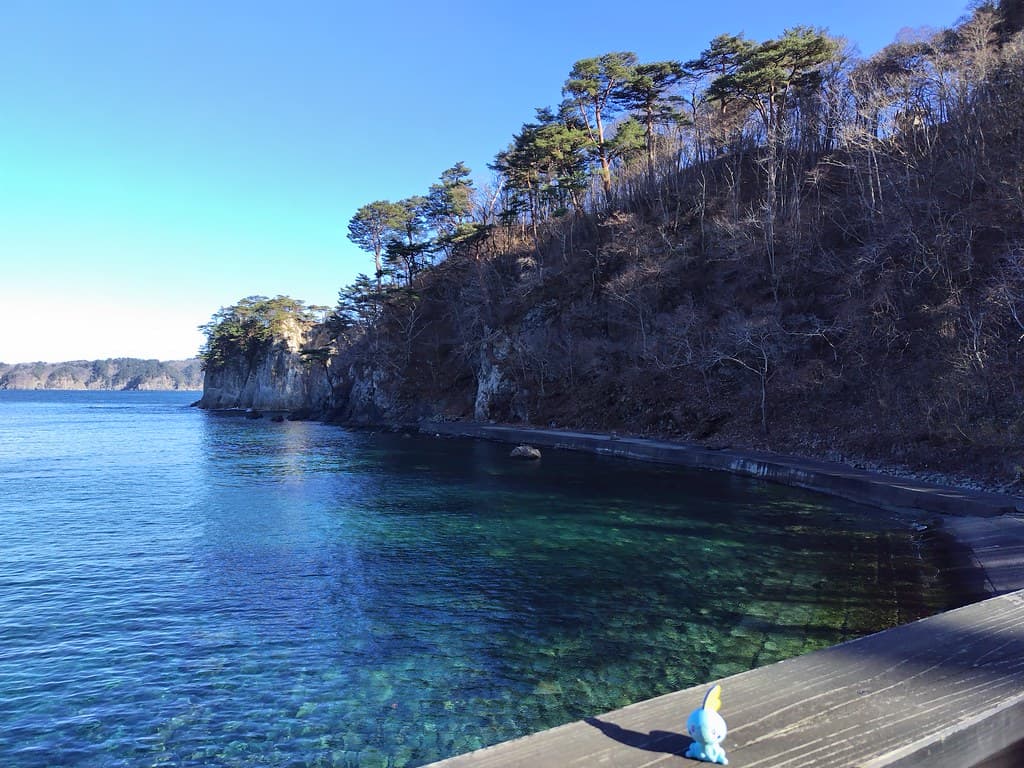
The cove is the size of a tennis court, a pocket beach so thoroughly hidden that most visitors to Omoe never know it exists. You'll squeeze through the rock entrance at low tide, feet sinking into soft sand that the protected location has allowed to accumulate. The water here is startlingly clear—you can count pebbles on the bottom three meters down—and noticeably warmer than the exposed coast, heated by sun and sheltered from the Oyashio Current. A freshwater seep darkens one rock wall, and ferns grow where spray never reaches.
“This is the Sanriku Coast's secret pocket, a cove so protected and hidden you'll wonder if you're allowed to be here—you are, barely.”
 Credit: Flickr
Omoe Hidden Cove — photo by Kasadera
The cove's entrance faces northeast, so the southern exposure keeps it sunny most of the day. You'll swim in water that barely moves, broken only by the occasional swell that makes it through the narrow mouth and spreads across the cove in gentle ripples. Herons fish the shallows in early morning, and you'll startle them on arrival, watching their labored flight over the rocks. At high tide, the entrance becomes a channel where incoming water creates a gentle current, and you can float in and out with the pulse of the sea.
The sand is coarse and mixed with tiny shell fragments that crunch underfoot. You'll find almost no trash—the cove is too hidden for casual visitors, too small for parties. Locals from Omoe village know about it, but they keep it quiet, a spot they swim when the main coast is too rough. You'll likely have it entirely to yourself, sitting on sun-warmed sand while the Pacific roars invisibly beyond the rock walls.


