
You'll need to time your visit with the tide tables posted at the trailhead. Two hours either side of low tide gives you passage through the arch without wading. Step through the opening and the Pacific's roar dampens instantly—the horseshoe of rock walls absorbs most of the wave energy, leaving the protected cove surprisingly calm even when whitecaps march past the headlands on either side.
“The arch acts as both gateway and geological clock, passable only during specific tidal windows that force you to synchronize with the ocean's schedule.”
 Credit: Flickr
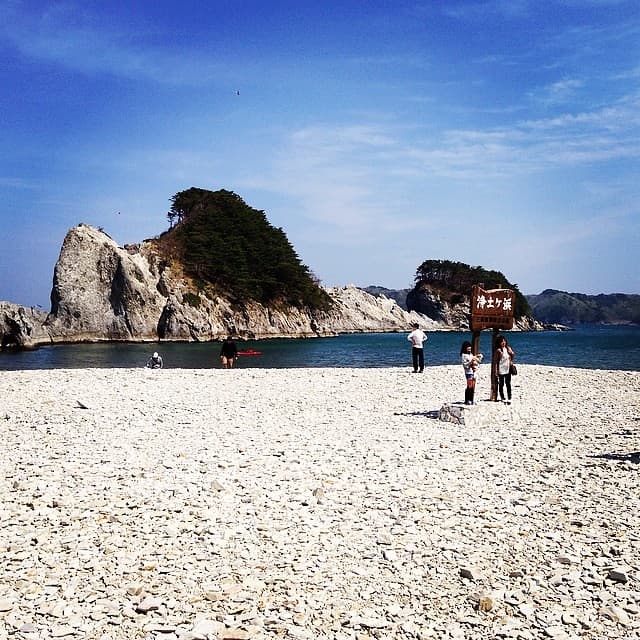
Sunayama Cove — photo by shckor
The sand here is coarser than you'd expect, mixed with crushed shells and fragments of sea urchin skeletons that crunch slightly underfoot. Wind has carved the surrounding sandstone into layers and curves that geology students use for textbook examples of differential erosion. Tide pools cluster near the arch's southern foundation, each one a saltwater terrarium of anemones, sea stars in rust and purple, and the occasional stranded mackerel waiting for high tide to carry it back out.
Pine trees lean at forty-five-degree angles along the cliff top, shaped by decades of prevailing winds off the Pacific. Their roots snake down the rock face, finding purchase in cracks that widen imperceptibly each season. By mid-afternoon, the arch casts a shadow across half the cove, creating a natural division between sun and shade that shifts as the day progresses. The locals who know this place bring lunch and stay for hours, reading paperbacks in the shadow while children build dams in the tide pools.


