

Anato Hidden Shore begins where the harbor's concrete ends, a transition marked by the last set of rusted cleats and a small shrine tucked into the rocks. The beach curves southward in a gentle arc, its sand darkened by volcanic minerals and textured with the fine grooves left by receding wavelets. This is a working shoreline first, a swimming beach second—you'll share it with fishermen tending equipment, families from the nearby houses, and the occasional dog chasing gulls.
“This is Ofunato's neighborhood beach, where the waterfront serves fishing families first and functions as swimming spot second, unchanged by tourism development.”
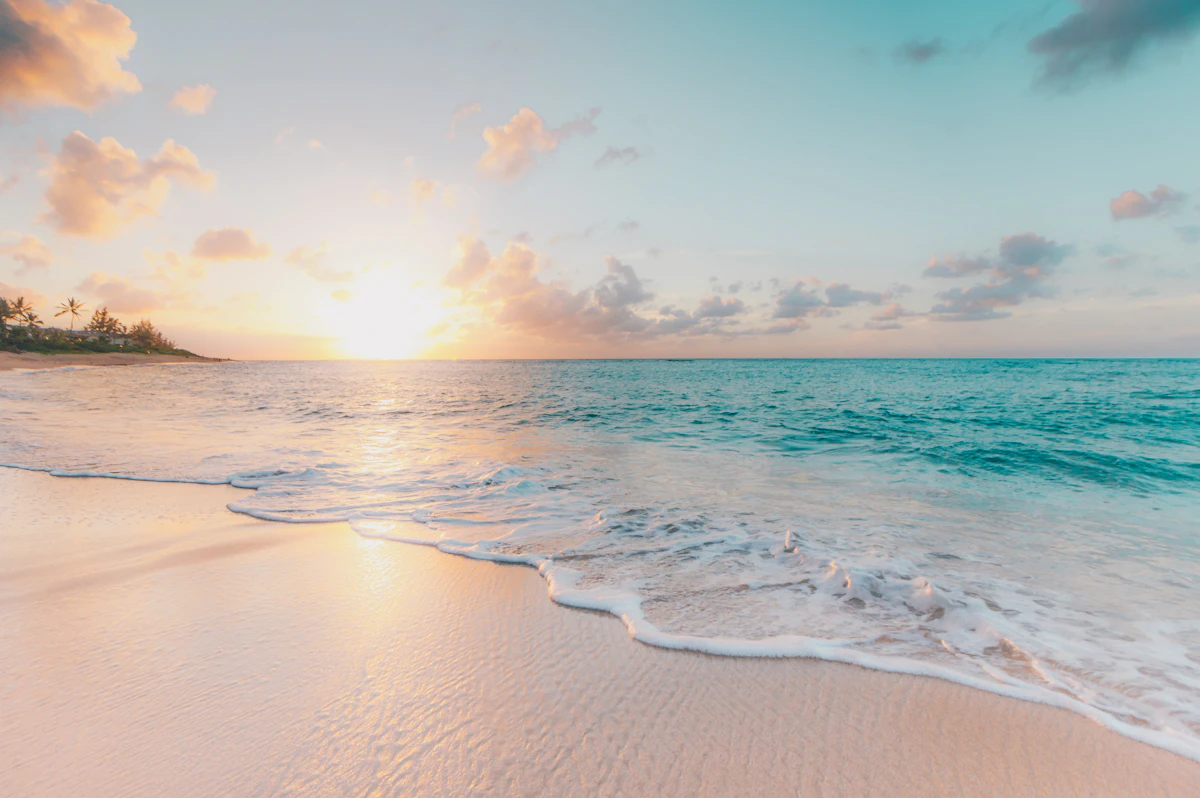 Credit: Unsplash
Aerial view of turquoise tropical bay
The water here is protected by the harbor breakwater to the north and a natural reef to the south, which means the waves arrive diminished and the swimming is safe even for children. Small flounder dart across the sandy bottom in the shallows, visible when the water is calm and the light is right. The beach slopes so gradually that wading out requires patience; you can walk a hundred meters and still be only chest-deep, the seafloor smooth beneath your feet.
Behind the beach, a narrow strip of pine trees separates sand from the houses beyond. Laundry flaps on lines, a cat sleeps on a windowsill, someone practices scales on a piano—the sounds of daily life mixing with wave-wash and gull cries. There are no facilities beyond a single cold-water tap where fishermen rinse their hands and a few weathered benches in the tree shade. The beach exists as neighborhood resource rather than destination, and visitors are tolerated rather than courted.


