

Counting the waves…
Counting the waves…
A refined fusion of water purity, environmental stability, and communal vibrancy for Asamogawa Beach.
View MethodologyAnalyzed via live sensors and environmental data.
Wave height, wind, and atmospheric stability.
Live footfall and crowd balance metrics.
Community reviews and curated sentiment.
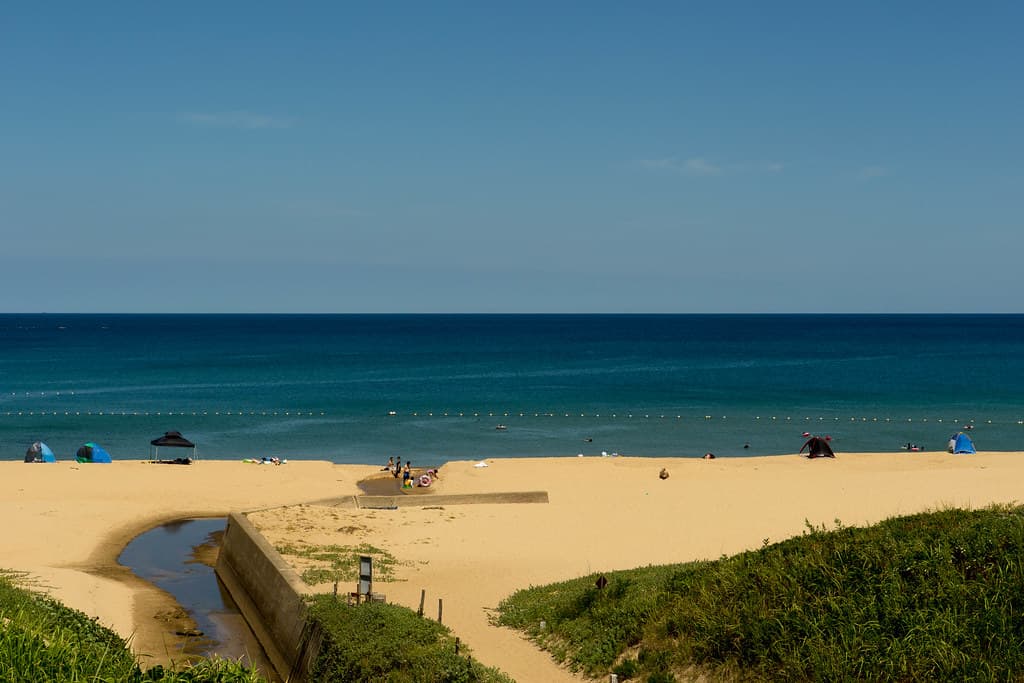
“No parking fees, no rental umbrellas, no lifeguards. Just a strip of sand where the Asamogawa River empties into the Sea of Japan and locals come to swim laps before work.”
Higher weekend density may affect water purity and crowd scores temporarily.
The beach sits at the mouth of the river, where freshwater mixes with salt and the sand takes on a darker, coarser texture than the tourist beaches farther north. Concrete tetrapods line the northern edge, installed decades ago to slow erosion, now colonized by barnacles and slick with algae at low tide. The swimming area is unmarked but understood—most people stay south of the river mouth where the current is gentler and the bottom more predictable.
Early mornings bring the regulars: elderly men in Speedos who swim parallel to shore for thirty minutes before toweling off and heading to work, women walking terriers along the waterline, the occasional parent with a toddler collecting shells in a plastic bucket. By afternoon, junior high students arrive on bicycles, dropping backpacks in the sand and wading in still wearing their school uniforms, too impatient to change. There's a vending machine by the parking area that dispenses warm tea in winter, cold barley tea in summer, and hasn't had its prices raised in years.
Sunset reflecting on wet sand
Person walking on a sand spit
Calm water, local swimming crowd
Freshwater meets sea, bird watching
No facilities, bring your own gear
Prime Visitation
Anytime
Where it is
Asamogawa Beach
Kyotango, Kyoto Prefecture, Japan
35.679100°, 135.051000°
Weather
Loading…
Swell
—
Temp
Warm · Restorative
UV Index
Moderate
Wind
—
Tidal State
Last known
Max Sunlight
—
Ideal Shade
—
May - Sep (Peak)
Jan - Dec (Off-season)
Historical data suggests peak visibility and stable sea temperatures occur during the prime visitation window.
Select a category to load nearby places.
Unlock restaurants, luxury stays and curated maritime experiences within 2km
Asamogawa Beach is a local access sandy beach in Kyotango with generally calm waters suitable for swimming during summer months. As an urban beach, it may have basic seasonal supervision during peak summer, though facilities can be more limited than major tourist beaches. Water conditions along the Tango Peninsula can vary with weather and tides. Always observe local warning signs and avoid swimming during rough seas or when flags indicate dangerous conditions. The beach's local character means it's primarily used by residents who know the conditions well.
While Asamogawa Beach can be visited anytime, the swimming season runs from mid-July through August when water temperatures are comfortable and any seasonal facilities operate. Spring and autumn offer pleasant weather for beach walks and enjoying the coastal scenery with minimal crowds. The beach's urban setting means access is easy year-round, making it suitable for quick visits or sunset viewing. Summer weekdays provide a quieter experience than weekends. Off-season visits are ideal for those seeking solitude or wishing to experience local daily life along the Kyotango coast.
Asamogawa Beach is located in Kyotango on the Tango Peninsula in northern Kyoto Prefecture. From Kyoto city, the journey takes approximately 2.5-3 hours by car via expressway and local roads. Train service on the Kyoto Tango Railway connects to Kyotango, though you may need local buses or taxis for the final leg to the beach. Driving offers the most flexibility for exploring multiple beaches along the Tango Peninsula. The beach's urban classification suggests it's relatively accessible within the local area, though specific directions should be confirmed with local maps or GPS.
As an urban local beach, Asamogawa Beach is situated within or near residential areas of Kyotango, providing access to local restaurants, convenience stores, and small shops. Accommodation options in Kyotango include ryokan, minshuku, and small hotels, many specializing in fresh seafood from the Japan Sea. The wider Kyotango area is known for excellent crab in winter and fresh fish year-round. Beach facilities themselves may be basic, so plan to explore nearby town areas for dining. Local tourism offices can recommend seasonal restaurants and lodging suited to your budget.
Asamogawa Beach stands out as a local access beach primarily used by residents rather than tourists, offering an authentic glimpse into everyday coastal life in Kyotango. Unlike some of the peninsula's more famous tourist beaches, it maintains a low-key, neighborhood atmosphere. This urban beach provides easy access without extensive travel to remote areas, making it convenient for quick visits. The local character means fewer crowds and a more relaxed vibe, though facilities may be simpler than major resort beaches. It's ideal for travelers seeking genuine local experiences over heavily touristed destinations.
Photos