

The approach reveals why this differs from its neighboring hidden cove—a maintained stairway descends where other Oyashirazu inlets demand chain climbs and scrambling. The beach itself curves in a near-perfect arc, cobblestones graded by wave action from fist-sized at the waterline to palm-sized where storm surge reaches. Behind you, the cliff wall rises in distinct sedimentary layers, each stratum a different shade of gray and tan.
“The horseshoe cliff formation creates natural amphitheater acoustics that transform ocean sounds into resonant performance.”
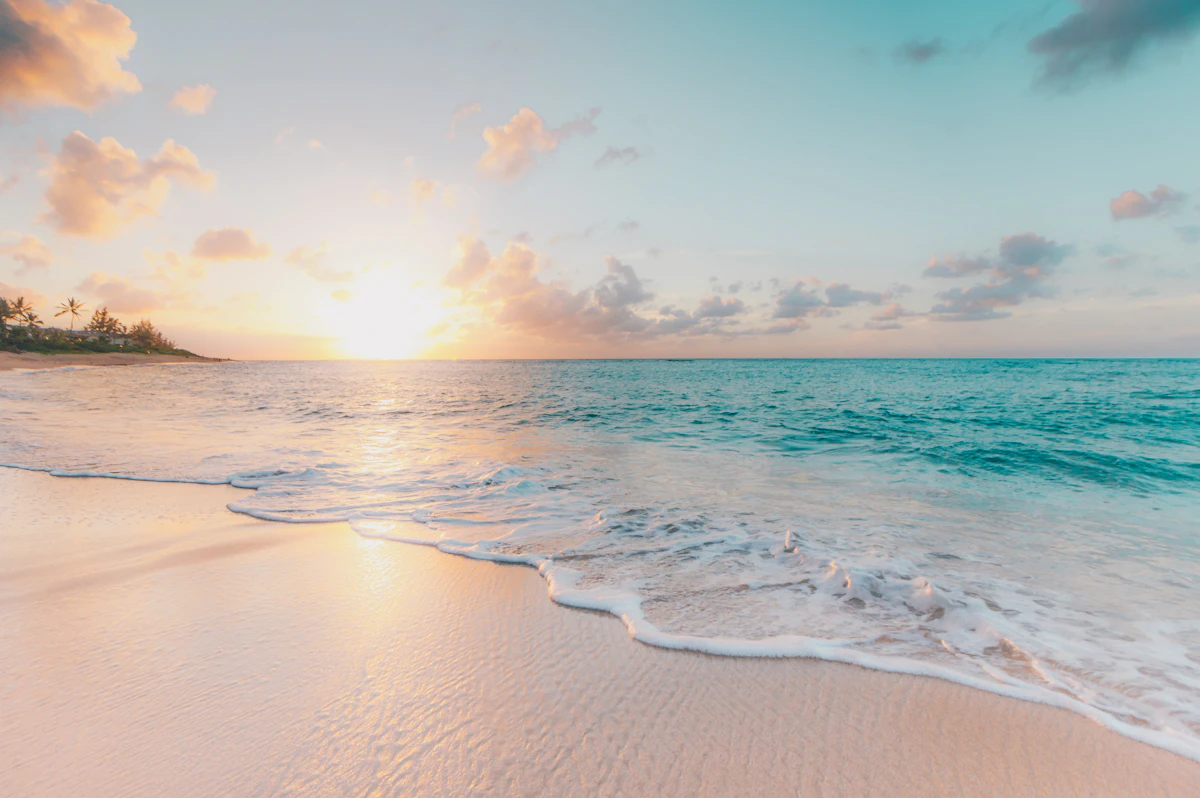 Credit: Unsplash
Aerial view of turquoise tropical bay
The horseshoe formation creates microclimates. Morning sun hits the eastern wall first, warming the stone while the beach remains shaded. By afternoon, reflected light from the western cliff bathes everything in warm glow. Wind patterns swirl unpredictably, sometimes creating perfect stillness while waves hammer the shore. The enclosed space concentrates sound—you hear individual stones rolling underwater, clicking against each other in rhythms that shift with each wave's withdrawal.
Swimmers enter where a natural channel cuts through the cobble bank, the bottom transitioning quickly from stone to sand once you're beyond the break zone. The water here holds surprising clarity despite the rocky shore, visibility extending ten meters on calm days. Cliff swallows nest in crevices overhead, their mud constructions dotting the limestone face, the birds swooping low across the water during evening insect hatches.


