
Counting the waves…
Counting the waves…
A refined fusion of water purity, environmental stability, and communal vibrancy for Inasa Beach.
View MethodologyAnalyzed via live sensors and environmental data.
Wave height, wind, and atmospheric stability.
Live footfall and crowd balance metrics.
Community reviews and curated sentiment.
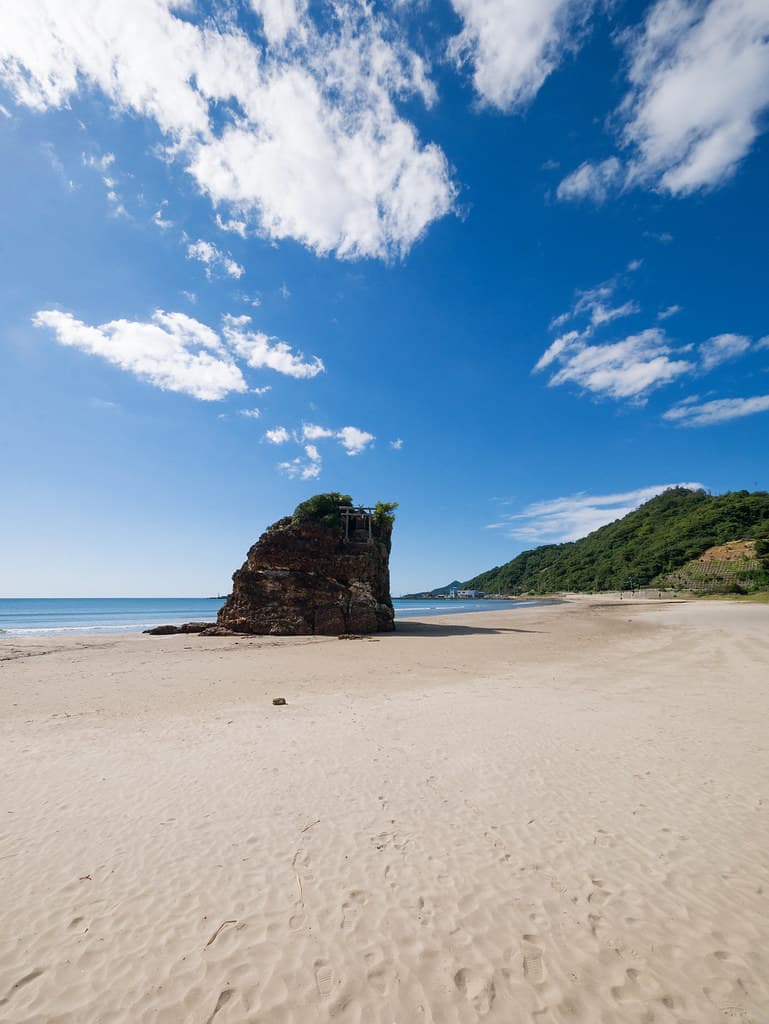
“The strand where deities are said to have gathered stretches wide and welcoming, its white sand curving toward the offshore island topped with a single pine. Arrive before dusk and you'll join the unspoken…”
Limited recent visitor reports — live OBI telemetry is your best guide for current conditions.
Your feet sink into fine sand that squeaks when dry, the beach extending south from the breakwater in a generous sweep. Bentenjima sits roughly two hundred meters offshore, connected by submerged rocks that pilgrims once crossed at low tide during the annual Shinto ceremony. The island's distinctive silhouette—a torii gate and pine tree against the sky—has launched countless social media posts, but the real magic happens in three dimensions, when shifting light turns the Sea of Japan from slate to copper.
Families stake claims with popup tents and coolers, children constructing sand fortifications while parents watch from beach chairs. The water temperature hovers cool even in summer, a reminder that the Japan Sea connects to northern latitudes, but that doesn't stop swimmers from wading in up to their waists. The shore break is gentle here, protected by the offshore topography that made this a sacred landing site in mythology.
A baseball bat laying in the sand on a beach
Tropical beach hammock between palms on the Okinawa coast, Japan
The iconic island silhouette shot
Wade where deities once gathered
Facilities support extended stays
Prime Visitation
Best Weather
Where it is
Inasa Beach
Izumo, Shimane, Japan
35.421900°, 132.685500°
Weather
Loading…
Swell
—
Temp
Warm · Restorative
UV Index
Moderate
Wind
—
Tidal State
Last known
Max Sunlight
—
Ideal Shade
—
May - Sep (Peak)
Jan - Dec (Off-season)
Historical data suggests peak visibility and stable sea temperatures occur during the prime visitation window.
Select a category to load nearby places.
Unlock restaurants, luxury stays and curated maritime experiences within 2km
Inasa Beach offers supervised swimming during summer months (typically July-August) with lifeguards on duty and designated swimming areas. The sandy bottom and generally moderate waves make it suitable for most swimmers, though conditions vary with weather. Strong currents can occur, so observe warning flags and posted notices. Jellyfish may appear in late summer. The beach's popularity means facilities like restrooms and first aid are available. Always swim in marked areas and supervise children closely. Outside summer season, swimming is at your own risk without lifeguard coverage.
Inasa Beach is spectacular during summer (July-August) for swimming and full beach facilities, but sunset visits are breathtaking year-round. The beach's dramatic sunsets are best appreciated in clear weather, particularly during spring and autumn when visibility is excellent. Visit during the tenth lunar month (usually November) to witness or learn about the mythological Kamiari Festival when deities are said to gather. Early morning offers peaceful atmosphere and good light for photography. Weekdays are less crowded than weekends, especially important during peak summer season.
Inasa Beach is remarkably close to Izumo Taisha shrine, just 1-2 kilometers northwest, making it easily walkable in 15-20 minutes. This proximity is significant given the beach's mythological connection to the shrine. By car, the journey takes about 5 minutes with parking available near the beach. Buses serving Izumo Taisha area also stop near Inasa Beach. Many visitors combine shrine worship with beach visits. Bicycle rental from Izumo Station or Taisha area provides another convenient option for exploring this culturally and scenically rich area.
The Izumo Taisha shrine area, within walking distance of Inasa Beach, offers numerous restaurants serving Izumo soba and local seafood specialties. Beach-area facilities are limited but seasonal food stalls appear in summer. The shrine district provides the best concentration of dining options. Accommodations range from traditional ryokan to modern hotels, with many options along the approach to Izumo Taisha. Staying in this area allows easy access to both the shrine and beach. Reserve ahead during festivals and summer peak season when demand is high.
Inasa Beach holds profound significance in Japanese mythology as the legendary site where deity negotiations determined rulership of Japan. According to ancient texts, this is where Takemikazuchi descended to convince Okuninushi to cede the land to the heavenly deities, directly connecting to Izumo Taisha's foundation mythology. The beach appears in the Kojiki and Nihon Shoki, Japan's oldest historical records. During Kamiari-sai (October/November), the beach becomes a sacred gathering point. This mythological heritage, combined with stunning sunsets and distinctive rock formations, makes Inasa Beach exceptionally photogenic and culturally significant.
Photos