

The beach runs in a gentle crescent backed by a modest park with aging playground equipment and concrete picnic tables stained by decades of use. This isn't neglect—it's patina. The facilities work perfectly well: clean public restrooms, cold-water showers, vending machines that actually stay stocked. What's missing is the commercial polish, the rental operations, the sense that every square meter must generate revenue. Instead, you'll find space that feels genuinely public, maintained for use rather than profit.
“A functioning community beach that prioritizes local family recreation over tourism, rare in an increasingly commercialized coastline.”
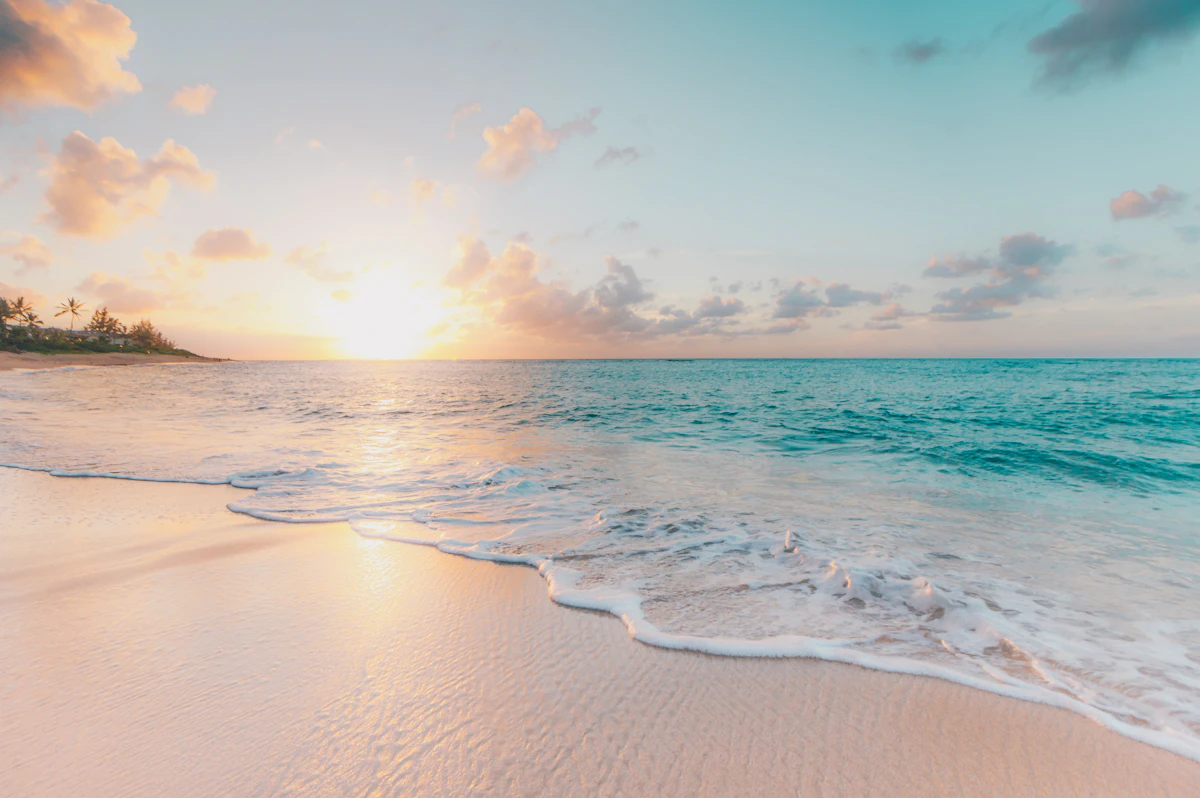 Credit: Unsplash
Aerial view of turquoise tropical bay
Summer weekends bring extended families who colonize sections of beach with pop-up canopies and coolers, children shuttling between grandparents and water in that timeless pattern of beach childhood. The swimming area is roped and monitored by volunteer lifeguards from the community—usually high school students earning service credits. The water stays shallow and calm, protected by offshore sandbars that take the energy from incoming swells. It's ideal for nervous swimmers and playing children, less interesting for experienced ocean-goers seeking adventure.
What distinguishes Oshinazu is its authenticity—this is how Japanese families actually beach, without performing for tourists or cameras. You'll see grandmothers in full sun protection, grandfathers sleeping upright in chairs, mothers preparing elaborate lunches in the limited shade, fathers teaching sons to body-surf the small shore break. Mount Daisen rises behind everything, close enough that you can pick out individual hiking trails on clear mornings, distant enough to maintain its mystique.


