

Hojo Beach spreads wide and accessible, the kind of coastline where you can scan the entire scene from the parking area—swimmers dotting the shallows, beach tents clustered near the tideline, and the Sea of Japan extending flat and gray-blue toward the horizon. The sand underfoot packs firm near the water, softening as you move inland toward the grassy bank that separates the beach from the main road.
“The westward orientation delivers sunsets that transform an already popular swimming beach into an evening gathering point for sunset watchers along the coast.”
 Credit: Unsplash
Aerial view of turquoise tropical bay
Swimming here requires no particular bravery. The seafloor slopes gradually, and waves arrive in low, foamy rolls that children jump through without worry. Lifeguard stations operate through the summer season, and rental shops supply the usual gear—tubes, beach chairs, umbrellas in primary colors. The beach develops a rhythm: morning arrivals staking territory, midday swims and picnics, then a collective shift of attention as late afternoon approaches.
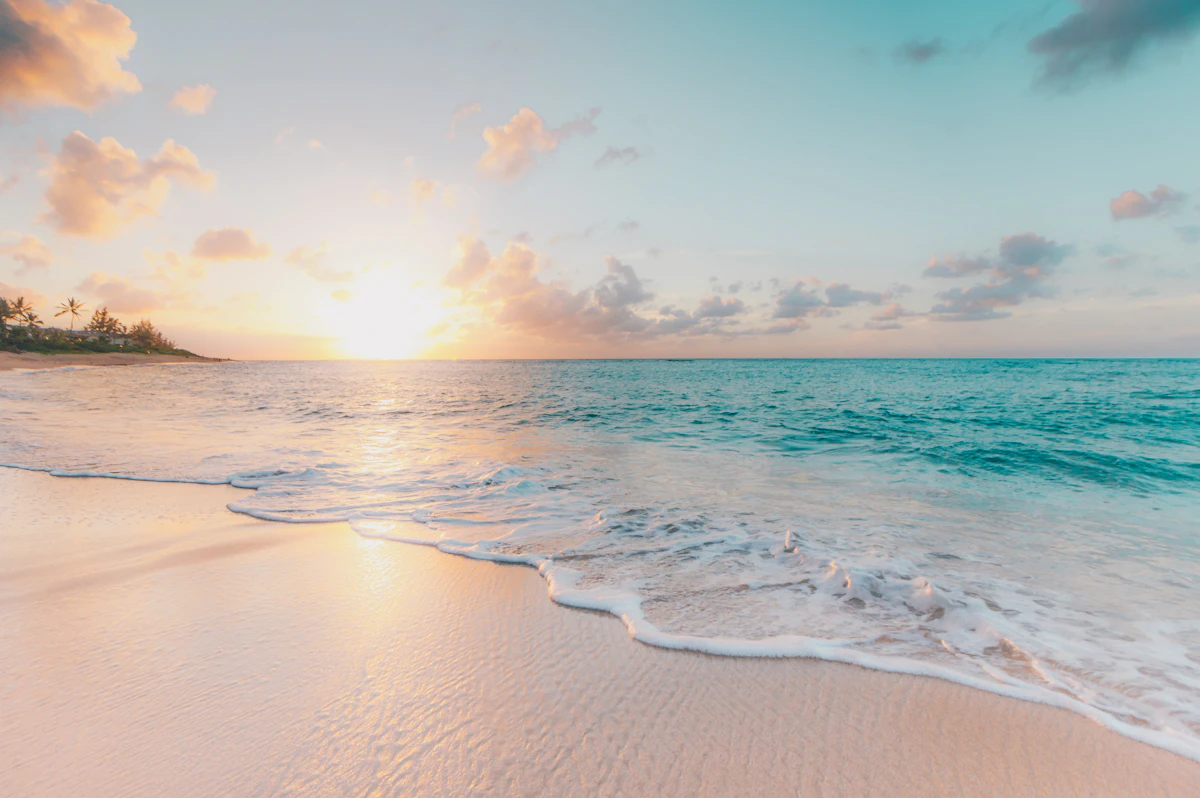
The sunset reputation is earned. As evening settles, the western sky begins its performance—first pale gold, then deepening through salmon and vermillion until the sun meets the water in a final flare of orange. Silhouettes form along the shore: couples on beach blankets, photographers adjusting tripods, kids still splashing in the shallows. The light fades quickly once the sun drops, leaving behind streaks of purple and indigo that linger until darkness fills in completely.


