Counting the waves…
Counting the waves…
A refined fusion of water purity, environmental stability, and communal vibrancy for Hotaruika Museum Beach.
View MethodologyAnalyzed via live sensors and environmental data.
Wave height, wind, and atmospheric stability.
Live footfall and crowd balance metrics.
Community reviews and curated sentiment.
“From March to May, tiny squid emit blue-green sparks as waves deposit them on dark stones. You crouch at the waterline with a handful of strangers, watching biology's light show flicker across the shore.”
Limited recent visitor reports — live OBI telemetry is your best guide for current conditions.
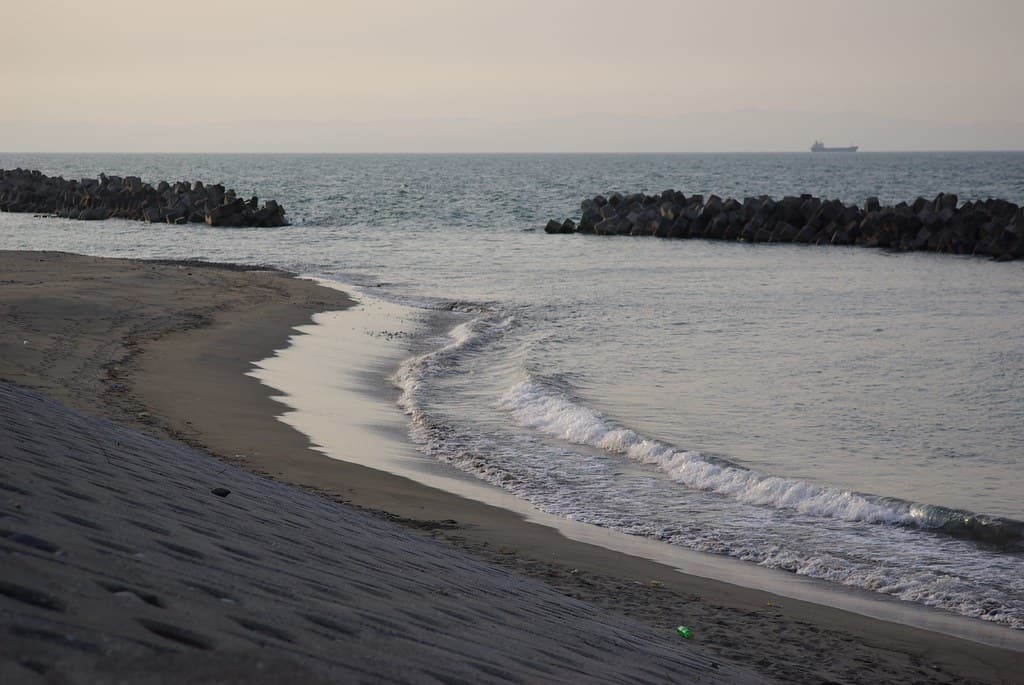
The beach curves in a tight arc beneath the museum's angular roofline, pebbles ranging from pea-sized to fist-sized, smooth enough that walking requires attention. By day it reads as a functional coastline—fishermen's floats tangled in the wrack line, tetrapod barriers offshore, the industrial port visible north across the bay. But on moonless nights between late March and early June, this shore becomes a pilgrimage site. Hotaruika—firefly squid—ride currents into the shallows to spawn, and when waves strand them, their photophores pulse blue-white against wet stones.
You arrive after dark with a small flashlight, joining the quiet cluster of photographers, families, and biology students spread along the shore. The museum above runs nighttime viewing tours when conditions align—new moon, onshore wind, warming water. Some visitors dip nets to collect specimens for closer observation; most simply kneel at the water's edge and wait for the next wave to deliver its cargo. Each squid is thumb-sized, translucent, studded with tiny light organs that fire in distress or communication. The effect is brief—minutes, sometimes—but unmistakable.

Sunset reflecting on wet sand
Person walking on a sand spit
Spring squid light shows
Firefly squid ecology
Off-season tide exploration
Prime Visitation
Best Weather
Where it is
Hotaruika Museum Beach
Namerikawa, Toyama Prefecture, Japan
36.763900°, 137.362500°
Weather
Loading…
Swell
—
Temp
Warm · Restorative
UV Index
Moderate
Wind
—
Tidal State
Last known
Max Sunlight
—
Ideal Shade
—
May - Sep (Peak)
Jan - Dec (Off-season)
Historical data suggests peak visibility and stable sea temperatures occur during the prime visitation window.
Select a category to load nearby places.
Unlock restaurants, luxury stays and curated maritime experiences within 2km
Hotaruika Museum Beach is primarily known for firefly squid viewing rather than swimming, with its pebble shoreline making water entry less comfortable than sandy beaches. Swimming is possible during summer months, but the beach lacks extensive swimming facilities and lifeguard services are limited. The coastal waters are generally calm, but as with all Sea of Japan locations, conditions vary with weather. Most visitors come for scenic walks, squid viewing, and photography rather than swimming. If you plan to enter the water, exercise caution and check local conditions first.
The prime time to witness firefly squid at Hotaruika Museum Beach is during their spawning season from March through May, with peak activity typically in April. The bioluminescent squid are best viewed on dark, moonless nights when they come close to shore. Early morning hours before dawn often provide the most spectacular displays. The adjacent Hotaruika Museum offers year-round exhibits if you miss the natural season. For general beach visits without squid viewing, summer months offer the most pleasant weather, though the beach is accessible year-round.
Hotaruika Museum Beach is located in Namerikawa, accessible from Namerikawa Station on the Ainokaze Toyama Railway line. From the station, the beach and museum are about 10-15 minutes by taxi or local bus. If driving, take Route 8 or coastal roads from Toyama City, approximately 20-30 minutes away. Parking is available near the Hotaruika Museum. The museum itself is well-signposted in the area. During firefly squid season, special early morning access may be arranged through local tours or the museum for optimal viewing opportunities.
The Namerikawa area offers dining focused on local seafood, particularly firefly squid dishes during season. The Hotaruika Museum has a restaurant serving firefly squid preparations when available. Namerikawa's town center, a short distance inland, features additional restaurants and cafes serving Toyama Bay specialties. Accommodation options in Namerikawa include small hotels and guesthouses. More extensive lodging choices are available in nearby Toyama City. Many visitors choose to stay in Toyama and make Namerikawa a day trip, combining museum visits with coastal exploration.
Hotaruika Museum Beach is uniquely famous for the bioluminescent firefly squid phenomenon that occurs offshore during spring spawning season. This rare natural light show, where thousands of glowing squid illuminate the waters, attracts visitors from across Japan and internationally. The adjacent Hotaruika Museum provides educational exhibits about these unique creatures and Toyama Bay's ecosystem. The pebble beach offers scenic views of the bay with mountain backdrops, combining natural wonder with accessibility. This combination of natural spectacle and educational opportunity makes it distinctive among Japan's coastal destinations.
Photos